

Water Treatment
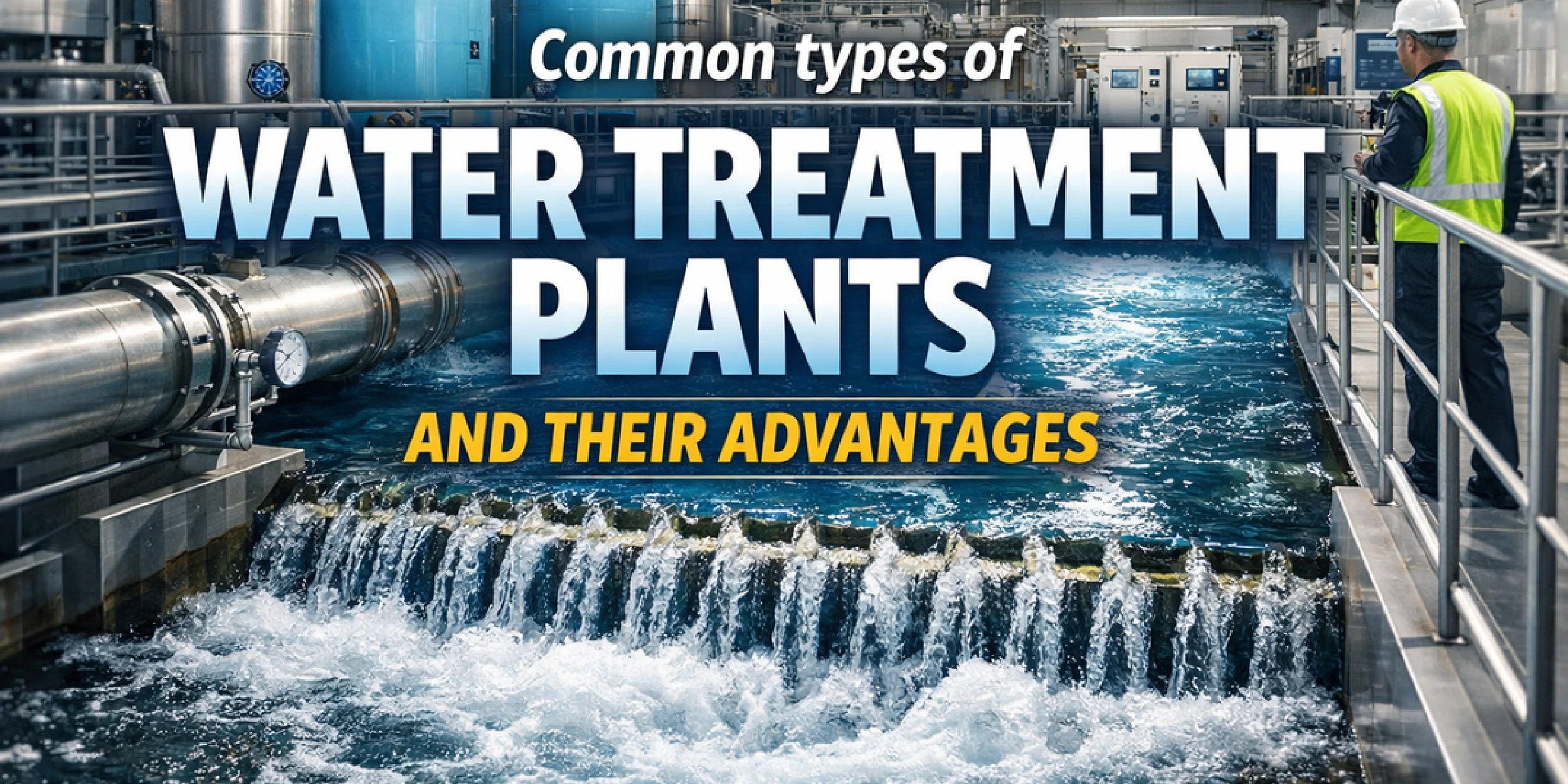
Understaning the types of water treatment plants and their advantages
2024-05-08 | by Joydip Manna
When we talk about water treatment plants, we are essentially talking about how raw water is made safe and reliable for use—whether for drinking, industry, or institutional supply. Rivers, lakes, canals, and borewells rarely give usable water straight out of the source. Turbidity, bacteria, dissolved salts, iron, fluoride, or seasonal contamination make treatment unavoidable.
Conventional Water Treatment Plants
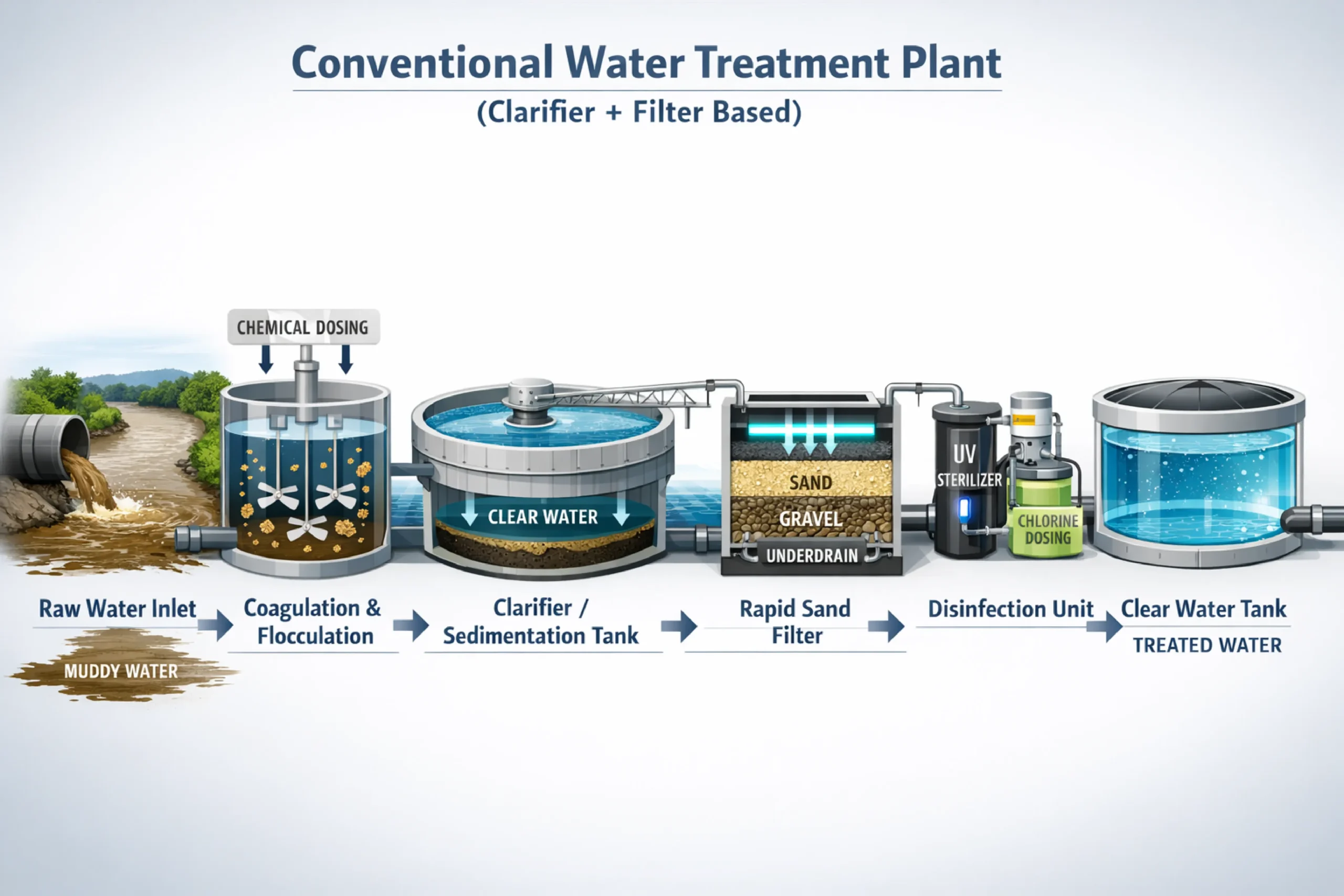
This is the most familiar and widely used system for municipal water supply. If a city draws water from a river or reservoir, chances are this is the treatment method being used.The process is straightforward: chemicals are added to clump fine particles together, heavy solids are settled in clarifiers, remaining particles are filtered, and finally the water is disinfected.
Why it works well
- Handles highly muddy river water, especially during monsoons
- Technology is well understood by operators
- Accepted by regulators under Bureau of Indian Standards IS 10500 and World Health Organizationguidelines
- Long service life when maintained properly
The downside is space and sludge. These plants need land, and sludge handling is
often neglected, which eventually creates operational issues.
Slow Sand Filter Plants
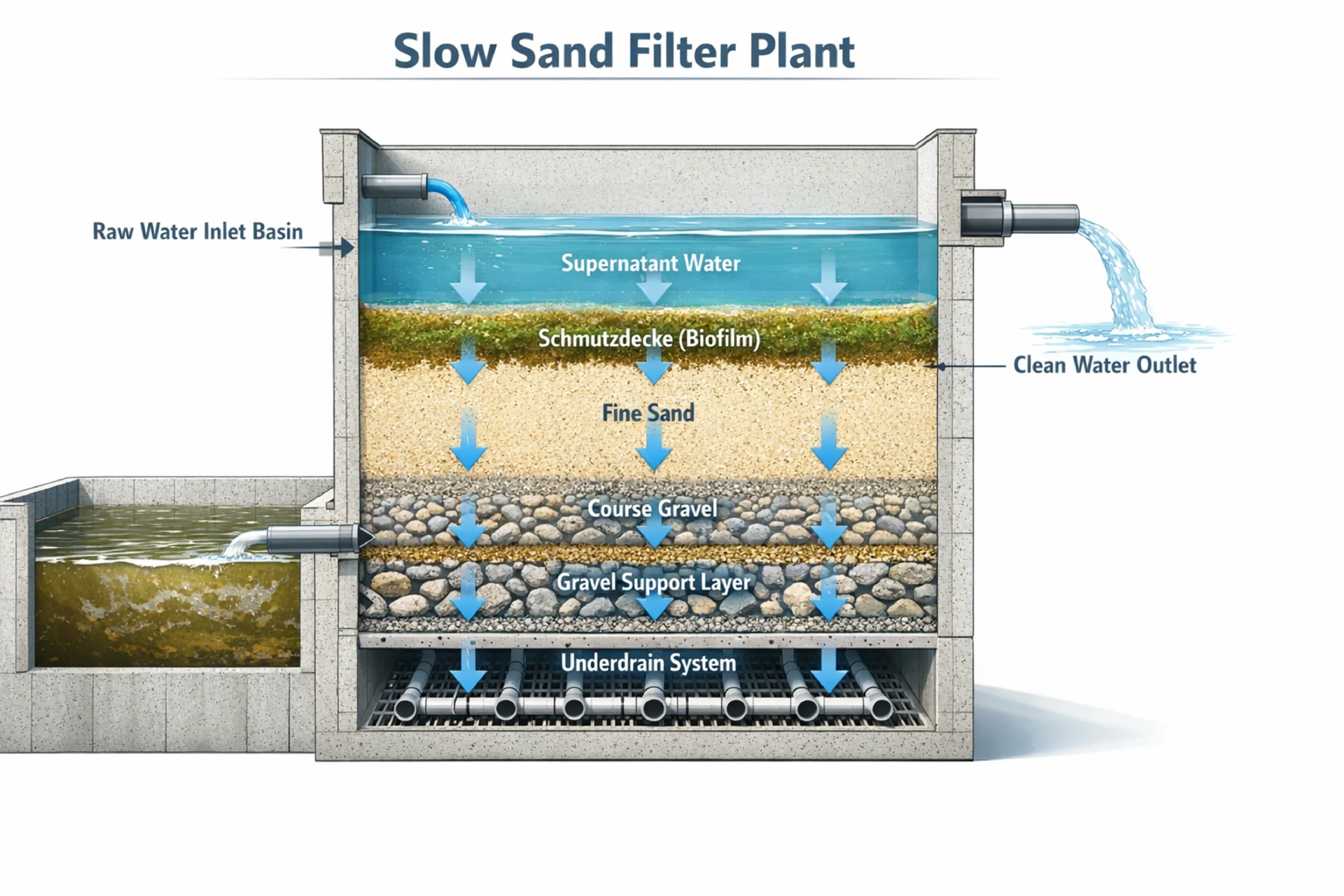
Slow sand filters are old-school, but still very relevant in the right conditions. They rely more on biology than machinery. Water moves slowly through fine sand, where a natural bio-layer removes pathogens.
Why they still make sense
- Very low power and chemical requirement
- Simple to operate and maintain
- Ideal for rural or remote areas
- Excellent pathogen removal for low-turbidity water
They are not suitable for dirty or highly variable sources and require large land
areas. But where conditions allow, they are extremely reliable.
Rapid Sand Filter Plants
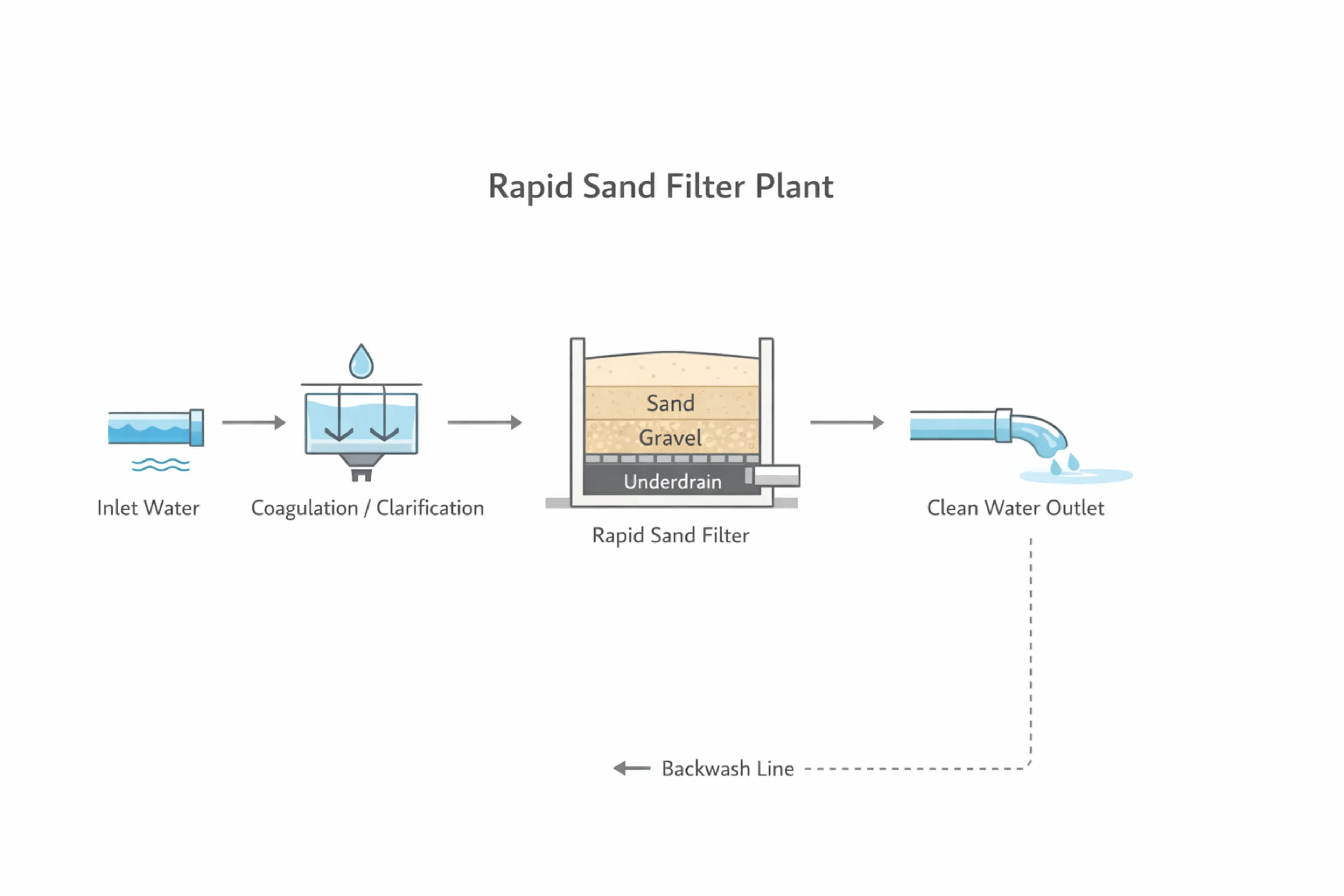
Rapid sand filters are faster, more compact, and commonly used in towns and
cities. They always need upstream clarification but can handle large volumes in
small spaces.
Key advantages
- High treatment capacity
- Smaller footprint
- Easy integration with automation
- Quick recovery through backwashing
Their performance depends heavily on good chemical dosing and operator discipline.
Membrane-Based Water Treatment Plants (UF / RO)
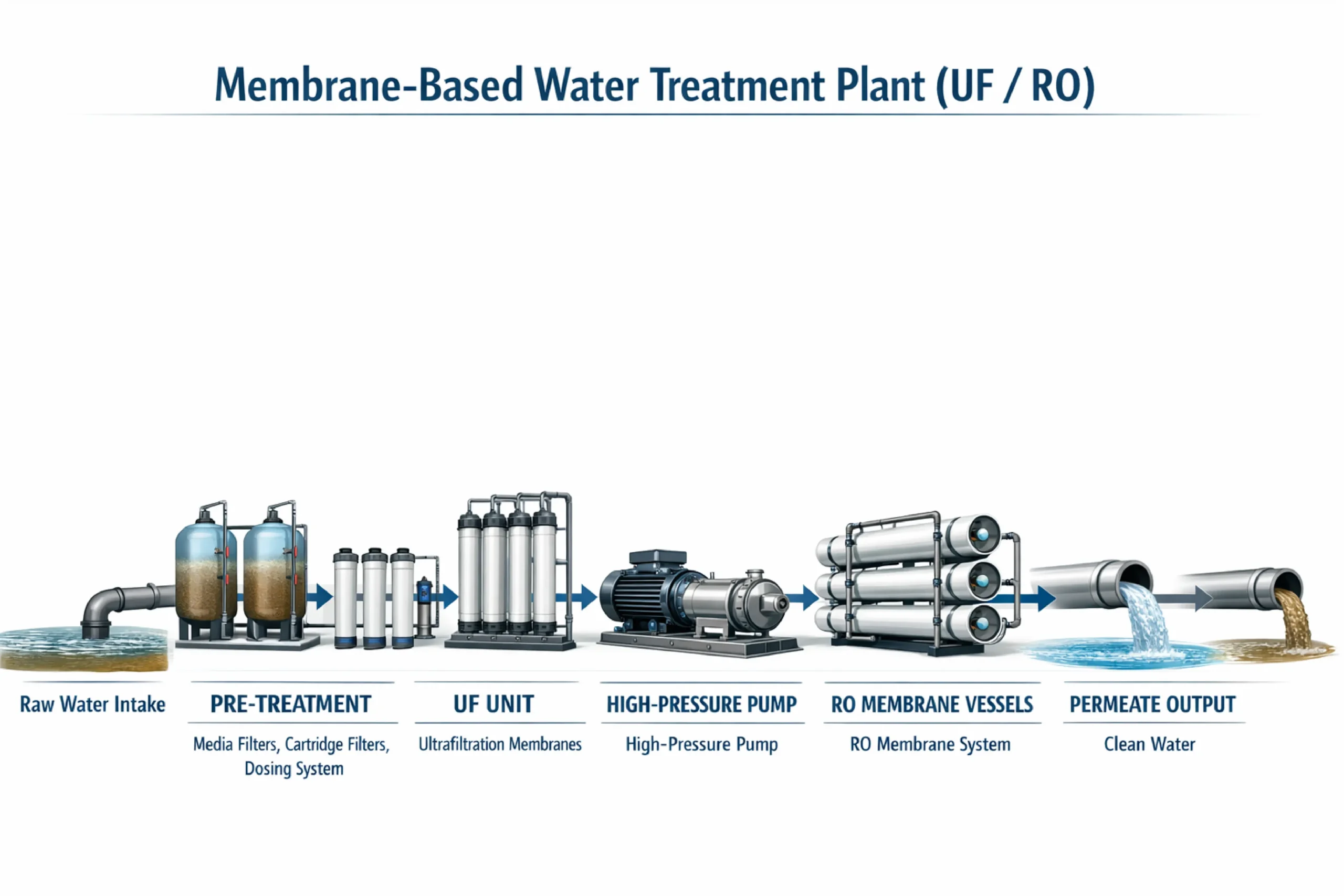
Membrane systems physically block contaminants using pressure-driven filtration.
These are common in groundwater treatment, desalination, and industrial water
supply.
Why industries prefer them
- Very consistent output quality
- Removes bacteria, viruses, and dissolved salts
- Compact and modular
- Fast installation
The reality check: membranes are unforgiving. Poor pretreatment, bad operation,
or irregular power supply quickly lead to fouling, high costs, and downtime.
Package Water Treatment Plants
Package plants are factory-built, compact systems delivered ready to install.
They’re popular for housing projects, hotels, hospitals, and campuses.

Where they work well
- Limited space
- Fast project timelines
- Predictable raw water quality
- Decentralized water supply needs
They must be correctly sized and matched to the source. A “one-size-fits-all”
package plant almost always fails in the long run.
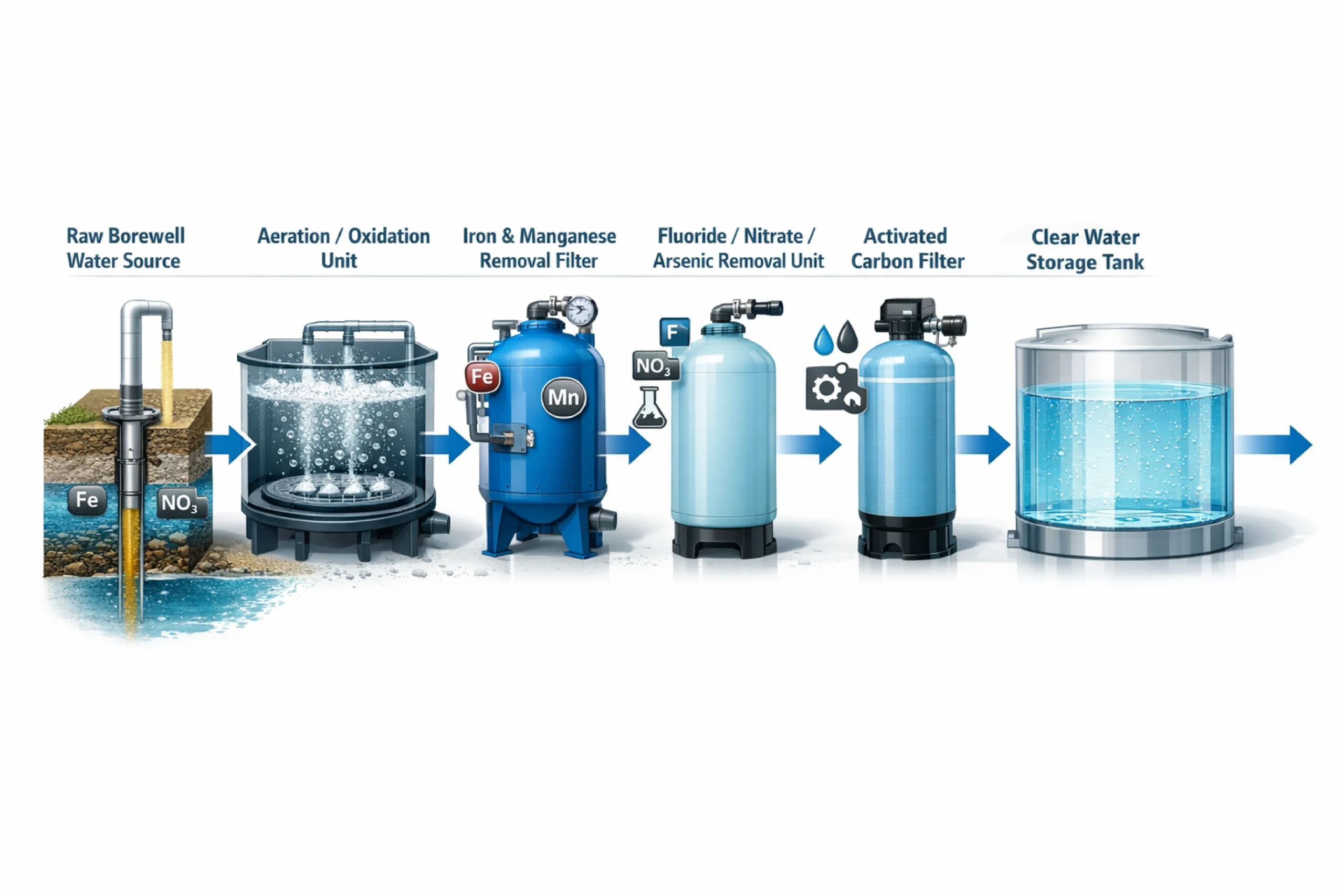
Groundwater-Specific Treatment Plants
Borewell water often looks clean but hides problems like iron, fluoride, nitrate,
arsenic, or hardness. These plants are designed to remove specific contaminants,
not turbidity.
Advantages
- Targeted treatment
- Smaller sludge volumes
- Stable year-round performance
- Lower operational complexity
Accurate water testing is critical. Wrong assumptions at design stage lead to
chronic failures.
Why Plant Selection Really Matters
Choosing the wrong water treatment process doesn’t just increase cost—it creates
daily operational stress. Operators struggle, water quality fluctuates, complaints
rise, and compliance becomes difficult.
Regulators like
Central Pollution Control Board (India)
increasingly focus on actual performance, not installed capacity.
Plants that look impressive on drawings but ignore source variability, operator
skill, and maintenance realities rarely survive beyond a few years.
Prefer Listening Instead of Reading?
Listen to This Article:
Quick FAQ (Industry-Relevant)
Is conventional treatment still relevant today?
Yes. For surface water with high turbidity, it remains the most reliable and
regulator-accepted approach (WHO, BIS).
Are membrane plants always better?
No. They give better water quality but demand better operation, power stability,
and pretreatment (WHO, USEPA).
Can slow sand filters meet drinking water norms?
Yes, for suitable sources. WHO recognizes them as effective biological treatment
systems.
Are package plants safe for long-term use?
Yes, if correctly designed for the raw water and properly operated under BIS IS
10500 norms.
Does groundwater always need treatment?
Often yes. Iron, fluoride, nitrate, and hardness frequently exceed permissible
limits across South Asia.
From an industry perspective, organizations such as
Plizma Technology work on the design, execution, and long-term operation of water and wastewater
treatment systems across industrial and municipal contexts. Experience from such
field implementations reinforces the importance of realistic design, operator
training, and lifecycle thinking rather than theoretical sizing alone.
Learn more:
View Location
RECENT BLOG
Difference Between Softener, RO, and DM Plant
2026-02-25
Zero Liquid Discharge (ZLD) – Is It Becoming Mandatory?
2026-02-20
Top 10 Water And Wastewater Treatmant Plant Manufacturer in Eastern India
2026-02-12

What Is an Effluent Treatment Plant (ETP)? A Complete Guide
2026-02-10