2026-09-28



2026-02-10 | by Joydip Manna
Quick context first, because wastewater on real factory floors almost never behaves the way textbooks keep pretending it does.
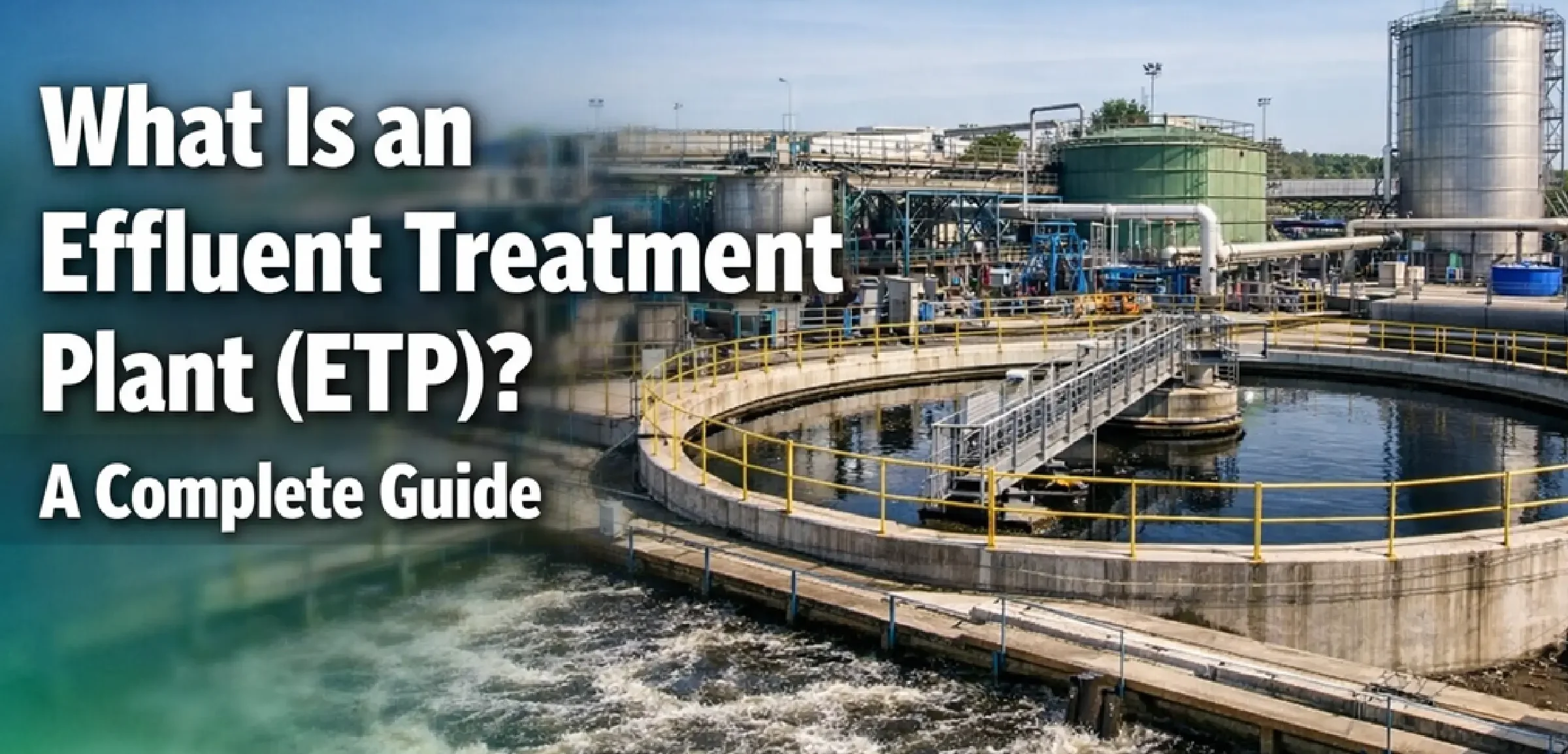
Industrial wastewater is inconsistent, sometimes badly inconsistent. One shift pH is under control, next shift it drops because process washing happened, or somebody dumped line-cleaning water without warning. COD rises, oil enters from utility side, color stays stubborn, biology gets disturbed for reasons operators already know but reports never fully show. This is where the question becomes important, and not just for SEO or definitions — what is effluent treatment plant? Because in actual plant operation, ETP is not just a tank-and-pump setup. It is the system standing between industrial wastewater and a compliance problem.
An Effluent Treatment Plant is basically the treatment system used by industries to handle wastewater before it is discharged or reused. It removes suspended solids, oil, grease, organic load, chemicals, and in many cases metals or toxic contaminants too. If the ETP is stable, plant runs with less risk. If ETP is unstable, sooner or later compliance, cost, and even operations start getting hit. That part industries usually understand only after few bad cycles.
ETP full form: Effluent Treatment Plant.
An Effluent Treatment Plant (ETP) is an industrial treatment facility designed to process wastewater generated from manufacturing and processing operations. It removes harmful pollutants like chemicals, biodegradable organic matter, heavy metals, suspended solids, and oils so the final water can be discharged safely or reused depending on treatment level. Industries such as textile, pharma, food processing, chemicals, electroplating, and engineering commonly depend on ETP systems for environmental control and legal compliance.
Not drinking water.
Not miracle-clean water.
But treated water that can meet discharge or reuse targets, if the plant is designed right and operated right also.
One line still gets confused in many sites:
ETP ≠ STP
This difference is not small. It changes the whole treatment philosophy. Domestic sewage is mostly biodegradable and comparatively stable. Industrial effluent may be corrosive, toxic, saline, or non-biodegradable. So if somebody uses STP thinking for industrial wastewater, result usually is dead biomass, unstable clarifier, excess sludge, and lot of blaming later.
This is not just “environment department topic” now, not anymore.
Discharge compliance is under closer watch than before. Industries are expected to maintain outlet quality, records, proper treatment, sludge management, and in many cases online monitoring visibility too. Under the framework of Central Pollution Control Board and State Pollution Control Boards, wastewater non-compliance is not treated as a minor housekeeping issue.
Once ETP performance starts slipping, the damage is not limited to one corner utility area. Sludge cost rises, chemicals rise, water reuse fails, operator pressure rises, and production teams start asking why utilities are unstable. Many sites keep ETP as back-end unit, but consequences come to front-end very quickly.
Untreated or partially treated effluent can contaminate drains, soil, groundwater, and nearby surface water. Once that happens, it becomes much bigger than one lab report or one explanation letter.
So in practical terms, when someone asks what is effluent treatment plant, answer is not just definition.
It is compliance infrastructure.
It is pollution control infrastructure.
And yes, it is business continuity infrastructure too.
Screens, traps, pits, grit handling, oil separation.
This stage removes floating matter, coarse solids, grit, and free oil before they damage pumps and choke downstream units. People sometimes underestimate this section because it does not show dramatic COD reduction. But skip proper preliminary care and downstream treatment pays for it, every time, in breakdowns, fouling, and lost stability.
This is the stage where raw wastewater becomes manageable enough for real treatment.
Probably the most underrated unit in many industrial ETPs. Equalization absorbs flow fluctuation, pH swings, COD shock, color peaks, and temperature variation. Without proper equalization, the rest of the plant keeps reacting instead of treating.
Neutralization is not just acid and alkali dosing. It is preparation step for everything after this. Poor pH control affects coagulation, metal precipitation, settling, and biological treatment. Biology especially does not forgive lazy pH control.
These steps help remove colloidal particles, color, emulsified oil, and part of the organic load. Proper dosing matters. Under-dosing gives poor separation. Over-dosing gives excess sludge and unnecessary cost. In real plants, jar testing is still more honest than guesswork copied from previous site.
Biological treatment works well, but only when upstream wastewater is made suitable for it.
This stage removes biodegradable organics, mainly reducing BOD and part of COD through microbial action. Systems may include activated sludge, MBBR, biofilm reactors, aeration tanks, and related settling units. But biology is not magic. If equalization is weak and toxic load is entering directly, aeration alone will not save the plant no matter how much power is consumed.
Tertiary treatment is the polishing stage. It is used when basic treatment is not enough for discharge norms, or when treated water has to be reused in utilities, flushing, cooling, or further process applications.
One common mistake, frankly, is installing membranes before stabilizing upstream treatment. Then fouling starts, scaling starts, maintenance cost rises, and membrane technology gets blamed for problems actually created earlier in the ETP.
Regulators judge outlet quality, yes. But treatment performance starts from understanding inlet properly. That part cannot be skipped.
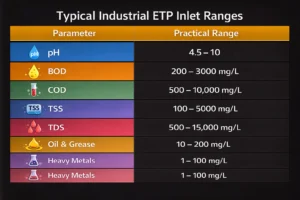
A plant cannot be designed properly on rough assumptions alone. Actual influent characteristics like pH, COD, BOD, TSS, TDS, oil & grease, heavy metals, chlorides, sulfates, and toxicity all decide the treatment route. Average data often hides the worst-hour condition, and worst-hour condition is usually what breaks the plant.
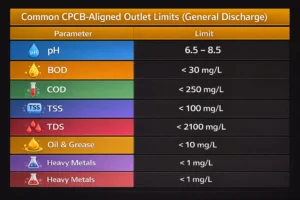
This is where the answer to what is effluent treatment plant becomes very straightforward. It is the industrial treatment system used to convert contaminated and variable wastewater into treated effluent that can remain within prescribed discharge or reuse limits, not just during inspection day, but during actual plant operation.
Industrial wastewater does not behave the same way in every factory. A treatment system that works smoothly for one industry can face completely different problems in another. This is why ETP design cannot be based only on flow rate or COD values. The actual industrial wastewater characteristics, production cycle, chemicals used, and variation in discharge all matter.
Textile wastewater usually brings problems beyond basic COD and BOD reduction. Dyes, salts, colour, suspended solids, and changing chemical loads can make textile wastewater treatment difficult.
The wastewater characteristics can change with different batches, fabric types, dyeing processes, and washing operations. Colour removal may require additional chemical treatment, coagulation, filtration, or advanced polishing, while high TDS can become a major limitation when treated water is planned for water reuse.
A plant may achieve acceptable organic-load reduction and still struggle with colour or dissolved salts. This is where effluent treatment plant technology and treatment selection become important, because simply increasing chemical dosing does not always solve the actual problem.
Food and beverage wastewater generally contains high biodegradable organic matter, but the real operational challenge is often fluctuation.
Grease, oil, food particles, cleaning chemicals, and intermittent CIP or washing discharges can suddenly change the wastewater characteristics. If these streams enter the biological treatment system without proper equalization, microbial activity can become unstable.
Grease removal, screening, equalization, and proper biological wastewater treatment therefore become important parts of plant stability. A system designed only around average COD can struggle when production cleaning discharge suddenly increases the load.
Pharmaceutical wastewater treatment and chemical wastewater treatment can be considerably more complicated. COD alone does not tell the complete treatment story.
Solvents, toxic compounds, reaction residues, salts, pH variation, and other inhibitory substances can affect biological treatment. Some streams may not be suitable for direct mixing with normal effluent.
Wastewater segregation at source and controlled equalization therefore becomes critical. High-strength or toxic streams may require separate handling before they are introduced into downstream treatment. Otherwise, a biological ETP can lose performance very quickly.
Electroplating and metal-processing industries can generate wastewater containing heavy metals, acids, alkalis, cyanide-bearing or other process-specific contaminants depending on the operation.
Here, chemical wastewater treatment and pH control become particularly important. Precipitation, coagulation, clarification, and industrial sludge management need to be properly controlled because removing a contaminant from water does not mean the contaminant has disappeared. It has often moved into the sludge.
This makes sludge classification, dewatering, storage, and authorized disposal an important part of the ETP operation and maintenance system.
Paper and pulp wastewater can contain high organic loading, suspended solids, colour, and process chemicals. Fibre and solids can also create operational problems when preliminary treatment is weak.
Screening, primary clarification, equalization, and biological treatment need to work together. Variation in production and chemical use can affect downstream biological performance, so stable hydraulic and organic loading becomes important for Pulp & Paper Industry.
Although every industry has its own wastewater characteristics, some ETP operational problems appear again and again.
Most ETP problems are not because treatment technology is unavailable. The bigger issue is often that actual plant conditions have changed while the effluent treatment plant continued operating on old assumptions.
An ETP needs to be treated as process infrastructure. Wastewater changes, production changes, chemical consumption changes, and therefore industrial wastewater treatment requirements also change.
For this reason, effective ETP operation and maintenance, regular effluent testing, process monitoring, sludge management, and appropriate treatment-stage optimization remain important across industries. The treatment process has to follow the wastewater, not the other way around.
So, what is effluent treatment plant? It is the industrial wastewater treatment system that helps reduce pollution load, supports environmental compliance, protects surrounding water bodies, and in many cases makes water reuse possible. But more than definition, it is a working operational system. If design is correct but operation is weak, results will still fail. If operation is disciplined and influent is understood properly, treatment becomes much more reliable.
Plizma Technology works in this area across industries, wastewater types, and treatment problems that look different on paper but often fail for same reasons in reality. Stable influent control first, proper treatment next — this pattern keeps repeating, almost every time.
👉 Also read:
How Good ETPs Contribute Largely to Your Company’s ESG Goals
Contact:
Click Here
Last updated on: 2026-03-16
2026-09-28
2026-09-23