



Effluent treatment
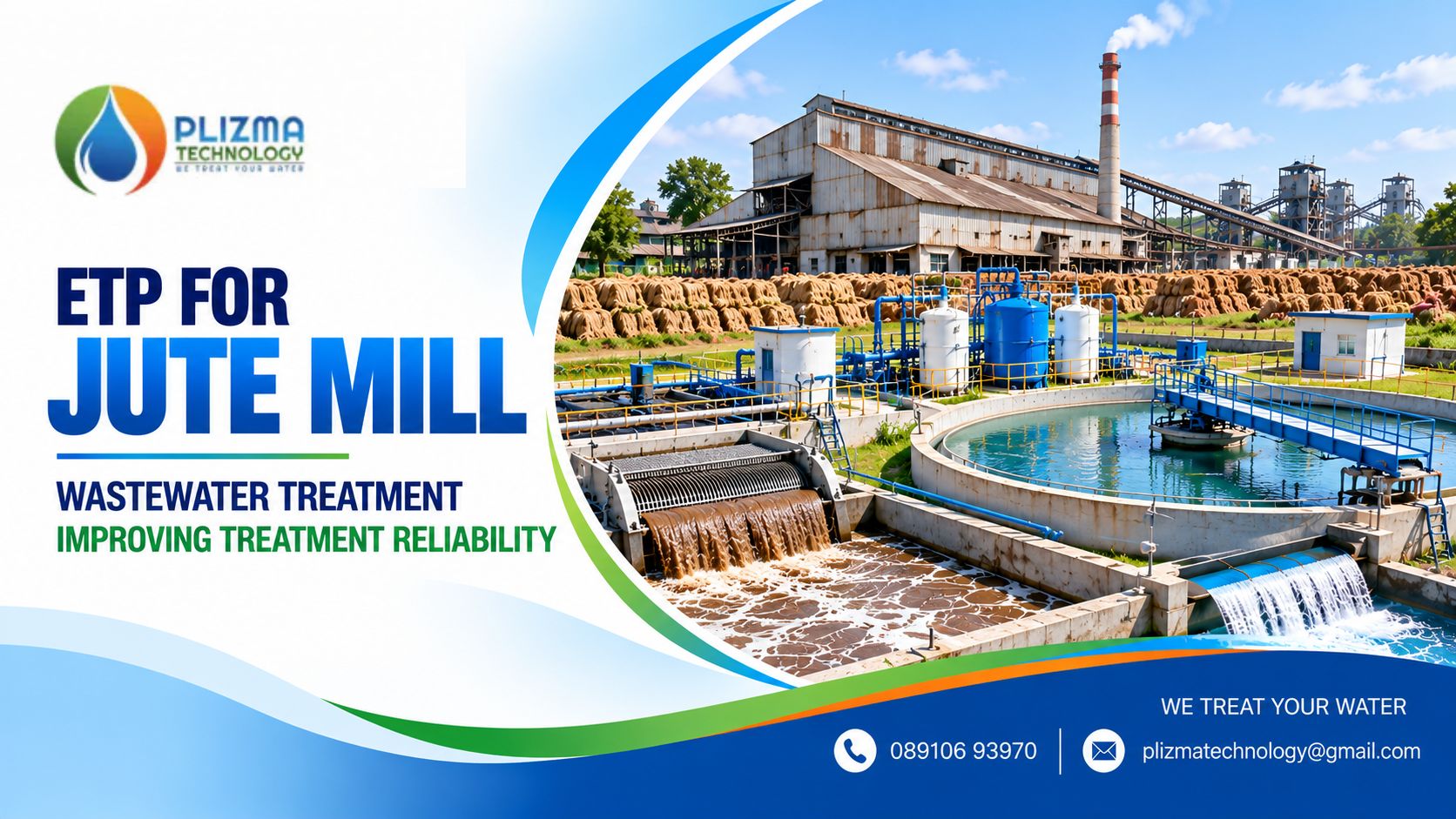
ETP for Jute Mill Wastewater Treatment in West Bengal: Improving Treatment Reliability
2026-10-22 | by Joydip Manna
Jute mills play an important role in West Bengal’s industrial sector, particularly across the Howrah, Hooghly and Kolkata industrial belt. However, wastewater generated during fibre processing, washing, batching and finishing can create significant treatment challenges. Suspended jute fibres, organic matter, processing oils and chemicals may affect effluent quality, making consistent wastewater treatment difficult without proper process control.
An ETP for jute mill wastewater treatment in West Bengal helps industries manage wastewater before discharge, maintain compliance with applicable environmental requirements and improve water management. A reliable effluent treatment plant must handle changing wastewater loads, remove suspended fibres, maintain biological treatment performance and manage sludge effectively.
At Plizma Technology, industrial wastewater treatment is approached through the practical requirements of each industry. For jute mills, treatment reliability depends on equipment selection, process control, preventive maintenance and regular effluent monitoring.
Understanding Jute Mill Wastewater and Its Treatment Requirements
Jute mill wastewater characteristics depend on manufacturing operations, water consumption and the chemicals used during production. Depending on the process, wastewater may contain suspended fibres, organic matter, oil and grease, and other process-related contaminants.
The main treatment challenges include:
- Suspended fibres and solids: Loose fibres can block screens, pumps and pipelines if not removed effectively.
- Organic pollution: Biodegradable organic matter increases BOD and COD, placing additional pressure on biological treatment.
- Processing chemicals: Batching oils, detergents and other additives may affect pH and microbial activity.
- Sludge generation: Solids captured during physical, chemical and biological treatment require proper management.
Every mill does not generate identical wastewater. Proper wastewater analysis is essential before selecting an industrial effluent treatment plant.
Why ETP Reliability Matters in West Bengal’s Jute Industry
Managing Variable Wastewater Flow
Production schedules and washing operations can cause fluctuations in wastewater flow and pollutant concentrations. An equalisation tank helps balance these variations and provides a more consistent feed to downstream treatment units.
The tank must have suitable capacity, adequate mixing and proper maintenance to protect downstream processes from sudden changes in wastewater loading.
Preventing Fibre Blockage and Equipment Failure
Fibre removal is critical in jute mill wastewater treatment. Inadequate screening allows loose fibres to accumulate in pumps, pipelines and treatment tanks, increasing maintenance requirements.
Coarse screening followed by suitable fine screening can reduce solids entering downstream equipment. Regular screen cleaning and proper handling of collected fibres are equally important.
Maintaining Biological Treatment Efficiency
Biological treatment uses microorganisms to break down biodegradable organic pollutants. Sudden organic loading, inhibitory chemicals or insufficient aeration can reduce treatment efficiency.
Monitoring dissolved oxygen, biomass concentration and sludge settling helps operators identify problems before final effluent quality deteriorates.
Improving Sludge Management
Sludge generated during screening, chemical clarification and biological treatment must be collected and handled appropriately. Depending on sludge characteristics, suitable thickening, dewatering and disposal arrangements may be required.
Supporting Environmental Compliance
Industrial wastewater discharge must comply with applicable environmental standards and conditions specified by the competent pollution control authority.
For mills in West Bengal, the West Bengal Pollution Control Board (WBPCB) is an important regulatory authority. Compliance assessment should consider the Environment (Protection) Rules, 1986, relevant amendments and the facility’s consent conditions.
Regular monitoring and operating records help establish whether the treatment process performs consistently. Applicable discharge limits should be verified before being used for ETP design or compliance decisions.
How Does an ETP for Jute Mill Wastewater Treatment Work?
A typical jute mill effluent treatment plant may combine preliminary treatment, equalisation, physicochemical treatment, biological treatment and final clarification. The exact process depends on wastewater characteristics and the required discharge or reuse quality.
Screening → Equalisation → pH Adjustment → Coagulation and Flocculation → Biological Treatment → Secondary Clarification → Tertiary Treatment, Where Required
1. Screening and Fibre Removal
Screening removes coarse fibres, debris and suspended material. Fine screening may be required where smaller particles remain. Screen capacity, opening size, cleaning frequency and fibre characteristics should be considered during design.
Regular inspection is essential because blocked screens can restrict wastewater flow or encourage bypassing. Removing captured solids at suitable intervals helps maintain reliable operation.
2. Equalisation and pH Adjustment
An equalisation tank balances fluctuations in wastewater flow and pollutant concentration. Mixing helps maintain uniform conditions before subsequent treatment.
Where required, neutralisation adjusts pH to suitable operating conditions. Automated pH monitoring and controlled chemical dosing can improve consistency when instruments are maintained and calibrated correctly.
3. Coagulation, Flocculation and Primary Clarification
Where fine suspended solids or emulsified substances remain, coagulation and flocculation may improve their removal. Suitable chemicals help particles combine into larger flocs that settle more readily.
Chemical selection and dosage should be established through testing, including jar tests where appropriate. Excessive dosing increases chemical consumption and sludge generation, while insufficient dosing may leave excessive suspended solids in the treated water.
4. Biological Wastewater Treatment
Biological treatment reduces biodegradable organic pollution through microbial activity. Activated sludge systems and Moving Bed Biofilm Reactor (MBBR) systems may be considered depending on wastewater characteristics and site requirements.
Reliable operation requires suitable oxygen supply, biomass management, hydraulic retention time and effective sludge separation. Technology selection should consider wastewater analysis, available land, power consumption and operating expertise.
5. Secondary Clarification and Sludge Separation
After biological treatment, clarification separates biological solids from treated water. Where activated sludge is used, a portion of the settled sludge is returned to maintain the required biomass concentration.
Excess sludge must be removed at suitable intervals. Poor settling, excessive sludge accumulation or solids carryover can increase suspended solids in the final effluent.
6. Tertiary Treatment and Final Polishing
Additional treatment may be necessary if clarified effluent does not meet the required discharge or reuse quality. Depending on the remaining contaminants, options may include filtration, adsorption, membrane treatment or disinfection.
Reverse osmosis is not automatically necessary for every jute mill. Its suitability depends on the intended application, pretreatment requirements, energy consumption and concentrate management.
Practical Ways to Improve ETP Operation and Maintenance
A well-designed industrial wastewater treatment plant still requires regular monitoring and preventive maintenance. Important practices include:
- Monitor wastewater flow: Identify peak discharge periods and prevent hydraulic overloading.
- Check pH regularly: Maintain suitable conditions for chemical and biological treatment.
- Test BOD, COD and TSS: Compare inlet and outlet results to assess treatment efficiency.
- Maintain aeration equipment: Inspect blowers, diffusers and dissolved oxygen levels.
- Control sludge inventory: Monitor settling, return flow and excess sludge withdrawal.
- Calibrate instruments: Check pH probes, flow meters and dissolved oxygen sensors.
- Maintain operating records: Document laboratory results, chemical consumption, equipment faults and maintenance activities.
Automation and SCADA-based monitoring can support ETP operation through data recording and alarms. Sensors and control systems must still be calibrated and maintained to ensure reliable measurements.
Industrial Wastewater Recycling and Water Reuse
Industrial wastewater recycling can help jute mills reduce freshwater demand when treated water is suitable for reuse. Feasibility depends on the intended application and treated-water quality.
Residual chemicals, dissolved solids and suspended matter must be evaluated before reuse. Additional filtration or membrane treatment may be necessary in some cases.
Water reuse planning should also consider energy consumption, maintenance, membrane fouling and concentrated residual streams. A properly designed industrial water recycling system must address both treated-water quality and treatment by-products.
Choosing the Right Industrial ETP Solution in West Bengal
Selecting an industrial effluent treatment plant requires more than estimating daily wastewater volume. Important considerations include pollutant characteristics, production variation, available land, power supply, sludge handling facilities and applicable discharge requirements.
For existing mills, an ETP performance assessment may identify improvements in screening, equalisation, aeration control, chemical dosing or sludge management before major equipment replacement is considered.
For new installations, wastewater characterisation and appropriate process design help establish treatment capacity. Installation and commissioning should include performance checks, operator training and a preventive maintenance plan.
The most appropriate ETP solution is one that consistently handles actual wastewater characteristics while meeting applicable discharge or reuse requirements.
ETP Solutions for Jute Mills Across Howrah, Hooghly and Kolkata
West Bengal has an established jute manufacturing sector, with industrial activity across Howrah, Hooghly and the wider Kolkata region. Treatment requirements vary between facilities depending on production processes, site conditions and available infrastructure.
For mills in these areas, wastewater treatment planning should begin with an assessment of wastewater quantity, pollutant concentration and the quality required at the final discharge point.
A reliable wastewater management programme combines appropriate ETP design with routine monitoring, preventive maintenance and compliance checks. The objective is to maintain consistent treatment performance under real production conditions.
Frequently Asked Questions
1. What is an ETP for jute mill wastewater treatment?
An effluent treatment plant treats wastewater generated during jute processing and related manufacturing operations. Depending on wastewater characteristics, it removes suspended solids, reduces organic pollution and prepares water for compliant discharge or suitable reuse.
2. Why is fibre removal important in jute mill wastewater treatment?
Loose fibres can accumulate in pumps, pipelines and treatment tanks, creating blockages and increasing maintenance requirements. Effective screening removes these materials early and reduces the solids load on downstream treatment units.
3. Which parameters should be monitored in a jute mill ETP?
Important parameters include flow rate, pH, BOD, COD and total suspended solids. Dissolved oxygen, biomass concentration and sludge settling observations also help assess biological treatment performance.
4. Which technology is suitable for a jute mill effluent treatment plant?
The appropriate technology depends on wastewater composition, organic loading, suspended solids, available space and required treated-water quality. Screening, equalisation, physicochemical treatment and biological treatment may be combined according to site requirements.
5. Can jute mill wastewater be reused after treatment?
Yes, provided the treated water meets the quality requirements for its intended application. Additional filtration or polishing may be necessary depending on remaining contaminants and reuse conditions.
6. Which environmental regulations apply to jute mills in West Bengal?
Applicable requirements include the Environment (Protection) Rules, 1986, relevant amendments and conditions imposed by the competent pollution control authority. Mills should verify current standards and their specific West Bengal Pollution Control Board consent conditions before determining compliance limits.
7. How can ETP maintenance improve treatment reliability?
Regular screening, equipment inspection, pH monitoring, aeration control, sludge management and laboratory testing help identify problems early. Preventive maintenance and documented operating procedures reduce avoidable interruptions and support consistent effluent quality.
8. What should be considered before installing an ETP in a jute mill?
Important factors include wastewater flow, pollutant characteristics, production variation, available land, power requirements, sludge handling, operating expertise and discharge or reuse standards. A suitable design should be based on actual wastewater analysis and realistic operating conditions.
Conclusion
ETP for jute mill wastewater treatment in West Bengal requires a practical approach that combines fibre removal, equalisation, biological treatment, sludge management and final-effluent monitoring. When these stages are not properly controlled, treatment performance can fluctuate and maintenance requirements may increase.
A reliable industrial effluent treatment plant depends on suitable process design, regular monitoring and maintenance based on actual factory conditions. Better screening, aeration control, chemical dosing and sludge handling can improve treatment stability while supporting environmental compliance.
Industrial wastewater recycling may also help reduce freshwater demand, provided treated water meets the requirements of the intended use and residual waste streams are managed responsibly.
At Plizma Technology, industrial wastewater management is approached through the relationship between treatment engineering, operational reliability and environmental responsibility. For jute mills and other fibre-based industries, the objective is to establish treatment systems that manage wastewater consistently under real production conditions.
RECENT ARTICLE'S

2026-09-28