


Recent
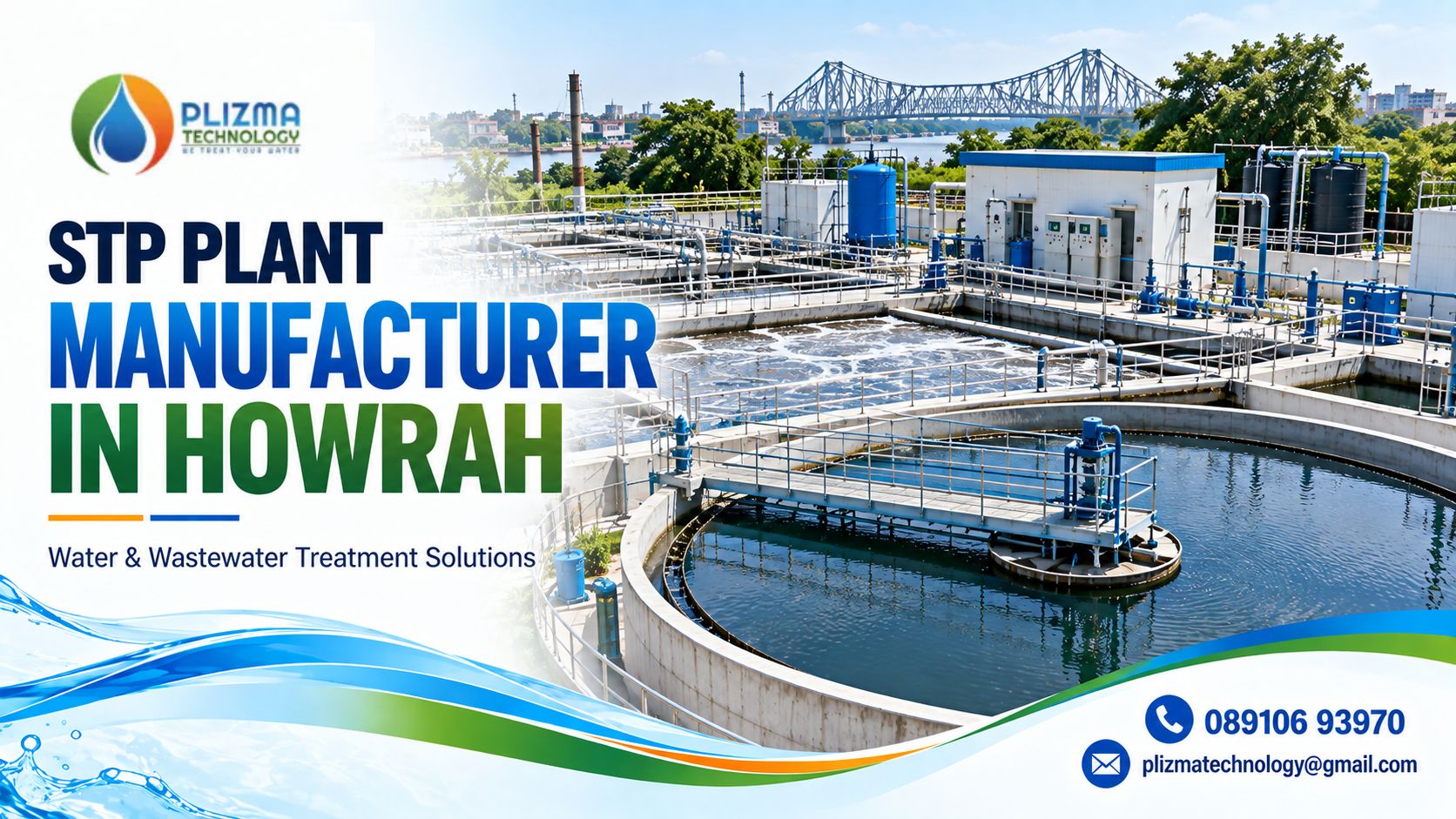
STP plant manufacturer in howrah
2026-09-23 | by Joydip Manna
STP Plant Manufacturer in Howrah: Building Reliable Sewage Treatment Systems
Sewage treatment plants have become an essential part of modern residential, commercial and industrial infrastructure. As cities expand and water consumption increases, the amount of sewage generated every day also keeps increasing. This wastewater cannot simply be released into the environment without proper treatment. It contains organic matter, suspended solids, pathogens and other pollutants that can affect water bodies, soil and public health.
This is where a properly designed Sewage Treatment Plant (STP) becomes important.
In Howrah, the growth of residential complexes, commercial establishments, hospitals, hotels, institutions and industrial facilities has increased the requirement for reliable wastewater treatment systems. An STP helps these facilities treat sewage before discharge or suitable reuse, while supporting better water management.
But an effective STP is not simply a collection of tanks, pumps and blowers. Its performance depends on treatment technology, hydraulic loading, biological conditions, equipment selection, operation and maintenance. This makes the role of an experienced STP plant manufacturer in Howrah particularly important.
What is a Sewage Treatment Plant?
A Sewage Treatment Plant is a system designed to treat domestic sewage and remove pollutants before the treated water is discharged or reused for appropriate applications.
Sewage normally contains suspended solids, biodegradable organic matter, microorganisms, nutrients and other contaminants. The treatment process uses physical and biological methods to progressively reduce these pollutants.
A typical STP can include:
- Screening
- Grit removal
- Equalization
- Biological treatment
- Secondary clarification
- Filtration
- Disinfection
- Sludge treatment and handling
The exact process depends on the sewage characteristics, plant capacity, available land and required treated-water quality.
Why STP Plants are Important for Howrah
Urban development creates a continuous wastewater-management requirement.
Residential buildings, hotels, hospitals, offices, educational institutions and industries generate sewage every day. Without adequate treatment, untreated sewage can enter drains and natural water bodies, increasing organic and microbial pollution.
A properly functioning STP helps reduce this pollution load.
It can also support water conservation when treated sewage is reused for suitable non-potable applications such as gardening, flushing and other utility purposes.
This is why sewage treatment is no longer only about disposal. It is increasingly connected with water recovery, environmental protection and responsible resource management.
STP Plant Manufacturing in Howrah
Manufacturing an STP requires coordination between process design, mechanical equipment, electrical systems and civil structures.
An STP plant manufacturer may be involved in:
- Process design
- Capacity calculation
- Equipment selection
- Tank and piping design
- Fabrication
- Electrical and automation systems
- Installation
- Commissioning
- Testing
- Operation and maintenance support
The plant configuration changes according to the application. A residential STP, hospital STP and industrial-campus STP may have very different requirements even when their nominal capacities are similar.
MBBR Sewage Treatment Plant
MBBR, or Moving Bed Biofilm Reactor, is a biological treatment technology used in many sewage treatment applications.
The process uses carrier media inside an aerated reactor. Microorganisms grow on the surface of this media and help degrade biodegradable organic matter.
MBBR can be useful where:
- Compact treatment is required
- Biological loading varies
- Existing capacity needs to be increased
- Space is limited
Aeration and media movement need to be properly controlled because biological performance depends on maintaining suitable operating conditions.
SBR Sewage Treatment Plant
Sequencing Batch Reactor, or SBR, treats sewage through a controlled sequence of operations inside a reactor.
The process generally involves filling, aeration, settling and decanting.
SBR systems can combine several treatment functions within the same reactor, which can be useful where compact layouts are required.
Automation becomes an important part of SBR operation because the treatment cycles need to follow defined timing and process conditions.
Packaged STP Systems
Packaged sewage treatment plants are often considered for projects where installation time and available space are important.
These systems can integrate several treatment components into a compact arrangement.
They may be suitable for:
- Residential developments
- Hotels
- Small commercial buildings
- Institutions
- Construction and temporary facilities
- Other space-constrained projects
The packaged approach does not remove the need for proper design. Sewage flow, loading, treated-water requirements and sludge management still need to be considered.
STP for Residential Complexes
Residential developments generate sewage mainly from toilets, bathrooms, kitchens and other domestic activities.
The treatment plant needs to accommodate daily flow variations because sewage generation is not uniform throughout the day.
For residential projects, the STP may include biological treatment followed by clarification, filtration and disinfection.
Where permitted and where the treated-water quality is appropriate, reclaimed water can be used for gardening, flushing and other non-potable applications.
STP for Hotels and Commercial Buildings
Hotels and commercial buildings have changing occupancy and usage patterns.
A hotel may experience high sewage generation during certain periods and much lower loading at other times. Commercial buildings can also have strong daily flow variations.
The STP therefore needs sufficient hydraulic flexibility and biological stability.
STP for Hospitals
Hospital wastewater requires additional attention because it can contain chemicals, pharmaceuticals, disinfectants and other substances associated with healthcare operations.
The treatment approach needs to consider the source and characteristics of the wastewater rather than treating every hospital wastewater stream as ordinary domestic sewage.
Where required, additional treatment or source-specific management may be incorporated into the overall wastewater system.
STP and ETP Are Not the Same
A common mistake in wastewater management is treating STP and ETP as interchangeable systems.
An STP treats sewage, generally from domestic and similar sources.
An ETP treats industrial effluent, where wastewater may contain process chemicals, dyes, oils, heavy metals or other industry-specific contaminants.
A factory may require both systems when domestic sewage and industrial process wastewater are generated separately.
The treatment technology should therefore be selected according to the actual wastewater characteristics.
How to Select a STP Plant Manufacturer in Howrah
Selecting a STP manufacturer should not be based only on equipment price. The manufacturer should understand sewage characteristics, treatment requirements, available space, operation and long-term maintenance.
Sewage Testing
Wastewater testing should come first. Parameters such as pH, BOD, COD, TSS, ammonia, nitrogen, phosphate, oil and grease help determine the correct treatment process. Sewage quality can vary between residential buildings, hotels, hospitals and commercial facilities.
Capacity
STP capacity is generally specified in KLD or MLD. The design should consider average and peak sewage flow, occupancy, water consumption, operating patterns and future requirements.
Treated-Water Quality
The required treatment depends on the final use. Gardening, flushing, cooling and discharge applications may have different quality requirements. Disinfection may also be required where pathogen control is important.
Space and Technology
The manufacturer should design around the available land, including tanks, blowers, pumps, sludge handling, electrical panels and maintenance access. Technologies such as MBBR, SBR, MBR and activated sludge systems can be considered depending on sewage quality, capacity and treated-water requirements.
Automation and Sludge Management
PLC controls, sensors, flow meters and remote monitoring can improve plant operation. At the same time, sludge generation and dewatering must be planned from the beginning using suitable equipment where required.
Maintenance Support
An STP needs regular maintenance of blowers, pumps, diffusers, electrical systems and instrumentation, along with proper biological process control. Therefore, manufacturer support after installation is an important part of selection.
In short, compare manufacturers on engineering capability, treatment technology, customization, operating requirements and after-sales support—not only the quoted price.
STP and Water Conservation
Sewage treatment also supports water conservation. Where treated sewage meets the required quality, it can be reused for gardening, toilet flushing, cooling and other non-potable applications.
This reduces dependence on fresh water and makes sewage treatment part of a broader water-management approach.
STP vs ETP vs WTP
These treatment systems serve different purposes:
- WTP: Treats raw water for a specific use.
- STP: Treats domestic sewage from toilets, bathrooms, kitchens and similar sources.
- ETP: Treats industrial wastewater generated from manufacturing processes.
The treatment system should always be selected according to the wastewater source and required treated-water quality.
Why Local STP Support Matters
For projects in Howrah and nearby areas, local technical support can help during site inspection, installation and commissioning.
Important factors include sewage flow, occupancy, available space, drainage, electrical supply, treated-water storage, sludge handling and the final reuse or discharge point.
Existing civil structures can also affect tank dimensions, piping levels, pumping requirements and equipment access.
Plizma Technology for Sewage Treatment
Plizma Technology provides STP, ETP, WTP and wastewater treatment solutions for different applications.
Depending on the project, an STP may include screening, biological treatment, clarification, filtration, disinfection and sludge handling.
Technologies such as MBBR, SBR and MBR can be considered based on sewage characteristics, capacity, available space, required treated-water quality and operating conditions.
The objective is to develop a treatment system based on actual site requirements rather than simply using a standard configuration.
Conclusion
A STP plant manufacturer in Howrah can support residential, commercial, industrial, hotel and institutional projects with suitable sewage treatment solutions.
Proper STP design starts with understanding the sewage source, hydraulic flow, required treated-water quality and site conditions. The appropriate biological and supporting treatment processes can then be selected according to the project requirement.
Frequently Asked Questions
Q1. What is an STP plant?
An STP treats domestic sewage by reducing pollutants before reuse or discharge.
Q2. Which STP technology is suitable?
MBBR, SBR, MBR and other technologies can be selected based on project requirements.
Q3. Is MBR required in every STP?
No, MBR is used where the required treatment quality and operating conditions justify membrane treatment.
Q4. How is STP capacity calculated?
Capacity depends on sewage generation, occupancy, water consumption and peak flow.
Q5. What tests are required before STP design?
Common parameters include pH, BOD, COD, TSS, TDS, ammonia and microbiological characteristics.
Q6. Can treated sewage be reused?
Yes, treated sewage can be reused for suitable non-potable applications when the required quality is achieved.
RECENT ARTICLE'S

2026-09-28