

Recent
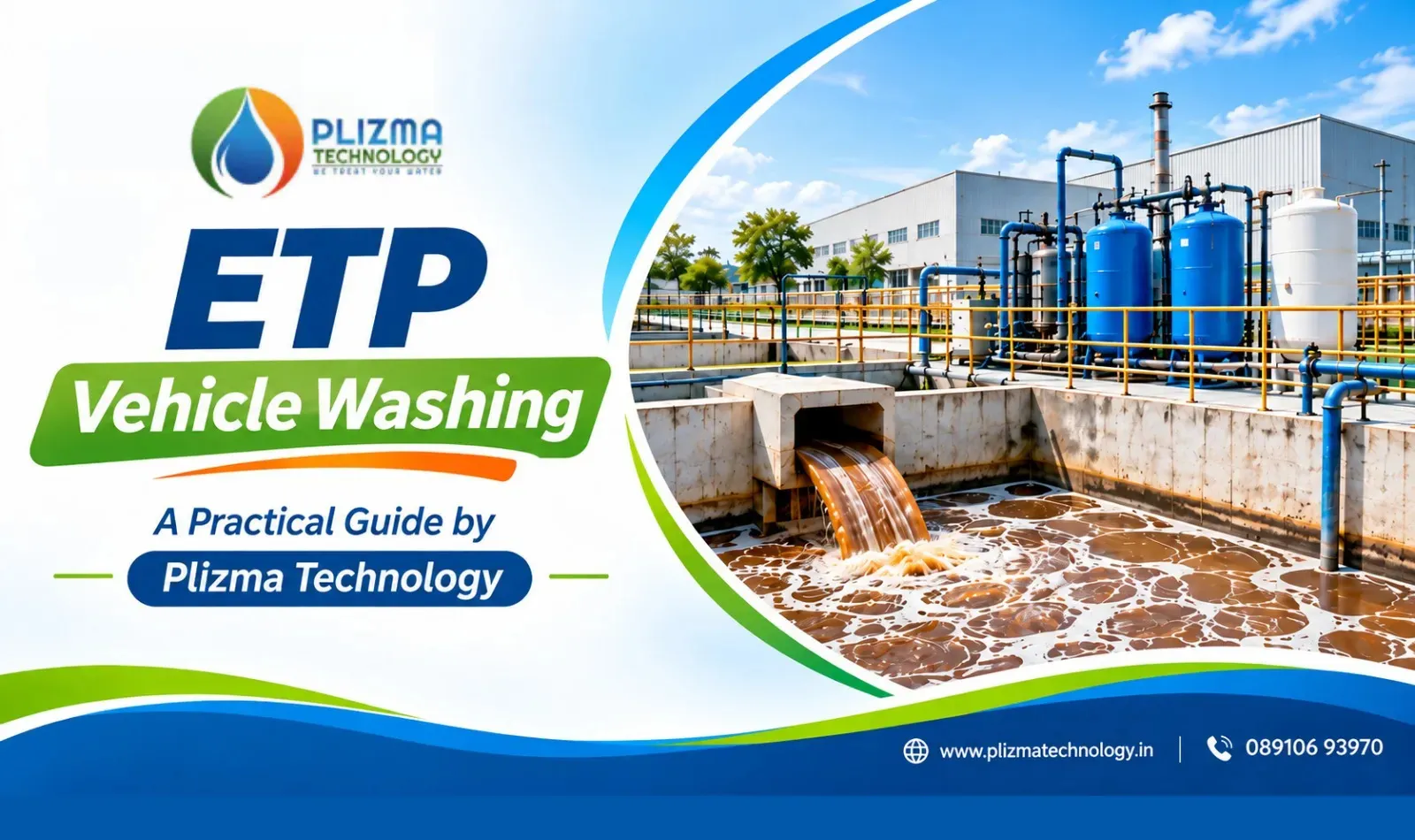
ETP Vehicle washing : A Practical Guide by Plizma Technology
2026-11-11 | by Joydip Manna
Vehicle washing generates wastewater containing mud, sand, oil, grease, detergents, wax, and fine suspended particles. Releasing this water into open drains or onto land without suitable treatment can create pollution and regulatory problems. An Effluent Treatment Plant (ETP) collects and treats wastewater from car wash centres, automobile workshops, truck washing facilities, and fleet maintenance yards. Treated water may be reused for selected activities or discharged when it meets applicable requirements. The process depends on wastewater volume, quality, available space, and intended use.
What Is Present in Vehicle Washing Wastewater?
Vehicle washing wastewater changes according to vehicle type, washing method, cleaning chemicals, and the condition of the vehicle. A passenger car wash generally produces a different pollution load from a truck or construction equipment washing area. Still, several contaminants are commonly found.
- Oil and grease: These come from engines, gearboxes, chassis, lubricants, and road residues. Free oil can float on the water surface, while emulsified oil may remain mixed in the wastewater.
- Suspended solids (TSS): Mud, sand, dust, brake particles, and road grime increase turbidity and can settle inside collection tanks and pipelines.
- Detergents and surfactants: Soaps, shampoos, waxes, and cleaning agents can affect foaming and may make oil separation more difficult.
- Organic pollutants: Soil residues, vehicle deposits, and cleaning products can contribute to the wastewater’s organic load.
- Variable pH: Different washing chemicals can cause changes in pH, which may affect downstream treatment.
Wastewater characteristics should therefore be checked before equipment is selected. A system designed without understanding the pollution load may not deliver consistent results.
Why Vehicle Washing Centres Need an ETP
Every facility, from a two-wheeler shop to a commercial truck depot, must consider what happens to wastewater after washing. Untreated oil, grease, detergents, and suspended particles can enter drains, soil, and nearby water bodies. An ETP provides a controlled treatment route and can support water conservation through suitable non-potable reuse. However, clear-looking water is not automatically suitable for every application; quality depends on intended use and must be verified by testing.
Where Are Vehicle Washing ETP Systems Used?
Vehicle washing ETPs are used across automobile and transport operations:
- Car washing centres: Wastewater from exterior washing, underbody cleaning, and detailing.
- Two-wheeler service centres: Water containing mud, detergent, oil, and road dust.
- Automobile workshops: Wastewater from vehicle servicing, floor cleaning, and component washing.
- Truck and bus depots: Larger wastewater volumes and often higher quantities of grit and grease.
- Transport and logistics facilities: Cleaning operations at fleet yards and maintenance centres.
- Construction equipment washing: Wastewater with heavy soil, sand, grease, and other deposits.
- Automobile dealerships: Wastewater generated at authorised service and washing facilities.
Construction equipment washing generally needs greater grit removal, while car detailing may use more cleaning chemicals. One standard ETP design is not suitable for every application.
Standard ETP Treatment Process for Vehicle Washing
A vehicle wash ETP combines physical separation, chemical treatment, filtration, and, where required, disinfection. The arrangement depends on wastewater quality and intended use.
1. Screen and Grit Trap
Wastewater passes through a screen that catches plastic, leaves, cloth, and debris. A grit trap allows sand and small stones to settle, protecting pumps and pipelines from blockage and abrasion.
2. Oil-Water Separator
An oil-water separator allows free oil to rise to the surface for collection. Performance depends on oil condition, flow, design, and maintenance. Emulsified oil may need additional chemical treatment.
3. Equalization Tank
Flow and pollution strength can change during the day. An equalization tank stores and mixes incoming water, giving downstream treatment a more consistent flow and reducing sudden load variations.
4. Flash Mixer and Flocculator
Coagulation and flocculation are used to bring fine suspended particles together. Chemicals such as alum or polyaluminium chloride (PACl), along with suitable polymers where required, help destabilise small particles and form larger flocs. Chemical selection and dosage should be established through testing; excess dosing increases sludge and operating costs.
5. Tube Settler or Lamella Clarifier
Larger flocs settle under gravity and are collected as sludge. Tube settlers or lamella plates provide additional settling surface in a compact footprint. Remove sludge regularly to prevent carry-over.
6. Pressure Sand Filter and Activated Carbon Filter
A pressure sand filter removes fine suspended particles and reduces turbidity. Activated carbon can reduce residual organics, odour, and some chemical residues. Filters need backwashing and periodic media replacement; they cannot correct poor upstream treatment.
7. Disinfection and Treated-Water Tank
Where required, treated water may pass through UV disinfection or controlled chlorination before storage. Disinfection does not remove dissolved salts, oil, or suspended solids, so it is only one part of the treatment train.
How to Calculate ETP Capacity for a Vehicle Washing Centre
Correct capacity selection is important. An undersized plant may struggle during peak washing hours, while an unnecessarily large system increases capital and operating costs.
The preliminary calculation considers the number of vehicles washed per day, water used per vehicle, and the proportion of water entering the wastewater collection system.
Example: A car washing centre cleans 40 vehicles daily and uses an average of 150 litres per vehicle.
Daily water consumption = 40 × 150 = 6,000 litres per day.
If approximately 85% enters the wastewater collection system:
Wastewater generation = 6,000 × 85% = 5,100 litres per day, or approximately 5.1 KLD.
This is a preliminary estimate only. Peak hourly flow, shifts, wash-bay use, cleaning practices, wastewater quality, and future expansion must also be assessed before finalising plant capacity and layout.
Can Treated Vehicle Wash Water Be Reused?
Yes, treated vehicle wash water can often be reused for selected non-potable applications when its quality is suitable. Possible uses include initial vehicle washing, underbody cleaning, and certain floor-cleaning activities. Final rinsing may need better-quality water to prevent spots, streaks, or residue on vehicle surfaces.
Reuse rate depends on influent quality, treatment efficiency, filter condition, dissolved salts, and operating losses. Recovery of up to 90% may be targeted in suitable installations, but it is not a universal guarantee and must be confirmed through design and operating data.
Factors Affecting Vehicle Washing ETP Installation Cost
The installation cost depends on more than the daily capacity. Important factors include:
- Plant capacity: Average and peak wastewater flow.
- Pollution load: Oil, grease, suspended solids, and detergent concentration.
- Treatment configuration: Requirement for oil separation, chemical treatment, clarification, filtration, or additional polishing.
- Automation: Manual, semi-automatic, or automatic controls.
- Available space: Civil tanks, underground arrangements, or compact skid-mounted equipment.
- Reuse quality: Additional treatment may be required for higher-quality recycled water.
- Operating expenses: Electricity, chemicals, filter backwashing, sludge handling, and maintenance.
Compare quotations against process design, equipment specifications, expected performance, and lifecycle cost. A low initial price does not always mean an economical plant over its operating life.
ETP Maintenance and Common Operating Problems
An ETP needs routine operation and maintenance to keep performance stable.
Daily checks should cover pumps, pipelines, tank levels, oil collection, chemical dosing, and unusual colour or odour changes.
Weekly checks should include screen and grit-trap cleaning, filter-pressure inspection, backwashing when required, and sludge checks. Review chemical consumption and operating records for unusual changes.
Periodic maintenance includes treated-water testing, electrical-panel inspection, pump servicing, dosing-system checks, and filter-media replacement. Collected oil, grit, and sludge need appropriate handling and disposal.
Blocked screens, oil carry-over, poor floc formation, sludge build-up, and rapid filter choking are common problems. They can result from irregular cleaning, incorrect dosing, changing wastewater quality, or inadequate preliminary treatment. Follow manufacturer guidance and actual operating conditions when setting maintenance schedules.
Environmental Compliance for Vehicle Washing Centres in India
Vehicle washing businesses should check the relevant State Pollution Control Board (SPCB) or Pollution Control Committee requirements, CPCB guidance, consent conditions, and local rules. Depending on location, scale, activity, and exemptions, permissions may include Consent to Establish (CTE), Consent to Operate (CTO), groundwater permissions, and wastewater testing requirements.
Important parameters may include pH, Biochemical Oxygen Demand (BOD), Chemical Oxygen Demand (COD), Total Suspended Solids (TSS), and oil and grease. The applicable limits depend on the regulatory framework, receiving environment, and specific consent conditions. A single discharge value should not be assumed to apply to every vehicle washing facility.
It is also important to distinguish between discharge quality and reuse quality. Water that meets a particular discharge requirement is not automatically suitable for every washing operation. Installation of an ETP alone does not guarantee regulatory approval; the facility must meet the requirements that apply to its operation and demonstrate performance through suitable records and testing.
Vehicle Washing ETP Solutions by Plizma Technology
At Plizma Technology, wastewater treatment requirements are assessed according to the actual operation rather than assuming every vehicle washing centre needs the same plant. A small independent car wash may require a compact system, while a large automobile workshop, fleet maintenance yard, or truck washing depot may need a customised arrangement.
Plizma Technology provides water and wastewater treatment solutions, including ETP design, manufacturing, installation, commissioning, upgrading, and maintenance support. For vehicle washing applications, the treatment arrangement may include oil and grease separation, equalization, physicochemical treatment, clarification, filtration, and water recycling.
Project assessment considers wastewater generation, pollutant characteristics, space, reuse objectives, operating hours, and environmental requirements. Technical assessment should determine process configuration and capacity, rather than relying only on a nominal KLD rating or initial quotation.
Frequently Asked Questions
1. Is an ETP necessary for a car washing centre?
Requirements depend on the facility’s activity, location, and applicable environmental conditions. Vehicle washing wastewater can contain oil, grease, detergents, and suspended solids, so operators should confirm the requirements with the relevant SPCB or Pollution Control Committee.
2. What is the difference between an ETP and a water recycling system?
An ETP treats wastewater by removing pollutants. A recycling system includes treatment and the additional storage, filtration, or pumping arrangements needed to reuse treated water for a defined purpose. Both functions can be integrated.
3. Can a small vehicle washing centre install an ETP?
Yes. Compact systems can be considered for smaller facilities. Capacity and process selection should be based on wastewater generation, pollution load, available space, and treatment objectives.
4. How much water can a vehicle wash ETP recycle?
Recovery depends on plant design, wastewater quality, treatment performance, and operating losses. A high recovery percentage may be possible in suitable installations, but it should be confirmed through engineering assessment rather than assumed.
5. How often should a vehicle washing ETP be maintained?
Screens, grit traps, oil collection, pumps, and chemical dosing should be checked routinely. Filters, sludge systems, and treated-water quality need scheduled inspection according to operating conditions and manufacturer recommendations.
6. What is the best ETP technology for vehicle washing wastewater?
There is no single process suitable for every site. The right combination depends on oil and grease, suspended solids, detergent concentration, flow variation, and the required reuse or discharge quality.
Conclusion
Vehicle washing is essential for automobile maintenance, but wastewater management cannot be overlooked. A properly designed ETP removes oil, grease, suspended solids, and other pollutants while supporting reuse and responsible discharge. Correct capacity, treatment stages, maintenance, and compliance checks all contribute to long-term performance.
Plizma Technology provides water and wastewater treatment solutions across India, including Kolkata, Howrah, West Bengal, Odisha, Jharkhand, and Bihar. Before installing or upgrading an ETP, businesses should assess wastewater quality, daily flow, available space, and reuse requirements.
For an ETP for your vehicle washing centre, contact Plizma Technology to discuss capacity, treatment requirements, installation conditions, and suitable system arrangements.
RECENT BLOG
ETP manufracturer for steel Industry in Durgapur, West Bengal
2026-11-06
Wastewater Treatment Plant for Paper & Pulp Industry in India
2026-11-01
Why Mining Wastewater Needs Specialized ETP Treatment in Raniganj, West Bengal
2026-10-26
ETP for Jute Mill Wastewater Treatment in West Bengal: Improving Treatment Reliability
2026-10-22