

Recent
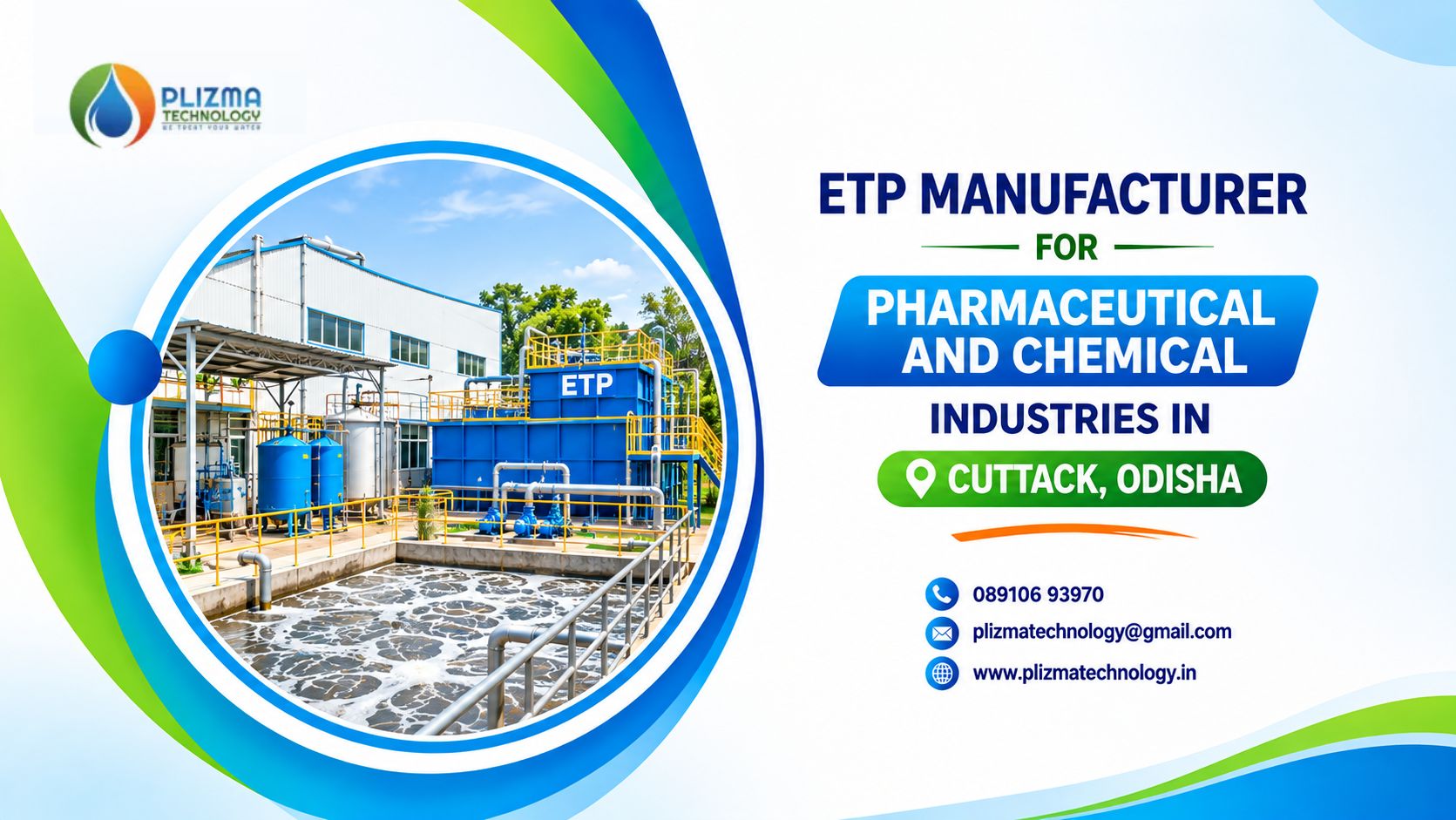
ETP Manufacturer for Pharmaceutical and Chemical Industries in Cuttack, Odisha
2026-11-14 | by Joydip Manna
Industrial development is growing rapidly in Odisha, and pharmaceutical and chemical manufacturing industries are becoming an important part of this industrial expansion. However, with increasing manufacturing activities, the generation of industrial wastewater is also increasing. This wastewater often contains harmful chemicals, organic pollutants, suspended solids, heavy metals and other contaminants that cannot be released directly into the environment.
This is where an Effluent Treatment Plant (ETP) becomes extremely important. An ETP is not simply a wastewater cleaning arrangement. It is an engineered treatment system that helps industries manage their wastewater, recover reusable water and meet applicable environmental requirements.
If you are searching for an ETP manufacturer for pharmaceutical and chemical industries in Cuttack, Odisha, understanding the treatment technology is equally important as selecting the manufacturer. Pharmaceutical and chemical wastewater have different characteristics, and therefore, both industries require carefully planned treatment solutions.
Plizma Technology focuses on the importance of industrial wastewater management and customized treatment solutions. Let us understand how ETP plants work, which technologies are required and what industries should consider before selecting an ETP system.
Understanding the Importance of ETP in Pharmaceutical and Chemical Industries
Pharmaceutical and chemical manufacturing units generate wastewater through several activities. These include equipment washing, reactor cleaning, chemical processing, production operations, floor washing and cooling processes.
The wastewater composition depends on the manufacturing activity and raw materials used during production.
For example, pharmaceutical wastewater may contain residual medicines, organic solvents, fermentation residues and high concentrations of COD. On the other hand, chemical manufacturing wastewater may contain acids, alkalis, dissolved salts, heavy metals and toxic chemical compounds.
An Effluent Treatment Plant treats these contaminants through physical, chemical and biological treatment processes.
Some important functions of an industrial ETP include:
- Removing suspended solids and floating impurities.
- Reducing BOD and COD concentrations.
- Neutralizing acidic and alkaline wastewater.
- Reducing heavy metals and toxic chemical compounds.
- Supporting industrial wastewater recycling and reuse.
- Helping industries comply with applicable pollution control requirements.
One important thing to understand is that pharmaceutical and chemical wastewater cannot always be treated using the same conventional treatment process. The treatment arrangement needs to be selected after understanding the actual wastewater characteristics.
Why Pharmaceutical Industries Require Specialized ETP Systems
Pharmaceutical manufacturing produces wastewater with complex chemical characteristics. Different production activities generate different wastewater streams, and their pollutant concentrations can change significantly.
Some common pharmaceutical wastewater contaminants include:
- High Chemical Oxygen Demand (COD).
- Biochemical Oxygen Demand (BOD).
- Residual pharmaceutical compounds.
- Organic solvents and chemical intermediates.
- Ammonia and dissolved salts.
- Suspended solids.
- Toxic and poorly biodegradable compounds.
The biggest challenge is that certain pharmaceutical compounds can affect microbial activity during biological treatment. This may reduce treatment efficiency and create operational problems in the aeration tank.
Therefore, pharmaceutical wastewater often requires proper segregation and pretreatment before entering the biological treatment system.
Treatment Technologies Used in Pharmaceutical ETPs
1. Chemical Oxidation
Chemical oxidation helps break down complex organic pollutants and reduce toxicity. Depending on the wastewater characteristics, technologies such as Fenton oxidation, ozone treatment and other advanced oxidation processes may be considered.
2. Coagulation and Flocculation
These processes help remove suspended particles and colloidal impurities. Chemicals such as PAC, alum and suitable polymers are used to form larger particles that can settle inside clarifiers.
3. Biological Treatment
Biological treatment uses microorganisms to break down biodegradable organic matter. Activated Sludge Process (ASP), Moving Bed Biofilm Reactor (MBBR) and other suitable biological technologies can be selected.
4. Membrane Treatment
Ultrafiltration and Reverse Osmosis (RO) are used for additional purification when higher-quality treated water is required for industrial reuse.
The selection of these technologies depends on COD, TDS, toxicity, biodegradability and the final treated-water requirement.
ETP Requirements for Chemical Manufacturing Industries
Chemical manufacturing industries generate wastewater containing different types of pollutants. Depending on the manufacturing process, it may include acids, alkalis, solvents, dyes, inorganic salts and heavy metals.
These contaminants create different treatment challenges, and a standard biological treatment plant may not be sufficient.
A properly designed chemical industry ETP generally considers the following requirements.
pH Neutralization: Acidic and alkaline wastewater needs controlled neutralization before further treatment. Automatic chemical dosing and online pH monitoring help maintain process stability.
Heavy Metal Removal: Chemical precipitation and other suitable treatment processes help reduce dissolved heavy metals from industrial wastewater.
COD Reduction: High COD wastewater may require chemical oxidation, coagulation and biological treatment in combination.
Oil and Grease Removal: Oil separation arrangements prevent floating oils and grease from affecting downstream treatment processes.
Sludge Management: Chemical treatment generates sludge that requires proper collection, dewatering, characterization and disposal according to applicable hazardous waste requirements.
Water Recovery: Filtration, ultrafiltration and RO systems can be incorporated when treated wastewater needs to be reused in industrial operations.
A chemical industry’s ETP should therefore be designed according to the actual manufacturing process rather than only its daily wastewater generation.
Step-by-Step ETP Treatment Process for Pharmaceutical and Chemical Industries
An industrial Effluent Treatment Plant works through multiple treatment stages. Each stage removes particular pollutants before wastewater reaches the final discharge or reuse stage.
1. Preliminary Treatment
Preliminary treatment removes larger solid materials and unwanted impurities from incoming wastewater.
This stage generally includes bar screens, collection chambers, oil traps and grit removal arrangements.
These components protect pumps, pipelines and downstream treatment equipment from blockages and mechanical damage.
2. Equalization Tank
The equalization tank is one of the most important components of an industrial ETP.
Industrial wastewater generation is not uniform throughout the day. Production activities and equipment washing may create sudden changes in flow rate and pollutant concentration.
The equalization tank collects wastewater and balances these variations before sending it to subsequent treatment stages.
Mixers or aeration arrangements can be installed depending on wastewater characteristics. Proper equalization also helps prevent sudden organic and hydraulic loading shocks.
3. Neutralization Tank
The neutralization tank controls wastewater pH through chemical dosing.
Acids or alkalis are added depending on the incoming wastewater characteristics. Online pH sensors can monitor the process and support automatic chemical dosing.
This stage is especially important for pharmaceutical and chemical industries where wastewater pH can change significantly during manufacturing operations.
4. Primary Chemical Treatment
Primary chemical treatment generally involves coagulation and flocculation.
Coagulants such as PAC, alum and ferric chloride help destabilize suspended particles. Flocculants then assist in forming larger particles that can settle easily.
The wastewater enters a primary clarifier where these particles are separated from the liquid.
5. Secondary Biological Treatment
Biological treatment removes biodegradable organic pollutants through microbial activity.
Some commonly used technologies include:
- Activated Sludge Process (ASP).
- Moving Bed Biofilm Reactor (MBBR).
- Sequential Batch Reactor (SBR).
- Membrane Bioreactor (MBR).
The selection depends on organic loading, wastewater biodegradability, available space and treated-water quality requirements.
However, toxic industrial wastewater should not be directly introduced into biological tanks without suitable pretreatment and toxicity assessment. Otherwise, microbial activity may become unstable and treatment performance can deteriorate.
6. Secondary Clarification
After biological treatment, wastewater enters a secondary clarifier.
The clarifier separates biological sludge from treated water through sedimentation. A portion of the settled sludge may be returned to the aeration tank, while excess sludge is removed for further processing.
7. Tertiary Treatment
Tertiary treatment provides additional purification when required.
Common technologies include Pressure Sand Filters, Activated Carbon Filters, Ultrafiltration, Reverse Osmosis and UV disinfection.
For pharmaceutical and chemical manufacturing facilities, tertiary treatment becomes particularly important when treated water is intended for industrial reuse or additional contaminant removal.
Important Components of an Industrial ETP Plant
A properly designed ETP requires several treatment components to work together.
Bar Screen: Removes coarse solid materials from incoming wastewater.
Equalization Tank: Balances wastewater flow and pollutant concentration.
Neutralization Tank: Controls wastewater pH through chemical dosing.
Chemical Dosing System: Provides chemicals required for treatment processes.
Flocculation Tank: Helps suspended particles form larger settleable flocs.
Primary Clarifier: Separates chemical sludge from wastewater.
Aeration Tank: Supports biological treatment through microbial activity.
Secondary Clarifier: Separates biological sludge from treated water.
Pressure Sand Filter: Removes residual suspended solids.
Activated Carbon Filter: Adsorbs suitable organic compounds.
RO System: Reduces dissolved salts and provides additional purification.
Sludge Dewatering System: Reduces sludge moisture for further handling and disposal.
The exact equipment arrangement depends on wastewater testing and the required treatment performance.
ETP Capacity Requirements for Pharmaceutical and Chemical Industries
Capacity planning is another important consideration when selecting an ETP manufacturerin Cuttack, Odisha.
ETP capacity is generally measured in KLD (Kilolitres per Day). The required capacity depends on wastewater generation, manufacturing operations and future production requirements.
For small pharmaceutical units, the indicative capacity may range from 10–25 KLD. Medium pharmaceutical facilities may require 25–100 KLD, while large pharmaceutical facilities may require 100–250 KLD.
For chemical manufacturing industries, small facilities may require 25–100 KLD, medium facilities may require 100–250 KLD and large facilities may require 250–1000 KLD.
These are indicative planning ranges, not mandatory regulatory capacities. Actual requirements need to be established through a water balance and wastewater characterization study.
Two manufacturing facilities generating 100 KLD wastewater may require completely different treatment arrangements because their COD, TDS, toxicity and biodegradability can be very different.
Environmental Regulations Applicable to Industries in Odisha
Industrial wastewater treatment is governed by applicable environmental legislation and discharge standards.
For pharmaceutical and chemical industries in Cuttack, Odisha, the Odisha State Pollution Control Board (OSPCB) plays an important role in regulating industrial wastewater management.
Some important regulatory requirements include:
Water (Prevention and Control of Pollution) Act, 1974: This legislation provides the framework for controlling water pollution and regulating industrial effluent discharge.
Environment (Protection) Act, 1986: It provides the framework for environmental standards and pollution control requirements.
Pharmaceutical Industry Standards: The Ministry of Environment, Forest and Climate Change notified pharmaceutical industry effluent standards through GSR 541(E), dated 6 August 2021.
The notified pharmaceutical standards include pH of 6.0–8.5, BOD of 30 mg/L, COD of 250 mg/L and TSS of 100 mg/L, among other parameters. Additional parameters apply depending on the industry and wastewater characteristics.
Consent to Establish and Consent to Operate: Applicable industries need to obtain necessary permissions from OSPCB before establishing and operating their manufacturing facilities.
The consent conditions may specify discharge limits, monitoring requirements and wastewater management arrangements. Industries must follow the conditions applicable to their particular facility.
Choosing the Right ETP Manufacturer in Cuttack, Odisha
Selecting an ETP manufacturer is not simply about comparing equipment prices. The manufacturer needs to understand industrial wastewater chemistry, treatment processes and long-term operational requirements.
Some important considerations include:
- Experience with pharmaceutical and chemical wastewater treatment.
- Ability to understand wastewater analysis reports.
- Customized treatment plant design.
- Appropriate chemical and biological treatment selection.
- PLC and SCADA automation wherever required.
- Energy-efficient pumps, blowers and equipment.
- Proper sludge management arrangements.
- Installation, commissioning and after-sales support.
A poorly designed ETP can create repeated operational problems. Biological process failure, excessive chemical consumption, membrane fouling and sludge accumulation are some common issues faced by industrial treatment facilities.
Therefore, industries should evaluate lifecycle operating costs and treatment reliability instead of focusing only on initial installation expenses.
Industrial Wastewater Treatment Solutions by Plizma Technology
Plizma Technology recognizes the growing importance of industrial wastewater management for pharmaceutical and chemical manufacturing facilities.
Industrial wastewater treatment requires proper engineering and a clear understanding of the pollutants generated during manufacturing operations.
The treatment arrangement should be selected according to wastewater quantity, chemical composition, production requirements and applicable environmental standards.
Important treatment areas include customized ETP design, chemical treatment, biological wastewater treatment, equalization and neutralization systems, filtration, membrane treatment and sludge management.
For industries operating in Cuttack and other parts of Odisha, the initial project assessment should include wastewater analysis, manufacturing process details, water balance, available installation space and final treated-water requirements.
This information helps establish an appropriate treatment configuration instead of depending on a standard plant design for every industry.
Frequently Asked Questions (FAQs)
Q1. Which ETP is suitable for pharmaceutical industries in Cuttack?
Pharmaceutical industries generally require customized ETP systems involving wastewater segregation, chemical pretreatment, biological treatment and tertiary polishing. The exact configuration depends on COD, BOD, TDS, toxicity and wastewater biodegradability.
Q2. Why do chemical industries require specialized ETP plants?
Chemical industries generate wastewater containing acids, alkalis, heavy metals, solvents and other chemical compounds. These pollutants may require neutralization, chemical precipitation, oxidation and specialized biological treatment.
Q3. What is the normal capacity of an industrial ETP?
Industrial ETP capacity depends on wastewater generation. Small facilities may require 10–25 KLD, whereas larger pharmaceutical and chemical manufacturing units may require several hundred KLD or more.
Q4. Is an ETP mandatory for pharmaceutical and chemical industries in Odisha?
Applicable industrial units generating trade effluent must follow relevant pollution control requirements and obtain necessary permissions from OSPCB. The specific requirements depend on manufacturing activity and applicable consent conditions.
Q5. Can treated ETP water be reused in pharmaceutical and chemical factories?
Yes. Treated wastewater can be reused for suitable applications such as cooling tower makeup, floor washing and gardening. Additional membrane treatment may be required depending on the intended reuse quality.
Q6. What information is required before installing an ETP?
Manufacturers generally require wastewater quantity, laboratory analysis, manufacturing process details, operating hours, available land, discharge or reuse requirements and applicable pollution control consent conditions.
Conclusion
Effluent Treatment Plants have become essential infrastructure for pharmaceutical and chemical manufacturing industries. Increasing industrial production also increases wastewater generation, and this wastewater contains pollutants that cannot be managed through ordinary sewage treatment processes.
For industries in Cuttack, Odisha, selecting an appropriate ETP manufacturer requires understanding wastewater characteristics, treatment technologies and environmental regulations.
A well-designed ETP combines preliminary, chemical, biological and tertiary treatment processes according to actual industrial requirements. It also supports water recycling, reduces freshwater consumption and helps industries manage their environmental responsibilities.
The important thing is that every industrial wastewater stream is different, and treatment design should reflect this difference. Plizma Technology recognizes the importance of properly engineered industrial wastewater treatment systems for pharmaceutical and chemical applications, with attention to treatment performance, operational requirements and environmental protection.
RECENT BLOG
ETP for Vehicle washing : A Practical Guide by Plizma Technology
2026-11-11
ETP manufracturer for steel Industry in Durgapur, West Bengal
2026-11-06
Wastewater Treatment Plant for Paper & Pulp Industry in India
2026-11-01
Why Mining Wastewater Needs Specialized ETP Treatment in Raniganj, West Bengal
2026-10-26