2026-09-28



2025-11-05 | by Joydip Manna
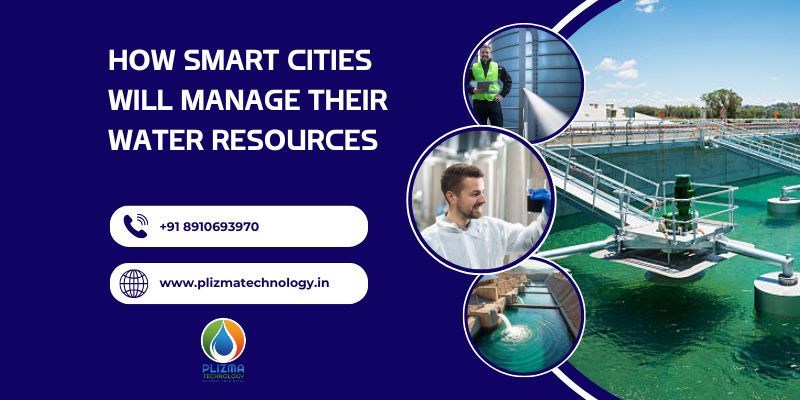
As the urban population of the world is growing exponentially, the cities are rising to the challenge of providing clean, safe, and sustainable water to millions of urban dwellers. Aging and obsolete water infrastructure is not equipped to manage increasing pressures in the wake of climate change, pollution, and water shortage. The municipalities are meeting the challenge by embracing new technologies that utilize data, sensors, and automation in designing smart and more robust water networks. Another issue that the municipalities need to come up with a solution to is the problem of sewage. The problem can be solved through the use of the best sewerage water treatment provider.
In a smart city, water is monitored, metered, and controlled in detail, drop by drop. Sophisticated leak detection, real-time in-situ quality monitoring, and cutting-edge predictive analytics collaborate to predict demand and prevent shortages ahead of time. Technology is changing the manner in which our greatest asset in the city is being managed. Balancing innovation and sustainability with each other in absolute harmony, smart cities not only provide perfect water distribution but also establish perpetual environmental balance and resistance to worldwide water challenges.
Water management in cities is not easy now, honestly getting tighter every year. Demand going up, population increasing, but supply… same or even reducing in some areas. Old pipelines still running, leakages happening, so even available water is not fully reaching users. So when we say smart cities, it is not just about adding technology. It is more about using what is already there in a better way, and not wasting it.
Cities are installing sensors to track flow, pressure, and water quality. Good step, no doubt. Leaks and bursts can now be detected early. But here is where problem comes. Detection happens, but action is slow. Repair teams delayed, approvals delayed, sometimes even data ignored. So water keeps leaking. System looks smart on dashboard, but ground reality same. Actual improvement only comes when response is fast. Otherwise sensors alone not solving anything.
Earlier wastewater was just treated and discharged. Now that approach not sustainable anymore. Freshwater sources already under pressure. Cities are trying to reuse treated water, but consistency is main issue. Treatment must work properly every day, not only when inspected. If quality drops, reuse becomes risky. So many cities upgrading to advanced treatment, but maintaining those systems… still a challenge, especially where manpower or budget is limited.
Large centralized plants need long pipeline networks. That itself becomes expensive and difficult to manage. Because of this, smaller decentralized systems are being used more now. These systems are closer to the source, easier to install, and reduce infrastructure load. But again same story—maintenance. If not maintained properly, they fail quietly and create local problems.
Smart meters are helping, not perfect but helping. When people see their daily usage, they become more careful. Leaks inside homes get detected faster. Wastage reduces. But sometimes issues come—wrong readings, billing confusion—so people lose trust. Still, over time, this is pushing consumers to think about water usage, which earlier was mostly ignored.
Cities are trying to use data for planning—demand forecasting, supply balancing, all that. Good idea, but depends on data quality. Many systems still incomplete. Sensors not calibrated, data gaps, manual entries… so decisions not always accurate. Where systems are properly maintained, benefits are visible. Where not, it becomes guesswork again.
Cities now facing both floods and shortages. One season too much water, next season not enough. So managing water properly is no longer optional. Basic idea is simple, but execution is where difficulty comes—treat water, reuse it, recharge sources. If this cycle works properly, cities become more stable. If not, problems keep repeating.
One more change happening, slowly but important. Wastewater is now being seen as resource. Treatment plants are recovering useful things—energy, nutrients. Phosphorus, for example, can be used as fertilizer. Some plants even generating energy from waste. So instead of only cleaning water, plants are also creating value. But again, this depends on how well systems are operated.
Even with all this, problems still there—power cuts affecting systems, skilled operators not always available, funding delays, land shortage for plants, public hesitation in using treated water. These are practical issues, not technology issues. And they slow down progress a lot.
What is the main goal of smart water management
To reduce losses and use available water properly
Why is wastewater reuse important
Because freshwater sources are limited and cannot meet future demand
Are decentralized systems better
They work well in many cases, but only if properly maintained
Do smart meters really help
Yes, they help reduce wastage, but accuracy and trust are important
What is the biggest issue in smart water systems
Not technology, but operation and maintenance
Smart water management is not about how advanced system looks, it is about how consistently it works. Cities focusing on maintenance, reuse, and proper operation are improving. Others still stuck with leakage and inefficient systems. From industry side, one thing becoming clear… future cities cannot depend only on freshwater. Reuse and better management will become necessary. Plizma Technology keeps seeing same pattern again and again—systems installed, but performance depends on how seriously they are handled after that. That is where real difference comes, not in technology alone.
Direction: Get Here
2026-09-28
2026-09-23