

Water Treatment
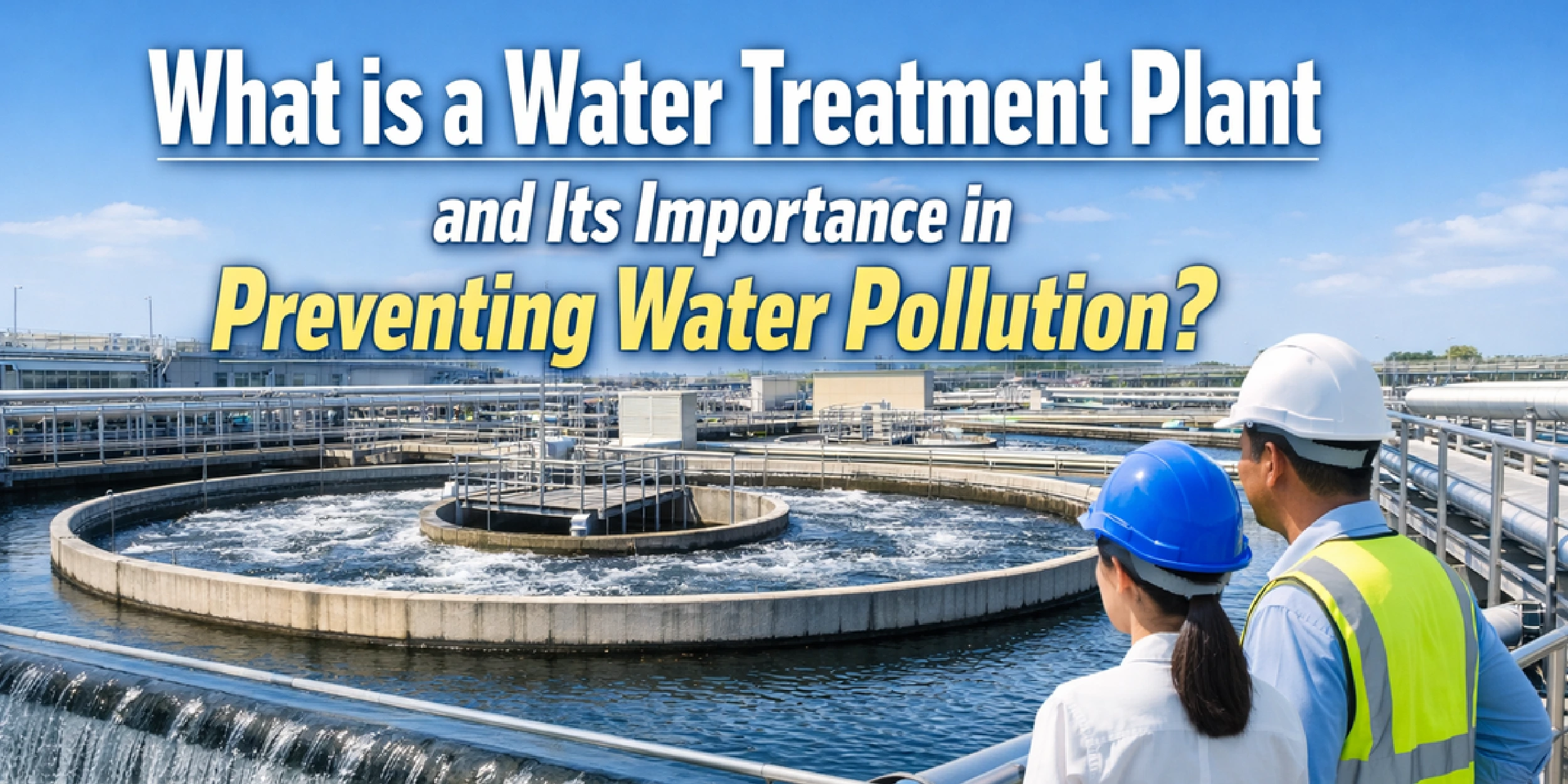
What Is a Water Treatment Plant & How it’s works?
2026-01-14 | by Joydip Manna
Water is one of the most important resources today for cities, factories, and natural ecosystems.
This is not a future risk or an academic projection. It is already visible on ground, every single day. fast urban growth, irregular sewage networks, uncontrolled industrial discharge, and poor upstream planning have pushed most raw water sources beyond safe recovery limits.
Because of this, Water Treatment Plants (WTP) and wastewater treatment systems are no longer background utilities. They have become frontline infrastructure for public health, regulatory survival, and operational continuity.
For industries, residential developments, institutions, and municipalities, a properly engineered
water treatment system stopped being “recommended” long back. Today, it sits directly inside
regulatory frameworks under CPCB and SPCB norms.
It is environmental protection, legal compliance, and risk management combined into one system.
Ignoring it is not oversight. It is exposure.
As Defined by Wikipedia
“Water treatment is any process that improves the quality of water to make it appropriate for a
specific end-use. The end use may be drinking, industrial water supply, irrigation, river flow
maintenance, water recreation or many other uses, including being safely returned to the environment.
Water treatment removes contaminants and undesirable components, or reduces their concentration so
that the water becomes fit for its desired end-use.”
This definition explains what water treatment is in general terms.
What it does not explain is how water treatment behaves in industrial and bulk-supply reality,
where shock loads, seasonal quality swings, inconsistent intake chemistry, and compliance audits
exist together.
In industrial and large-scale applications, water must meet
process-specific quality limits such as hardness, TDS, silica, iron,
microbial counts, organics, and reuse thresholds.
Even a minor deviation can foul membranes, damage heat exchangers, trip boilers,
or invalidate consent conditions issued by pollution control authorities.
This is why engineered WTPs exist.
Not optional. Not cosmetic.
Source:
Wikipedia
What Is a Water Treatment Plant?
A water treatment plant is an essentially engineered facility where raw water taken from rivers, lakes, reservoirs, or underground aquifers is pushed through a series of controlled physical, chemical, and in some cases biological processes. The intent is very clear and very non-negotiable. Suspended solids are separated, disease-causing microorganisms are neutralized, dissolved inorganic and organic contaminants are reduced, and taste, colour, odour issues are corrected.
By the time water exits plant, it is no longer “raw” in any practical sense. It is conditioned water, suitable for human consumption, industrial processes, or compliant discharge.
Technical Overview
A Water Treatment Plant (WTP) is an engineered system designed
to process raw water from rivers, lakes, borewells, or surface reservoirs into
usable water for defined applications.
Based on output requirements, treated water is commonly used for:
- Drinking and domestic supply
- Industrial process and make-up water
- Boiler feed and cooling systems
- Irrigation and landscaping
- Controlled environmental discharge
Unlike household filters, industrial WTPs are never generic.
Design depends on raw-water variability, peak demand patterns,
seasonal contamination, recovery targets, and compliance conditions
under CPCB/SPCB consents.
Shortcut design always shows later, usually during audits,
breakdowns, or membrane failures.
Water Treatment Plant Process: Step-by-Step
1. Coagulation and Flocculation
Coagulants such as alum, ferric chloride, or polymers are dosed to
destabilize fine colloidal particles.
During flocculation, these particles combine into larger flocs
that can be settled or filtered.
Incorrect dosing here quietly ruins downstream performance,
a very common field issue.
2. Sedimentation
The flocs settle by gravity in clarifiers.
This step removes bulk suspended solids and reduces turbidity load on filters.
Poor sludge withdrawal design here leads to carryover and chronic filter choking.
3. Filtration
Clarified water passes through pressure or gravity filters using sand,
anthracite, gravel, or activated carbon.
Filtration removes fine particles, color, and residual organics.
Filter loading rates matter far more than media brand,
often ignored in rushed designs.
4. Disinfection
Disinfection eliminates pathogenic organisms using chlorination,
UV, or ozone.
This step is non-negotiable for potable water and reuse applications
and aligns with WHO and BIS microbial safety requirements.
5. Advanced Treatment (If Required)
For industrial or high-purity applications, additional treatment may include:
- Reverse Osmosis (RO)
- Demineralization (DM)
- Ultrafiltration (UF) / Nanofiltration (NF)
- Ion Exchange Systems
6. Sludge Management
Sludge generated during clarification and filtration must be thickened,
dewatered, and disposed or reused as per CPCB hazardous and solid waste rules.
Ignoring sludge handling is how many plants quietly fall out of compliance.
Purpose of a Water Treatment Plant
- Convert raw or polluted water into usable water
- Remove turbidity, color, taste, and odor
- Protect public health by eliminating pathogens and chemicals
- Enable water usage for drinking, irrigation, and industry
Why Water Treatment Plants Are Important
- Prevent pollution before contaminants enter supply networks
- Ensure reliable water supply for populations and industries
- Enable reuse and reduce freshwater dependency
- Protect ecosystems from toxic and nutrient overload
- Support growth while staying within regulatory limits
WTP vs WWTP: Key Difference
- WTP: Treats raw water for supply or industrial use
- WWTP: Treats used water before reuse or discharge
Role of Wastewater Treatment Plants (WWTPs)
Wastewater from industries, housing, hospitals, and institutions contains
organic load, chemicals, oils, nutrients, and pathogens.
WWTPs remove these through physical, biological, and chemical processes
before reuse or discharge.
Non-compliance results in consent cancellation, penalties, or plant shutdowns.
This is operational fact, not advisory language.
Modern Water & Wastewater Treatment Solutions
Compared to conventional civil-heavy plants, modern packaged and modular
systems offer faster installation, tighter control, and more predictable
compliance when operated correctly.
- Compact and modular layouts
- Shorter commissioning timelines
- Lower operational variability
- Consistent compliance under load changes
Why Choose Plizma Technology?
Plizma Technology works with industrial, institutional,
and infrastructure projects to design and implement water and wastewater
treatment systems aligned with CPCB and SPCB requirements.
The focus stays on engineering logic, operability, and lifecycle compliance,
not brochure specifications.
- Application-specific WTP, STP, ETP, WWTP, and ZLD systems
- Support for consent documentation and regulatory audits
- Energy-efficient and maintainable process selection
- Water reuse planning to reduce freshwater stress
Prefer Listening Instead of Reading?
Listen to This Article:
Frequently Asked Questions
What is a water treatment plant?
A water treatment plant removes physical, chemical, and biological impurities
from raw water so it can be safely used for drinking, industrial processes,
irrigation, or regulated discharge.
Is a water treatment plant mandatory in India?
Yes. As per CPCB and State Pollution Control Board guidelines,
water treatment systems are mandatory for many industrial units,
commercial buildings, and large residential projects.
Can treated water be reused?
Yes. Properly treated water can be reused for cooling towers,
boiler feed, flushing, landscaping, and selected industrial applications
depending on treatment level.
What factors decide WTP design?
Raw water quality, output standards, demand profile, available space,
and regulatory consent conditions primarily decide WTP design.
WTP vs WWTP?
WTP treats raw water for use.
WWTP treats used water for reuse or safe discharge.
Industry note from Plizma Technology:
water treatment systems are infrastructure, not accessories.
They either operate quietly for decades or fail loudly during audits.
There is no middle ground.
👉 Also read:
Why water project fails early and how to prevent it?
Contact:
Click Here
Last updated on: 2026-01-28
RECENT BLOG
Difference Between Softener, RO, and DM Plant
2026-02-25
Zero Liquid Discharge (ZLD) – Is It Becoming Mandatory?
2026-02-20
Top 10 Water And Wastewater Treatmant Plant Manufacturer in Eastern India
2026-02-12
What Is an Effluent Treatment Plant (ETP)? A Complete Guide
2026-02-10