2026-09-28



2026-10-14 | by Joydip Manna
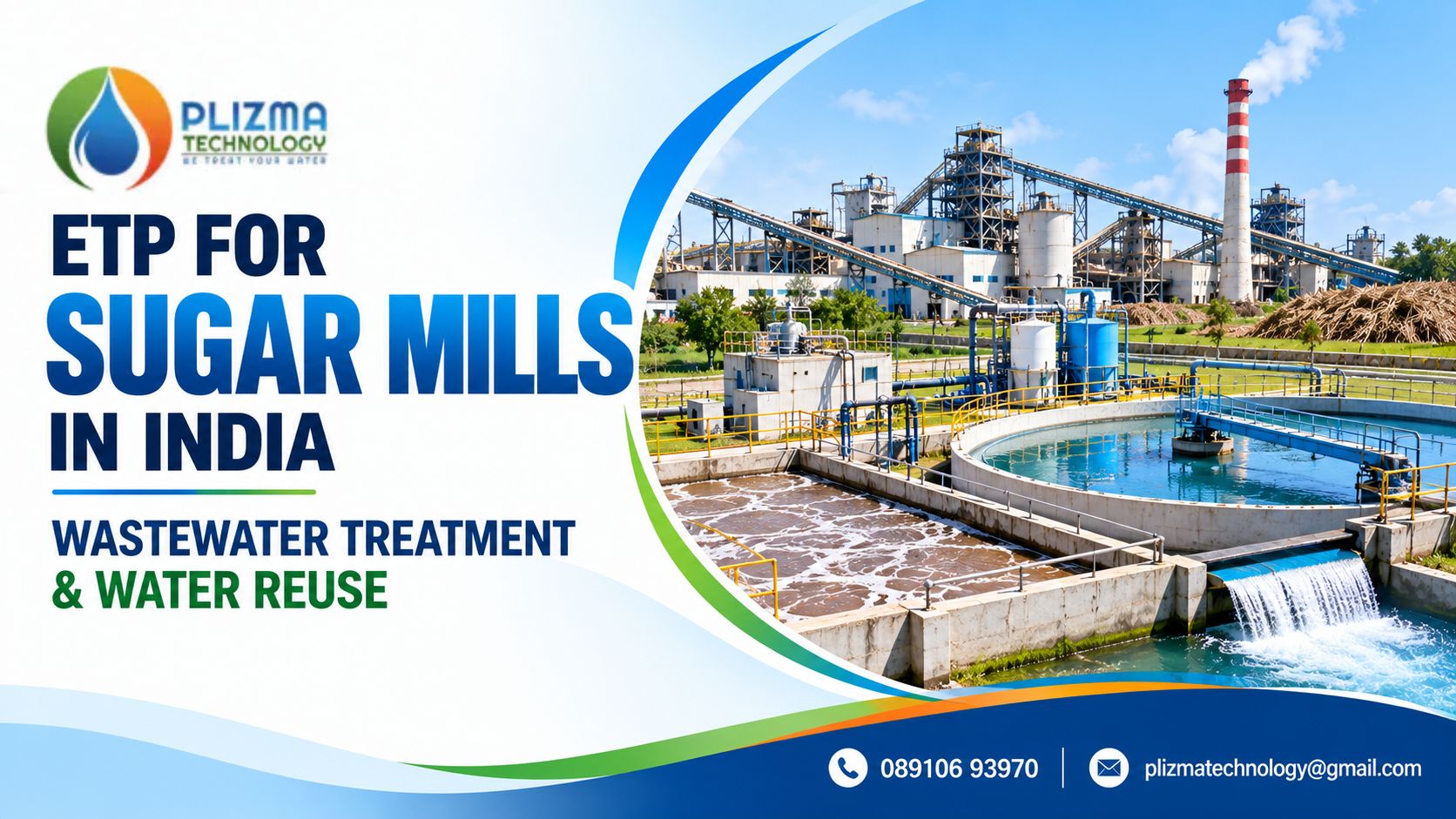
Sugar manufacturing is a water-intensive industrial process. Activities such as sugarcane washing, milling, equipment cleaning, cooling, and utility operations generate wastewater containing organic matter, suspended solids, oil and grease, dissolved salts, and other contaminants.
For sugar manufacturers, wastewater management directly affects operating efficiency, environmental compliance, water consumption, and opportunities for treated-water reuse. An appropriately designed effluent treatment plant for sugar mill in India helps manage these challenges through physical, chemical, and biological treatment processes.
Selecting the right system requires evaluating organic loading, seasonal production, flow variations, available space, discharge standards, and reuse objectives.
Sugar factories generate wastewater from equipment washing, floor cleaning, process spills, cooling systems, and utility operations. Sugar-containing residues can increase organic pollution, while suspended solids, oil and grease, and pH variations may affect treatment performance.
A properly designed sugar mill effluent treatment plant in India helps reduce pollutants before discharge or suitable reuse.
An effective sugar industry wastewater treatment plant should be designed according to actual wastewater characteristics rather than a standard equipment package.
Designing an ETP for sugar mills begins with wastewater characterization. Two factories generating similar wastewater volumes may require different treatment configurations because pollutant concentrations, production schedules, and reuse requirements differ.
Accurate wastewater analysis helps engineers determine the required capacity and select a suitable sugar factory wastewater treatment plant.
Cleaning activities can create hydraulic peaks, while process losses may increase organic loading. Seasonal startup and shutdown can also affect biological treatment stability. An adequately sized equalization system helps balance these variations before wastewater enters subsequent treatment stages.
A conventional effluent treatment plant in India may combine preliminary, physicochemical, biological, clarification, and tertiary treatment processes.
Screening → Oil and Grease Removal → Equalization → pH Correction → Primary Treatment → Biological Treatment → Secondary Clarification → Tertiary Treatment → Treated Water Storage
The exact configuration depends on wastewater characteristics, required effluent quality, and the intended discharge or reuse application.
Screening removes larger solids and debris that could block pumps or pipelines. Where oily wastewater is generated, suitable oil and grease separation equipment may be installed. Effective preliminary treatment protects downstream equipment and reduces maintenance problems.
An equalization tank collects wastewater and reduces fluctuations in flow and pollutant concentration. Mixing or suitable aeration may be provided to maintain uniformity and prevent solids deposition or septic conditions. Proper equalization helps protect downstream processes from sudden hydraulic and organic shock loads.
If incoming wastewater is too acidic or alkaline, pH correction may be necessary. Depending on wastewater characteristics, coagulation, flocculation, and primary clarification can remove suspended solids before biological treatment. Chemical dosing should be based on actual process requirements.
Biological treatment uses microorganisms to break down biodegradable organic pollutants. Common options include:
The most suitable technology depends on wastewater composition, available land, operating conditions, treatment objectives, and lifecycle costs.
After biological treatment, clarification separates biological solids from treated water. Performance depends on hydraulic loading, sludge characteristics, inlet distribution, and sludge withdrawal. Poor settling may indicate biological problems, shock loading, or inadequate process control.
Additional polishing may be required when secondary-treated water does not meet the intended reuse or discharge specifications. Depending on the application, tertiary treatment may include:
An appropriate sugar mill wastewater recycling system can reduce freshwater demand when treated water meets the requirements of the intended application. RO may be considered when dissolved salts or other membrane-removable contaminants need to be reduced, with energy use and concentrate management evaluated beforehand.
Sludge management is an essential part of an effluent treatment plant for sugar mills in India. Primary and biological treatment generate sludge that must be collected, thickened, dewatered, stored, and managed according to applicable requirements.
Depending on the configuration, equipment may include sludge holding tanks, thickeners, filter presses, or other mechanical dewatering systems. Adequate sludge-handling capacity helps maintain clarification and biological treatment performance.
An efficient industrial wastewater treatment plant in India depends on good operating practices as well as appropriate equipment.
Selecting an effluent treatment plant manufacturer in India requires evaluating engineering capability, process selection, equipment quality, and operational support.
Before finalizing an ETP plant supplier in India, project teams should assess:
A technically sound proposal should explain why each treatment stage is required and how the system will address the factory’s specific wastewater challenges. The lowest initial price does not necessarily represent the lowest lifecycle cost.
Plizma Technology provides industrial water and wastewater treatment solutions, including Effluent Treatment Plants (ETPs), Sewage Treatment Plants (STPs), Reverse Osmosis (RO), Ultrafiltration (UF), and other treatment systems.
For sugar manufacturing facilities, the appropriate treatment configuration should be based on wastewater characteristics, production capacity, site conditions, discharge requirements, and water-reuse objectives.
Businesses evaluating an ETP plant manufacturer for sugar mills in India should prioritize sound engineering, treatment reliability, energy efficiency, and long-term maintainability.
Visit Plizma Technology to explore industrial water and wastewater treatment solutions.
An ETP treats wastewater generated during sugar manufacturing and associated activities to reduce pollutants before discharge or suitable reuse.
Source-level pollution prevention, equalization, and appropriately designed biological treatment can reduce biodegradable organic pollution. Requirements depend on wastewater composition and loading.
MBBR, SBR, activated sludge, and selected anaerobic processes may be considered depending on wastewater characteristics, available space, operating conditions, and required effluent quality.
Yes. Treated wastewater may be reused for suitable applications when it meets the relevant water-quality specifications and applicable regulatory requirements.
Key factors include wastewater flow, pollutant loading, treatment technology, civil construction, automation, sludge handling, and required treated-water quality.
An effective ETP for sugar mills is an integrated treatment system designed around wastewater characteristics, production schedules, organic loading, discharge requirements, and water-reuse objectives.
Accurate wastewater analysis, equalization, appropriate biological treatment, effective clarification, sludge management, and tertiary polishing where required all contribute to reliable performance.
For sugar manufacturers planning a new installation or upgrading an existing facility, choosing the right effluent treatment plant for sugar mill in India requires balancing treatment efficiency, lifecycle cost, maintenance needs, and environmental compliance.
Plizma Technology provides industrial water and wastewater treatment solutions tailored to project-specific requirements, helping businesses evaluate suitable approaches to industrial wastewater management.
2026-09-28
2026-09-23