

Effluent treatment
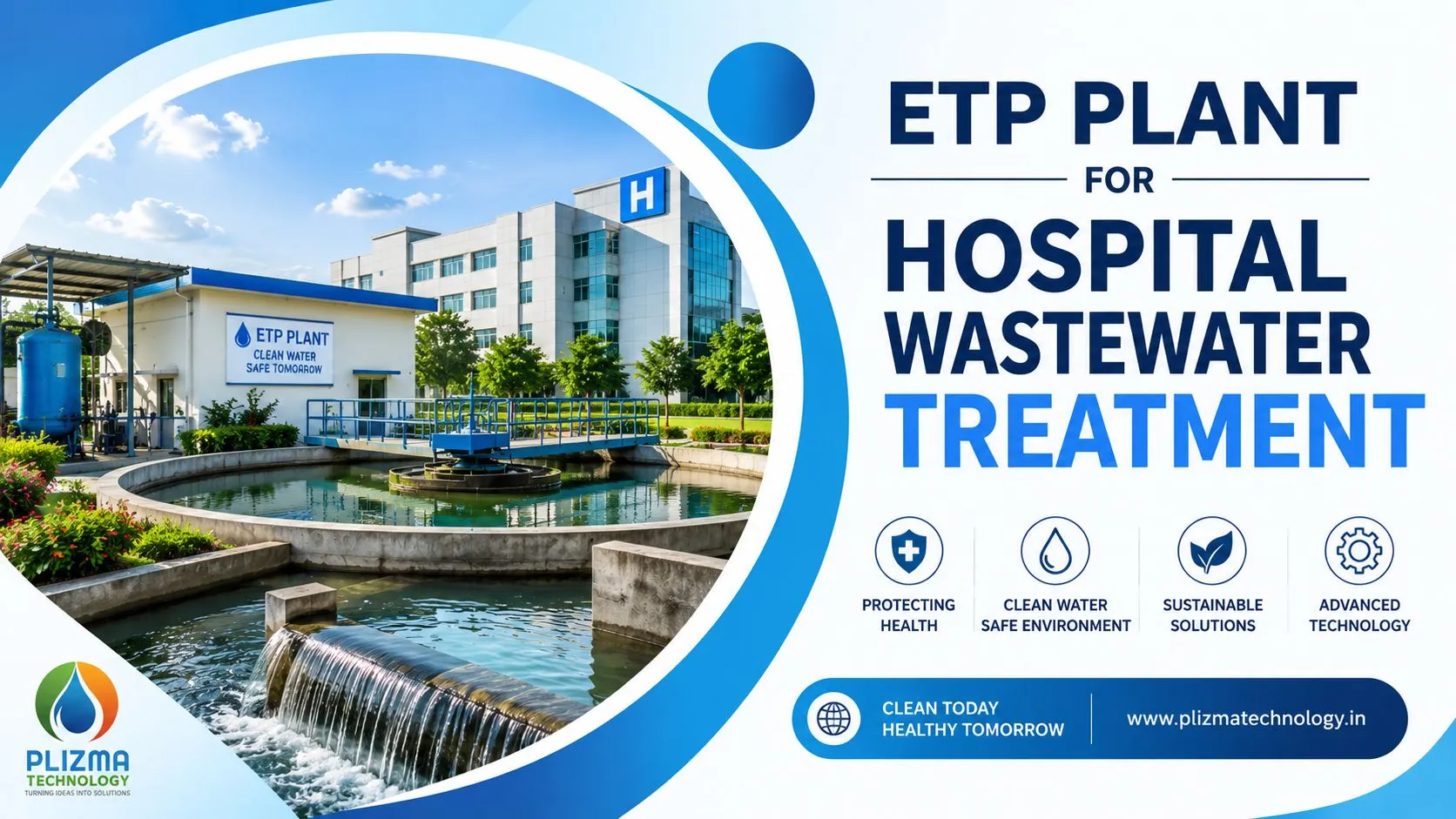
ETP plant for Hospital Wastewater Treatment
2026-06-19 | by Joydip Manna
India produces more than 72,368 million litres of sewage every day, yet less than 28% receives treatment before being discharged, as per CPCB data from 2024. For hospitals, hotels, manufacturing units, residential societies, and industrial facilities, this growing treatment gap creates more than environmental concerns. It also brings regulatory challenges, higher water expenses, and serious risks to business operations.
With state pollution control boards strengthening compliance checks, municipal water costs rising, and environmental regulations becoming increasingly important, having a dependable on-site wastewater treatment system is now essential for many establishments.
Selecting the right hospital ETP manufacturer is especially important because hospital wastewater contains complex pollutants. These may include harmful pathogens, pharmaceutical residues, antibiotics, disinfectants, heavy metals, laboratory chemicals, and biochemical waste, all of which require proper treatment before discharge or reuse.
Summary
India generates over 72,368 million litres of sewage daily, but less than 28% is treated before discharge, according to CPCB data from 2024. Hospital wastewater needs specialized treatment as it may contain antibiotics, pathogens, pharmaceutical residues, laboratory chemicals, antiseptics, and other hazardous contaminants that conventional biological treatment systems may not completely remove.
Some of the hospital ETP and wastewater treatment plant manufacturers operating in India include Plizma Technology, SUSBIO, Ion Exchange India Ltd., and Thermax Global. Choosing a suitable manufacturer depends on several factors, including wastewater characteristics, daily treatment capacity, available land, water reuse requirements, and applicable CPCB and State Pollution Control Board discharge standards.
Table of Contents
- Why Hospital Wastewater Needs Specialized Treatment
- Top Hospital ETP Manufacturers in India
- Regional Turnkey and Prefabricated Suppliers
- Important Hospital ETP Specifications
- Plizma Technology Wastewater Treatment Plants
- How Wastewater Treatment Plants Work
- Wastewater Treatment Plants for Different Industries
Why Hospital Wastewater Needs Specialized Treatment
The right Effluent Treatment Plant manufacturer for hospital wastewater must design systems capable of handling pathogens, active pharmaceutical residues, disinfectants, heavy metals, and biochemical fluids while maintaining strict regulatory compliance.
Hospital effluents cannot always be treated like standard industrial wastewater. Antimicrobial chemicals, antibiotics, antiseptics, and strong disinfectants may damage or kill the active microbial cultures used in conventional biological treatment plants.
The treatment plant must therefore be designed after evaluating the wastewater source, pollutant concentration, hospital occupancy, laboratory activities, operation theatre discharge, laundry wastewater, kitchen wastewater, and pharmaceutical contamination.
Depending on the wastewater characteristics, the manufacturer may recommend MBBR, SBR, AABR, electrochemical treatment, chemical precipitation, activated carbon filtration, UV disinfection, ozonation, or a combination of multiple technologies.
Top Hospital ETP and Wastewater Treatment Plant Manufacturers in India
1. Plizma Technology
Plizma Technology provides customized Effluent Treatment Plants, Sewage Treatment Plants, and wastewater treatment solutions for hospitals, healthcare institutions, commercial establishments, and industrial facilities.
Evidence: the company designs compact and low-footprint systems around actual site conditions, fluctuating inlet loads, wastewater characteristics, available installation area, treatment capacity, reuse requirements, and applicable discharge standards.
Plizma Technology also provides turnkey support covering system design, equipment supply, installation, commissioning, upgrades, operational assistance, and wastewater treatment plant performance reviews.
2. SUSBIO
SUSBIO provides its IONTREAT electrochemical wastewater treatment plants specifically for healthcare facilities.
Evidence: Its non-biological electrochemical method avoids microbial culture disruption caused by hospital antibiotics, antiseptics, and disinfectants. The systems can also support Zero Liquid Discharge configurations to maximize treated-water reuse.
3. Ion Exchange India Ltd.
Ion Exchange India Ltd. is a major participant in large-scale water and wastewater treatment infrastructure.
Evidence: The company provides customized civil and prefabricated high-capacity ETP-STP integrated plants for multi-specialty hospitals, medical colleges, institutional campuses, and large healthcare facilities.
4. Thermax Global
Thermax Global is known for standardized and custom-designed environmental engineering systems.
Evidence: The company deploys multi-stage physical, chemical, biological, and automated separation technologies for high-occupancy commercial facilities, healthcare institutions, and industrial sectors.
Regional Turnkey and Prefabricated Hospital ETP Suppliers
Hospitals requiring modular, skid-mounted, containerized, or localized turnkey installations can also consider regional engineering companies. Such systems are commonly available in capacities ranging from approximately 1 KLD to 500 KLD, depending on the wastewater flow and treatment requirement.
North and West India
Plizma technology & V AQUA Water Treatment Company in Delhi NCR and WTE Infra Projects in Pune provide fully automatic, PLC-controlled, and containerized hospital wastewater treatment plants.
East India
Plizma Technology and Oceanic Aqua Solution in Kolkata customize compact and low-footprint wastewater treatment systems designed to handle fluctuating inlet loads and localized installation requirements.
Key Hospital ETP Specification Requirements
To meet Central Pollution Control Board and State Pollution Control Board requirements, and to reduce the risk of treatment failure, verify that the selected hospital ETP manufacturer provides an appropriate multi-stage treatment configuration.
| Treatment Stage | Crucial Requirement for Hospitals | Purpose |
|---|---|---|
| Preliminary Treatment | Bar screening and grit chambers | Captures medical debris, plastic caps, fibres, rags, grit, and other solid waste before it enters pumps or downstream treatment units. |
| Primary Treatment | Dual equalization and pH balancing | Balances fluctuating flow and neutralizes aggressive laboratory chemicals, disinfectants, laundry wastewater, and washroom detergents. |
| Secondary Treatment | MBBR, SBR, AABR, or electrochemical cells | Reduces high organic BOD and COD loads while managing the effects of antibiotics, antiseptics, and chemical shock loads. |
| Tertiary Treatment | Activated carbon filtration and heavy disinfection using UV, ozone, or chlorination | Removes trace organics, improves clarity, and reduces infectious pathogens, coliform bacteria, and multi-drug-resistant microorganisms. |
| Advanced Treatment | Chemical precipitation, membrane filtration, electrochemical treatment, or advanced oxidation | Helps manage pharmaceutical residues, heavy metals, toxic laboratory compounds, and difficult-to-degrade contaminants. |
| Sludge Management | Sludge stabilization, dewatering, and safe disposal | Reduces sludge volume and supports compliant handling of potentially contaminated treatment residues. |
Plizma Technology Range: Wastewater Treatment Plants Built for India
Plizma Technology is available in two main configurations: an STP for domestic sewage and an ETP for industrial effluents. Both systems are factory-assembled from SS 304 stainless steel, delivered as plug-and-play units, and supported through after-sales service and AMC assistance.
The treated wastewater can be reused for toilet flushing, irrigation, vehicle washing, cooling towers, landscaping, ornamental water bodies, and selected industrial processes.
Common Uses of Treated Wastewater
- Reuse treated water for industrial processes
- Save costs through toilet flushing
- Support gardening and landscaping
- Use treated water for agricultural irrigation
- Maintain ornamental ponds and water bodies
- Enable cooling applications in factories
- Reduce dependence on municipal and groundwater supplies
STP: Sewage Treatment Plant
STP treats domestic sewage from hotels, hospitals, apartments, hostels, institutions, and commercial buildings. Raw sewage enters the treatment system and is processed to produce reusable treated water.
The AABR biological core achieves approximately 85–90% BOD and COD reduction. Sludge generation is minimal, odour is controlled, and the system does not require extensive civil construction or a specialist operator for routine day-to-day operation.
Range: 5 KLD to 500 KLD
Options: Fully automatic and semi-automatic
ETP: Effluent Treatment Plant
The ETP handles industrial effluents containing chemicals, heavy metals, suspended solids, oils, and high-strength organic pollutants that a standard STP cannot process.
It is designed for factories, rice mills, food-processing units, pharmaceutical plants, hospitals, and other sites where the wastewater is complex and the discharge standards are strict.
The manufacturer evaluates the effluent analysis report and configures an appropriate treatment sequence for the site.
Range: 15 KLD to 1000 KLD
Options: Automatic and semi-automatic
Why Choose Plizma Technology?
Proven Technology
Plizma Technology develops reliable wastewater treatment systems designed to deliver consistent treated-water quality for discharge and suitable reuse applications.
Durable & Efficient
Proper material selection and efficient treatment processes help reduce corrosion, maintenance requirements, energy consumption, and long-term operating costs.
Compact Design
Space-efficient treatment solutions are suitable for industries, hospitals, hotels, factories, and commercial facilities where installation area is limited.
Flexible Solutions
Treatment systems can be designed according to wastewater characteristics, flow variations, available space, and future capacity requirements.
Cost-Effective Operation
Optimized aeration, chemical dosing, sludge management, and automation can help control O&M costs while maintaining treatment performance.
Sustainable Water Management
Effective wastewater treatment supports water reuse, reduces freshwater demand, protects surrounding water resources, and helps industries meet their environmental responsibilities.
How Hospital and Industrial Wastewater Treatment Plants Work
A wastewater treatment plant generally follows a multi-stage treatment sequence. Each stage targets a specific category of pollutant so that the final treated water can meet the required discharge or reuse standards.
1. Preliminary Treatment: Screening and Equalization
Raw wastewater enters through a bar screen that removes large solids such as rags, plastics, fibres, caps, grit, and other debris before they reach pumps or biological treatment units.
An equalization tank then buffers variations in wastewater flow and pollutant concentration throughout the day. Hospitals, hotels, and commercial facilities may generate sudden peak loads during busy operational periods.
Without equalization, these peaks can hit the biological reactor as a shock load. With proper equalization, the reactor receives a more consistent and manageable feed.
2. Primary Treatment: Sedimentation and pH Correction
In the primary treatment tank, settleable solids drop to the bottom as primary sludge, while floating grease, oil, and scum are removed from the surface.
This stage removes a significant portion of total suspended solids before the wastewater reaches biological or electrochemical treatment. It reduces the pollutant load on downstream systems and improves overall treatment efficiency.
For hospital wastewater, pH balancing may also be required to neutralize acidic or alkaline laboratory chemicals, cleaning agents, and disinfectants.
3. Biological or Electrochemical Treatment
In an AABR, MBBR, or similar biological reactor, wastewater flows over media containing active microbial biofilm. These microorganisms break down dissolved organic pollutants, including BOD, COD, nitrogen, and phosphorus.
The system operates under controlled aeration, with dissolved oxygen maintained to support microbial activity and reduce odour.
Depending on the hospital wastewater characteristics, electrochemical cells or chemical treatment processes may be added to manage antibiotics, disinfectants, laboratory reagents, pharmaceutical residues, heavy metals, and toxic shock loads.
4. Tertiary Polishing: Filtration and Disinfection
Biologically or chemically treated water passes through sand filtration, followed by activated carbon filtration and disinfection using UV, ozone, or chlorine.
Sand filtration removes residual suspended solids and turbidity. Activated carbon filtration captures trace organic pollutants, colour, and odour-producing compounds.
UV, ozonation, or chlorination is then used to reduce coliform bacteria, infectious pathogens, and other microorganisms before discharge or non-potable reuse.
5. Sludge Management
Accumulated sludge is stabilized and then dewatered to reduce its volume. The final disposal method depends on the source and characteristics of the sludge.
Vulcan STP generates low sludge volumes, with approximately 50–100 kg per month reported for a 50 KLD plant. Stabilized nutrient-rich sludge from ordinary domestic sewage treatment may be suitable for selected agricultural applications, subject to testing and local regulatory requirements.
Sludge generated from hospital ETPs requires more careful testing and handling because it may contain pathogens, chemicals, pharmaceutical residues, or heavy metals.
How to Select the Right Hospital ETP Manufacturer
Hospital management should avoid selecting a wastewater treatment plant based only on the lowest quoted price. The treatment system must be designed around actual wastewater characteristics and the required treated-water quality.
Before finalizing the manufacturer, verify the following:
- Whether the manufacturer has experience with hospital or healthcare wastewater
- Whether wastewater testing and effluent analysis are included before system design
- Whether laboratory, laundry, kitchen, operation theatre, and domestic wastewater streams are evaluated separately
- Whether equalization and pH correction are properly sized
- Whether the proposed biological system can tolerate antibiotics and disinfectant shock loads
- Whether electrochemical or advanced oxidation treatment is required
- Whether activated carbon filtration and strong disinfection are included
- Whether the plant supports treated-water reuse
- Whether automation, alarms, and PLC control are available
- Whether installation, commissioning, operator training, AMC, and after-sales support are provided
- Whether the system is designed according to CPCB and applicable State Pollution Control Board requirements
Wastewater Treatment Plants for Every Industry
No two wastewater streams are identical. A hotel’s sewage has different characteristics from a rice mill’s effluent, a hospital’s mixed discharge, or a pharmaceutical plant’s chemical wastewater.
Plizma Technology range and wastewater treatment systems offered by other established manufacturers are configured according to the application instead of being supplied as one-size-fits-all packages.
Common application sectors include:
- Hospitals and healthcare facilities
- Medical colleges and institutional campuses
- Hotels, resorts, and restaurants
- Residential complexes and townships
- Commercial buildings and shopping centres
- Factories and manufacturing units
- Rice mills and food-processing plants
- Pharmaceutical and chemical industries
- Textile and dyeing facilities
- Educational institutions and hostels
Conclusion
Selecting the right hospital ETP manufacturer requires more than comparing plant capacity and price. Hospital wastewater can contain pathogens, antibiotics, disinfectants, pharmaceutical residues, heavy metals, laboratory reagents, and high organic loads that can affect conventional treatment systems.
Manufacturers such as Plizma Technology, SUSBIO, Ion Exchange India Ltd., and Thermax Global offer different technologies and project capabilities for healthcare wastewater treatment.
Before choosing a system, hospitals should obtain a detailed wastewater analysis, confirm the expected inlet and outlet parameters, review available space, determine treated-water reuse requirements, and verify the manufacturer’s installation and after-sales capabilities.
A properly designed hospital ETP can reduce compliance risks, prevent treatment breakdowns, improve water reuse, lower freshwater consumption, and provide stable wastewater management over the long term.
RECENT BLOG
ETP for Jute Mill Wastewater Treatment in West Bengal: Improving Treatment Reliability
2026-10-22
ETP for Sugar Mills in India: A Practical Guide to Wastewater Treatment and Water Reuse
2026-10-14
Top 5 STP Manufacturers in Chhattisgarh
2026-09-28
Top 5 ETP Plant Manufacturers in Chhattisgarh
2026-09-28