

Recent
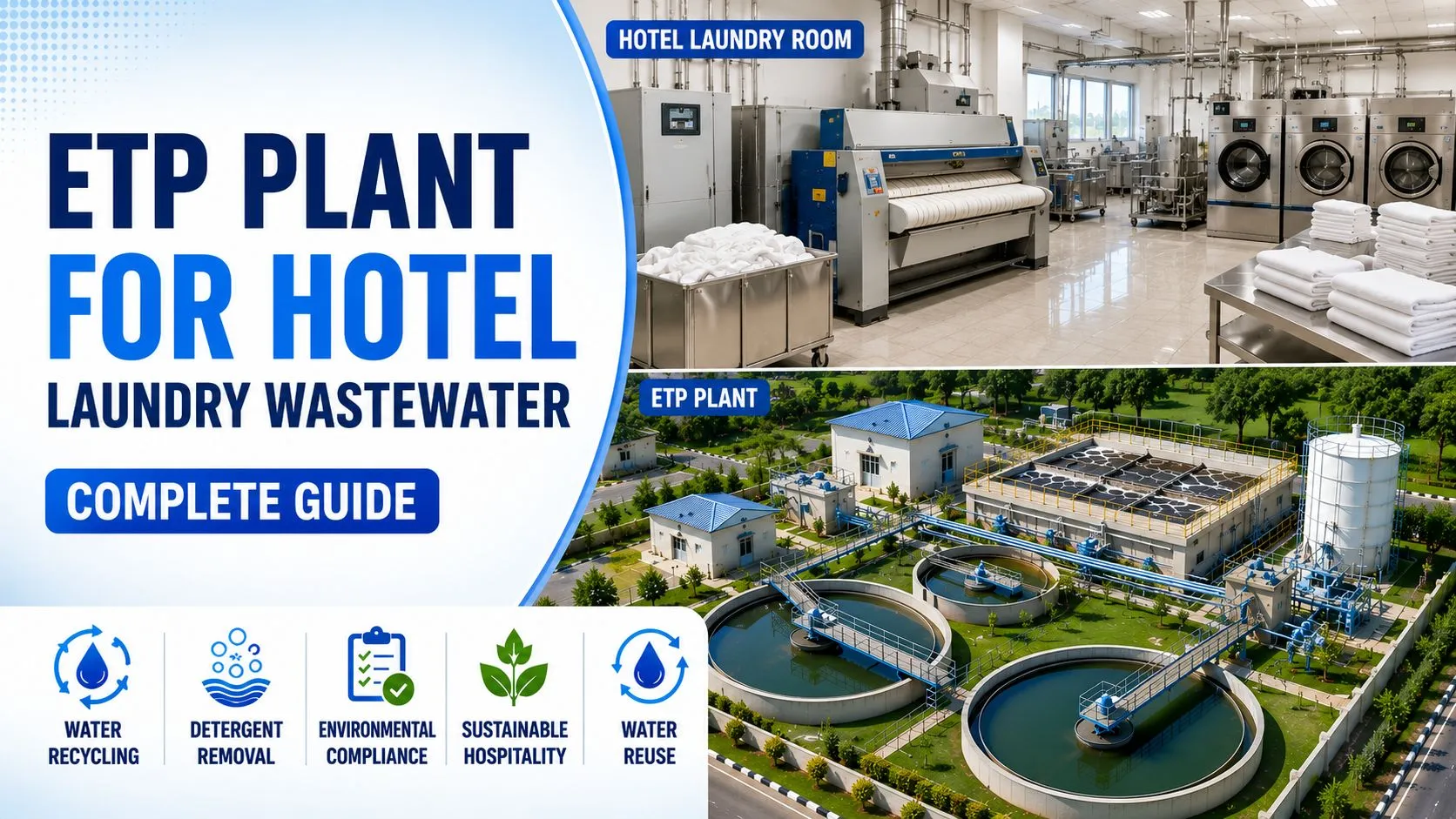
ETP Plant for Hotel Laundry Wastewater: Complete Treatment Guide
2026-06-19 | by Joydip Manna
Hotel laundry wastewater is often misunderstood. Many assume it is simply soapy water that can be discharged into a sewage treatment plant without much concern. In reality, commercial laundry operations generate wastewater containing detergents, surfactants, bleaches, fabric softeners, suspended lint, oils, grease, organic matter, and high levels of dissolved solids. If this wastewater is released untreated, it can disturb biological treatment systems, pollute water bodies, and lead to non-compliance with environmental regulations.
As hotels continue to expand across India and neighboring countries, water conservation has become equally important as wastewater treatment. Rising freshwater costs, stricter discharge norms from the Central Pollution Control Board (CPCB), and increasing demand for water reuse have made Effluent Treatment Plants (ETPs) an essential part of modern hotel infrastructure. A properly designed ETP not only ensures regulatory compliance but also enables hotels to recycle treated water for non-potable applications, reducing operating costs over the long term.
This guide explains how an ETP for hotel laundry wastewater works, the treatment technologies involved, key design considerations, and practical challenges faced during plant operation.
Understanding Hotel Laundry Wastewater
Laundry wastewater differs significantly from domestic sewage. Domestic sewage mainly contains biodegradable organic matter generated from kitchens, bathrooms, and toilets. Laundry wastewater, however, contains a complex mixture of cleaning chemicals that vary throughout the day depending on washing schedules, detergent dosage, linen type, and occupancy levels.
Common pollutants found in hotel laundry wastewater include:
- Detergents and surfactants
- Phosphates
- Chlorine bleach
- Hydrogen peroxide
- Fabric softeners
- Optical brightening agents
- Oils and grease from linens
- Suspended lint and textile fibres
- High Total Dissolved Solids (TDS)
- Elevated Biological Oxygen Demand (BOD)
- High Chemical Oxygen Demand (COD)
- Alkaline pH
Commercial hotel laundries generally consume between 15 and 40 litres of water per kilogram of linen, while larger centralized laundry facilities may generate anywhere from 20 KLD to over 300 KLD of wastewater every day.
Why Hotel Laundry Wastewater Requires an ETP
Many hotels connect laundry wastewater directly into the Sewage Treatment Plant (STP). While this may work for very small facilities, larger hotels often experience operational issues because laundry wastewater behaves differently from domestic sewage.
High detergent concentrations reduce oxygen transfer inside aeration tanks, excessive foam affects treatment efficiency, and strong alkaline discharge disturbs microbial activity. Bleaching chemicals may even inhibit beneficial bacteria responsible for breaking down organic pollutants.
An Effluent Treatment Plant specifically designed for laundry wastewater stabilizes these fluctuations before discharge or reuse. It protects downstream biological treatment while ensuring the treated water meets regulatory discharge standards.
Typical Characteristics of Hotel Laundry Wastewater
The quality of laundry wastewater changes continuously depending on occupancy, washing frequency, chemical dosage, and the type of fabric being processed. In most hotels, the wastewater is alkaline, with a pH ranging from 8 to 11. The Chemical Oxygen Demand (COD) generally varies between 600 and 2,500 mg/L, while the Biological Oxygen Demand (BOD) typically ranges from 250 to 1,200 mg/L. Total Suspended Solids (TSS) usually remain between 100 and 500 mg/L, and oil and grease concentrations often fall within 20 to 100 mg/L. Apart from these parameters, laundry wastewater also contains large amounts of surfactants, dissolved salts, suspended lint, and residual cleaning chemicals.
Because these values fluctuate throughout the day, wastewater sampling and laboratory analysis should always be performed before selecting treatment technology or sizing an ETP.
Complete ETP Process for Hotel Laundry Wastewater
1. Collection Tank
Laundry wastewater first enters the collection tank, where wastewater from multiple washing machines is collected before treatment begins. This tank provides temporary storage and ensures continuous feeding to downstream treatment units.
2. Screening
Large suspended materials including lint, cloth fibres, buttons, threads, plastics, and other debris are removed using mechanical screens. Early removal prevents clogging of pumps, pipelines, and valves.
3. Equalization Tank
The equalization tank is one of the most important units in the entire ETP.
Laundry wastewater characteristics vary every hour. Some washing cycles contain large amounts of detergent while others may discharge bleach or rinse water. Equalization tanks balance these fluctuations by thoroughly mixing incoming wastewater.
Proper equalization helps maintain stable flow, reduces shock loading, improves chemical dosing efficiency, and protects biological treatment processes.
Mechanical mixers or diffused aeration systems are commonly installed to prevent settling inside the tank.
4. pH Correction
Laundry wastewater is generally alkaline due to detergent formulations.
Acid dosing systems adjust the pH to nearly neutral conditions before chemical treatment begins. Proper pH control significantly improves coagulation efficiency and enhances pollutant removal.
5. Coagulation and Flocculation
Very fine suspended particles cannot settle naturally.
Chemical coagulants such as Poly Aluminium Chloride (PAC), Alum, or Ferric Chloride neutralize the electrical charge of suspended particles. Flocculants then bind these particles together into larger flocs, making them easier to separate.
This stage removes suspended solids, colour, detergent residues, phosphates, and colloidal impurities.
6. Primary Clarifier
The chemically formed flocs settle under gravity inside the clarifier.
Clear water flows to biological treatment, while settled sludge is removed for further processing.
7. Biological Treatment
Even after chemical treatment, dissolved organic pollutants remain in the wastewater.
Biological treatment uses naturally occurring microorganisms to degrade these pollutants.
- Activated Sludge Process (ASP)
- Moving Bed Biofilm Reactor (MBBR)
- Sequencing Batch Reactor (SBR)
- Membrane Bioreactor (MBR)
Among these, MBBR is widely preferred for hotel applications because it performs well under fluctuating hydraulic and organic loads.
8. Secondary Clarifier
After biological treatment, microorganisms settle inside the secondary clarifier.
Part of the settled biomass is recycled back into the aeration tank to maintain microbial concentration, while excess sludge is sent for dewatering and disposal.
9. Pressure Sand Filter
Remaining suspended particles are removed through pressure sand filtration.
This polishing stage significantly improves water clarity before final treatment.
10. Activated Carbon Filter
Activated carbon removes colour, odour, residual detergents, dissolved organics, and trace chemical compounds that remain after biological treatment.
This stage improves both water appearance and overall reuse quality.
11. Reverse Osmosis (Optional)
Hotels aiming for high water recovery often install Reverse Osmosis (RO) systems.
RO membranes remove dissolved salts, detergents, hardness, and microscopic contaminants, producing water suitable for reuse in laundry operations, cooling towers, flushing systems, and gardening.
RO reject water must always be managed according to local environmental regulations.
12. UV or Ozone Disinfection
The final treatment stage destroys any remaining microorganisms.
Ultraviolet disinfection is widely preferred because it eliminates pathogens without introducing additional chemicals into the treated water.
Sludge Management
Both chemical and biological treatment generate sludge that requires proper handling.
The sludge is thickened, mechanically dewatered using filter presses or centrifuges, and then disposed of according to CPCB and State Pollution Control Board guidelines. Poor sludge management often creates greater operational challenges than wastewater treatment itself, making regular monitoring essential.
Water Reuse Applications
One of the biggest advantages of installing a laundry ETP is water recovery.
- Toilet flushing
- Landscape irrigation
- Gardening
- Cooling tower makeup
- Floor cleaning
- Vehicle washing
- Utility water supply
- Laundry reuse after advanced membrane treatment
Water reuse reduces freshwater consumption, lowers utility bills, and supports sustainable hotel operations.
Design Considerations for Hotel Laundry ETP
Designing an efficient ETP requires more than simply calculating daily wastewater flow. Several practical factors influence long-term plant performance, including peak laundry loads, detergent consumption, future hotel expansion, available installation space, automation requirements, sludge handling methods, power availability, and local discharge regulations.
Hotels frequently underestimate peak hydraulic loading during festive seasons or periods of high occupancy. As a result, undersized plants struggle to maintain treatment efficiency. Providing adequate design margins during the planning stage usually prevents costly upgrades later.
Common Operational Challenges
Even well-designed hotel ETPs encounter practical operational issues.
- Excessive foaming
- Fluctuating pH
- Sudden detergent shock loading
- Poor sludge settling
- Membrane fouling
- Lint accumulation
- High TDS affecting reuse quality
- Incorrect chemical dosing
Routine monitoring of pH, COD, BOD, dissolved oxygen, sludge volume index, and flow rate helps operators detect problems before treatment performance begins to decline.
Regulatory Requirements
Hotel laundry wastewater treatment must comply with discharge standards prescribed by the Central Pollution Control Board (CPCB) and the respective State Pollution Control Boards (SPCBs). Where treated water is reused, relevant BIS guidelines should also be considered depending on the intended application. Hotels located in environmentally sensitive areas or regions facing water scarcity may be required to implement advanced recycling systems or even Zero Liquid Discharge(ZLD) solutions.
Future Trends in Hotel Laundry Wastewater Treatment
Modern hotel ETPs are becoming increasingly automated. IoT-based monitoring, PLC and SCADA control systems, automatic chemical dosing, online water quality sensors, and energy-efficient aeration technologies are replacing conventional manual operation.
Advanced membrane systems and AI-assisted process optimization are helping hotels achieve water recovery rates exceeding 80%, while reducing chemical consumption and operational costs. As sustainability becomes an important part of hotel management, wastewater treatment is gradually shifting from being a compliance requirement to becoming a valuable water conservation strategy.
Frequently Asked Questions
1. Is an ETP mandatory for hotel laundry wastewater?
The requirement depends on local Pollution Control Board regulations, wastewater quantity, and discharge method. Larger commercial hotels usually require dedicated treatment systems to comply with environmental standards.
2. Can treated laundry wastewater be reused?
Yes. After proper treatment and advanced polishing such as Reverse Osmosis, treated water can be reused for flushing, cooling towers, gardening, and even laundry operations, depending on the required water quality.
3. Which biological treatment process is best for hotel laundry wastewater?
MBBR and MBR systems are generally preferred because they perform well under fluctuating wastewater loads and require comparatively less operator intervention.
4. What is the biggest challenge in operating a laundry ETP?
Frequent changes in detergent concentration, excessive foaming, and alkaline pH are the most common operational challenges. Proper equalization and automatic chemical dosing greatly improve treatment stability.
5. How much water can a hotel recover through an ETP?
Depending on the treatment technology and reuse objectives, hotels can typically recover 70% to 95% of their laundry wastewater for various non-potable applications.
Conclusion
Hotel laundry wastewater contains far more than soap and dirt. It carries complex chemical pollutants that require carefully designed treatment processes before discharge or reuse. An efficient Effluent Treatment Plant combines physical, chemical, biological, and advanced filtration technologies to remove contaminants while maintaining consistent performance despite varying laundry loads. Beyond regulatory compliance, modern ETPs help hotels reduce freshwater consumption, lower operating costs, and support sustainable water management practices. As water scarcity continues to increase across many regions, properly engineered laundry wastewater treatment systems will become an essential part of responsible hotel infrastructure rather than just another utility installation.
Industry Note: At Plizma Technology, hotel laundry wastewater treatment is viewed as a process engineering challenge rather than simply installing equipment. Proper wastewater characterization, realistic hydraulic design, balanced chemical dosing, and reliable automation are what ultimately determine whether an ETP performs efficiently over the long term.
👉 Also Read:
How To Choose the Best Partner for Advanced Wastewater Solutions
👉 Contact:
Plizma Technology
RECENT BLOG
ETP for Jute Mill Wastewater Treatment in West Bengal: Improving Treatment Reliability
2026-10-22
ETP for Sugar Mills in India: A Practical Guide to Wastewater Treatment and Water Reuse
2026-10-14
Top 5 STP Manufacturers in Chhattisgarh
2026-09-28
Top 5 ETP Plant Manufacturers in Chhattisgarh
2026-09-28