

Recent
Mining Wastewater Treatment: Process, Challenges & Treatment Technologies
2026-06-19 | by Joydip Manna
Mining Wastewater Treatment: Process, Challenges & Treatment Technologies
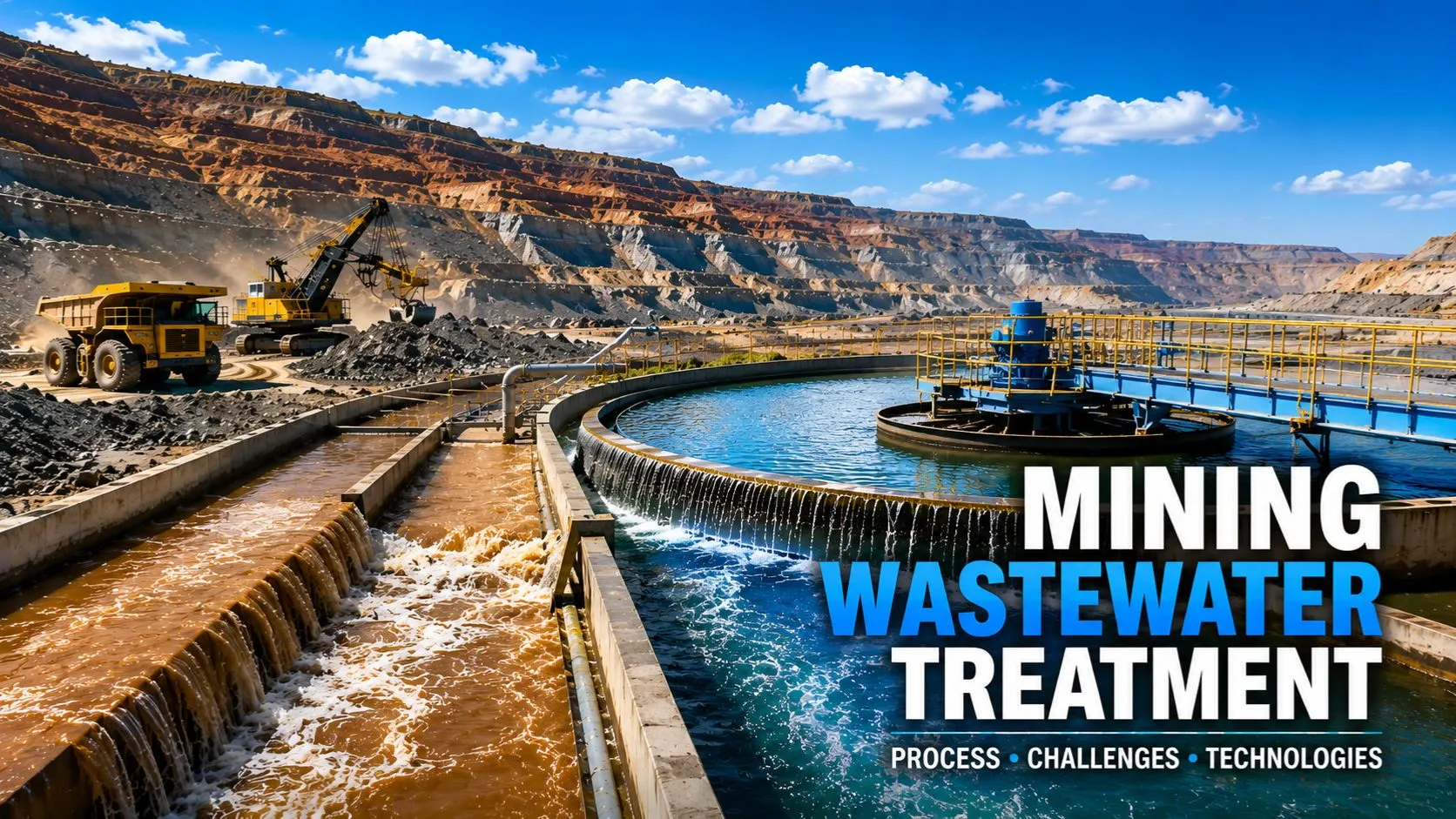
Mining cannot run without water. It is needed almost everywhere, ore washing, mineral processing, dust suppression, drilling operations, slurry transport, equipment cooling. But there is another side of this. Every litre of water used inside a mine eventually comes back carrying suspended solids, heavy metals, dissolved salts, process chemicals and sometimes highly acidic contaminants. If this wastewater goes into rivers or groundwater without proper treatment, environmental damage happens very quickly and in many cases continues for years.
This is exactly why mining wastewater treatment has become one of the most important parts of modern mining operations. It is not only about environmental compliance anymore. It is about water security, operational efficiency, long-term sustainability and avoiding expensive regulatory action.
Unlike municipal sewage, mining wastewater is never consistent. Water quality changes with ore type, mining method, blasting schedule, rainfall, beneficiation process and even seasonal production. One treatment process rarely works for every mine. That is where proper wastewater characterization becomes important before selecting the right treatment technology for each mining site.
What is Mining Wastewater?
Mining wastewater refers to water generated during mining and mineral processing activities. It may come from underground dewatering, open-pit drainage, ore beneficiation plants, tailings ponds, equipment washing or stormwater runoff passing through mining areas.
Depending on the mineral being extracted, this wastewater may contain:
- High Total Suspended Solids (TSS)
- Heavy metals like arsenic, lead, cadmium, mercury, chromium, copper and nickel
- Acid Mine Drainage (AMD)
- Cyanide from gold mining operations
- Sulphates and chlorides
- Iron and manganese
- Oil and grease from heavy equipment
- Flotation chemicals and frothers
- High Total Dissolved Solids (TDS)
Some mines mainly struggle with sediment, while others deal with extremely acidic water carrying dissolved metals. That is why treatment systems are always designed according to actual wastewater analysis instead of using one standard process.
Major Sources of Mining Wastewater
Mining wastewater does not come from only one location. Different activities inside the mine generate different wastewater streams.
1. Mine Dewatering
Groundwater continuously enters underground mines and open pits. This water has to be pumped out to maintain safe working conditions. Although comparatively cleaner than process water, it may still contain iron, manganese, suspended solids and dissolved minerals that require proper treatment before reuse or discharge.
2. Mineral Processing Plants
Crushing, grinding, flotation, washing and beneficiation processes consume huge quantities of water. The discharged water contains fine mineral particles together with chemical reagents used during extraction.
3. Tailings Storage Facilities
Tailings ponds store leftover slurry after valuable minerals have been recovered. Water collected from these ponds usually contains dissolved metals, suspended solids and residual chemicals that require proper treatment before reuse or discharge.
4. Acid Mine Drainage
Acid Mine Drainage is probably the biggest environmental challenge in mining.
When sulphide minerals such as pyrite come into contact with air and water, sulphuric acid forms naturally. This acidic water dissolves heavy metals from surrounding rocks and carries them into nearby water bodies. In some abandoned mines, AMD continues for decades after mining activities have stopped.
5. Surface Runoff
Rainwater flowing across waste rock dumps, stockpiles and haul roads carries sediment and pollutants into streams and nearby rivers if not properly controlled.
Challenges in Mining Wastewater Treatment
Mining wastewater treatment is rarely straightforward. Operators deal with several practical problems every day.
1. Changing Water Quality
Wastewater composition keeps changing because mining operations are never constant. Rainfall, ore grade, blasting frequency and production levels all influence contaminant concentration.
2. Heavy Metal Removal
Removing heavy metals to regulatory discharge limits requires carefully controlled chemical treatment. Biological treatment alone cannot achieve these standards.
3. High Suspended Solids
Ore crushing and washing generate enormous quantities of fine particles. These solids settle very slowly and often require coagulation and flocculation before clarification.
4. Large Treatment Volumes
Large mines may produce thousands of cubic metres of wastewater every day. Treatment technologies therefore need to balance efficiency with operating costs.
5. Sludge Management
Heavy metal precipitation produces hazardous sludge that must be safely dewatered, transported and disposed of according to environmental regulations.
6. Water Scarcity
Many mining projects operate in regions where freshwater availability is already limited. Instead of discharging treated water, companies increasingly recycle it back into mining operations to reduce freshwater consumption.
Mining Wastewater Treatment Process
Although every mine has different treatment requirements, most treatment plants follow a combination of physical, chemical and advanced treatment processes. Depending on the wastewater characteristics and discharge requirements, mining companies may install an Effluent Treatment Plant (ETP) to treat industrial effluent before discharge or reuse.
1. Preliminary Treatment
The first stage removes larger materials before wastewater enters sensitive treatment units.
- Bar screens
- Grit chambers
- Equalization tanks
- Oil-water separators
- Flow balancing systems
Equalization tanks are particularly important because they smooth out sudden fluctuations in flow and contaminant concentration.
2. Primary Treatment
Primary treatment mainly removes suspended solids.
- Coagulation
- Flocculation
- Clarifiers
- Lamella settlers
- Sedimentation tanks
Coagulants such as PAC, ferric chloride or aluminium sulphate destabilize suspended particles. Polymer dosing then helps these particles combine into larger flocs that settle much faster.
3. Chemical Treatment
Chemical treatment becomes necessary whenever acidic wastewater or dissolved heavy metals are present.
- Lime dosing
- Caustic soda addition
- pH correction
- Heavy metal precipitation
- Oxidation and reduction reactions
The objective is simple. Convert dissolved contaminants into solid particles that can be separated from water.
4. Biological Treatment
Where biodegradable organic contaminants are present, biological treatment can be introduced using:
- Activated Sludge Process (ASP)
- Moving Bed Biofilm Reactor (MBBR)
- Sequencing Batch Reactor (SBR)
- Membrane Bioreactor (MBR)
However, these systems are generally used only where organic pollution exists. Heavy metals still require separate treatment.
5. Advanced Treatment
Modern mines increasingly reuse treated water instead of discharging it. Where higher-quality treated water is required for recycling or process applications, a Wastewater Treatment Plant (WWTP) may include advanced polishing technologies.
- Ultrafiltration (UF)
- Reverse Osmosis (RO)
- Nanofiltration (NF)
- Ion Exchange
- Activated Carbon Filtration
- Advanced Oxidation Processes (AOP)
Reverse Osmosis is especially useful where high-quality process water is required, although concentrate management must also be considered during plant design.
Water Reuse in Mining
Freshwater is becoming more expensive and difficult to obtain. Because of this, many mining companies now treat wastewater for reuse instead of disposal.
Recovered water is commonly used for:
- Mineral processing
- Dust suppression
- Slurry preparation
- Equipment washing
- Cooling systems
- Greenbelt irrigation where permitted
Apart from reducing freshwater consumption, recycling also lowers wastewater discharge volumes and improves overall operational sustainability.
Regulatory Requirements
Mining wastewater cannot simply be discharged after basic treatment. Industries must comply with environmental standards established by regulatory authorities.
In India, discharge requirements are mainly governed by the Central Pollution Control Board (CPCB), State Pollution Control Boards (SPCBs), the Water (Prevention and Control of Pollution) Act, 1974 and environmental clearance conditions issued by the Ministry of Environment, Forest and Climate Change (MoEFCC).
Typical monitoring parameters include:
- pH
- TSS
- COD
- BOD
- Heavy metals
- Sulphates
- Oil & Grease
- TDS
Depending on the reuse application, treated water may also need to satisfy BIS, WHO or other project-specific quality requirements.
Failure to comply can lead to financial penalties, production restrictions and expensive environmental remediation.
Emerging Technologies
Mining wastewater treatment continues to evolve as industries move towards circular water management.
- AI-assisted treatment optimisation
- IoT-based online water quality monitoring
- Zero Liquid Discharge (ZLD)
- Recovery of valuable metals from wastewater
- Passive Acid Mine Drainage treatment using constructed wetlands
- High-efficiency sludge dewatering systems
Instead of looking at wastewater only as waste, many mining companies now consider it a valuable water resource that can be recovered and reused.
Conclusion
Mining wastewater treatment is becoming more challenging every year as environmental regulations become stricter and freshwater resources continue to decline. Every mining site generates wastewater with different characteristics, so treatment systems must always be designed after proper water analysis instead of following a standard template.
Most successful treatment plants combine physical separation, chemical precipitation, biological treatment where suitable and advanced polishing technologies. Whether the project uses an ETP for industrial effluent treatment or a WWTP for advanced wastewater management, the objective is not only regulatory compliance anymore. It is also reducing freshwater demand, improving operational efficiency and supporting long-term sustainable mining.
Proper mining wastewater treatment ultimately protects surrounding ecosystems while allowing mining operations to continue responsibly, something every modern mining project is now expected to achieve.
Frequently Asked Questions
1. What is mining wastewater?
Mining wastewater is water generated during mining, ore processing and related activities that contains suspended solids, heavy metals, dissolved salts, chemicals and other contaminants requiring treatment before discharge or reuse.
2. What is Acid Mine Drainage (AMD)?
AMD is acidic water formed when sulphide minerals react with oxygen and water. It dissolves heavy metals and is considered one of the most serious environmental problems associated with mining.
3. Which treatment technology is commonly used for mining wastewater?
Most mines use a combination of clarification, chemical precipitation, filtration and advanced membrane technologies like Reverse Osmosis. The final process depends entirely on wastewater characteristics.
4. Can treated mining wastewater be reused?
Yes. After proper treatment, it can be reused for ore processing, dust suppression, cooling systems, slurry preparation and several other industrial applications.
5. Which authority regulates mining wastewater discharge in India?
Mining wastewater discharge is regulated mainly by the Central Pollution Control Board (CPCB), State Pollution Control Boards (SPCBs), the Water (Prevention and Control of Pollution) Act, 1974 and environmental clearance conditions issued by MoEFCC.
Also Read
👉 Industrial Wastewater Treatment (ETP)
Contact Us
RECENT BLOG
ETP for Jute Mill Wastewater Treatment in West Bengal: Improving Treatment Reliability
2026-10-22
ETP for Sugar Mills in India: A Practical Guide to Wastewater Treatment and Water Reuse
2026-10-14
Top 5 STP Manufacturers in Chhattisgarh
2026-09-28
Top 5 ETP Plant Manufacturers in Chhattisgarh
2026-09-28