

Recent
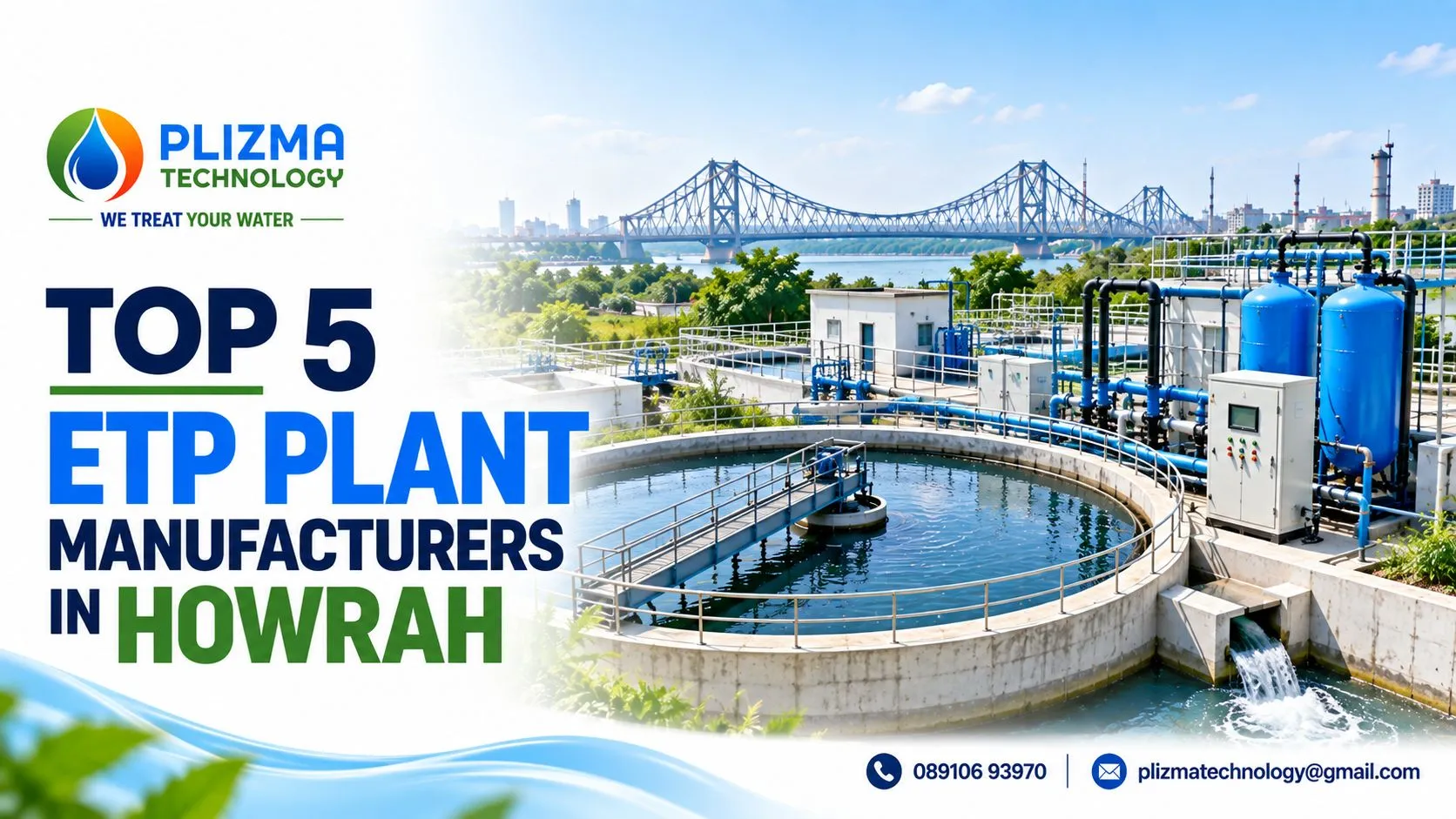
Top 5 ETP Plant Manufacturers in Howrah: A Practical Industry Guide
2026-09-10 | by Joydip Manna
Industries in Howrah are growing across engineering, manufacturing, foundries, textiles, chemicals, food processing and several other sectors. With this industrial growth, management of industrial wastewater is becoming increasingly important.
Industrial wastewater is different from domestic sewage. It may contain suspended solids, organic matter, oil and grease, chemicals, colour, dissolved solids, heavy metals and other pollutants depending on the manufacturing process. Discharging such wastewater without proper treatment can create environmental and regulatory problems.
This is where an Effluent Treatment Plant (ETP) becomes important.
An ETP is designed to treat industrial effluent before it is discharged or reused. The treatment process may involve physical, chemical, biological and membrane-based technologies depending on the characteristics of wastewater.
But selecting an ETP plant manufacturer is not simply about comparing quotations. The manufacturer needs to understand the wastewater, production process, flow variation, pollutant load, available space, treated-water requirement and long-term operating conditions.
For industries searching for an ETP plant manufacturer in Howrah, here are five companies that can be considered.
Top 5 ETP Plant Manufacturers in Howrah
1. Plizma Technology
Plizma Technology is a Howrah-based water and wastewater treatment company providing solutions for industrial and commercial applications.
Its portfolio includes Effluent Treatment Plant (ETP), Sewage Treatment Plants (STP), Water Treatment Plants (WTP), RO systems, DM systems, ZLD and industrial wastewater-treatment solutions.
The company focuses on treatment systems according to wastewater characteristics, treatment capacity, site conditions, available space and water-reuse requirements.
The important part of industrial wastewater treatment is customization. Every factory does not produce the same type of effluent.
A textile unit may have high colour, COD, TSS and TDS. Chemical industries can generate wastewater with variable pH and complex chemical pollutants. Food-processing industries can produce wastewater with high biodegradable organic matter. Metal-related industries may require specific treatment for heavy metals and other contaminants.
So, one standard ETP design cannot simply be installed everywhere.
Depending on the application, an ETP may involve different stages such as screening, equalization, neutralization, coagulation, flocculation, clarification, biological treatment, filtration, membrane treatment and disinfection.
For applications requiring higher water recovery, additional treatment such as UF, RO or ZLD may also be considered.
Plizma Technology provides services covering design, manufacturing, installation and commissioning, as well as ETP upgrading and maintenance support.
ETP upgradation is particularly important for existing industries. A plant that was designed several years ago may no longer be sufficient after production capacity increases. Hydraulic loading, COD loading, sludge generation and chemical requirements can all change.
In such cases, simply adding another tank may not solve the problem. The complete treatment process may need to be reviewed.
Plizma’s local presence in Howrah can also be useful for industries requiring installation, troubleshooting, plant modification or ongoing technical support.
Major solutions include:
- Industrial ETP
- STP and WTP
- RO and UF systems
- ZLD and water-reuse systems
- ETP upgradation
- Industrial wastewater treatment
- Installation and commissioning
- Operation and maintenance support
For industries looking for a local wastewater-treatment partner, Plizma Technology can therefore be considered based on its industrial treatment portfolio and Howrah presence.
2. Green Axis Solutions
Green Axis Solutions provides water and wastewater-treatment solutions for industrial, commercial and other applications.
Its portfolio includes ETP, STP, WTP, RO and ZLD-related solutions, with services covering engineering, fabrication, installation and commissioning.
An industrial ETP needs to be designed around actual wastewater rather than only the name of the industry.
For example, two chemical factories can have completely different wastewater characteristics because their production processes and raw materials are different.
This is why wastewater analysis is an important starting point.
Typical parameters that may need to be considered include:
- pH
- BOD
- COD
- TSS
- TDS
- Oil and grease
- Colour
- Heavy metals
- Specific industrial pollutants
Based on these parameters, the treatment process can be selected.
A typical ETP may start with screening and equalization, followed by neutralization and physico-chemical treatment. Biological treatment can then be used where biodegradable organic matter is present. Filtration and membrane systems may be added where higher-quality treated water or reuse is required.
Green Axis Solutions follows a turnkey approach covering engineering, fabrication and installation, making it relevant for industries that want a complete treatment system rather than individual equipment.
Before selecting any ETP manufacturer, however, industries should compare the proposed treatment process, expected treated-water quality, power consumption, chemical consumption, sludge management and after-sales support.
The lowest quotation is not always the lowest lifecycle cost.
3. Laxmi Enterprises
Laxmi Enterprises, based in Shibpur, Howrah, operates in the water-treatment equipment sector and lists Effluent Treatment Plants among its offerings.
The company also deals with water-treatment equipment including RO plants, filtration systems and related products.
For industries considering an ETP from a local supplier, the proposed treatment process, plant capacity, equipment specifications and after-sales support should be checked before finalising the system.
Wastewater analysis should also be carried out so that the ETP is designed according to the actual industrial effluent.
4. Spans Envirotech
Spans Envirotech provides environmental engineering and wastewater-treatment solutions including ETP, STP and ZLD systems.
The company states that it has been involved in ETP and wastewater-treatment projects since 1993 and serves industries such as pharmaceutical, textile, chemical and food processing.
For industries in Howrah and elsewhere in West Bengal, Spans Envirotech can be considered when comparing conventional as well as advanced wastewater-treatment requirements.
5. Optima Water Solutions
Optima Water Solutions provides ETP design, manufacturing, installation and maintenance services for industrial applications in Howrah.
Its published information lists applications including textile, pharmaceutical, chemical and food-processing industries. The company states an ETP capacity range of 5 KLD to 5 MLD, along with turnkey execution and AMC support.
The final ETP configuration should be selected according to wastewater characteristics, capacity, required treated-water quality and operating conditions.
How Does an ETP Plant Work?
An ETP generally uses multiple treatment stages. The exact process changes according to the industrial wastewater.
Preliminary Treatment
The wastewater first passes through screens to remove larger solids, plastics, fibres and other debris.
This prevents blockage and protects pumps and downstream equipment.
Equalization
Wastewater flow and pollutant concentration can change throughout the day.
An equalization tank provides buffering and helps maintain more stable conditions before chemical or biological treatment.
This stage is particularly useful in industries where production is batch-based.
Neutralization and Chemical Treatment
Industrial wastewater may require pH correction before further treatment.
Coagulation and flocculation can then be used to remove suspended and colloidal matter. Chemicals are added to destabilize fine particles and form larger flocs that can be separated in a clarifier.
Biological Treatment
Where biodegradable organic matter is present, biological treatment may be required.
Microorganisms consume organic pollutants under controlled conditions. Technologies such as activated sludge, MBBR and MBR may be selected according to the wastewater and required treatment performance.
Tertiary Treatment
Some industries require higher-quality treated water for reuse.
In such cases, tertiary treatment can include pressure sand filtration, activated carbon filtration, ultrafiltration, RO, UV or other polishing processes.
Where maximum water recovery and minimum liquid discharge are required, a Zero Liquid Discharge (ZLD) system may be considered.
What Should You Check Before Choosing an ETP Manufacturer?
Selecting an ETP manufacturer based only on the initial price can create problems later.
Several factors should be evaluated.
1. Wastewater Characteristics
The manufacturer should first understand the actual effluent.
Laboratory testing may include pH, BOD, COD, TSS, TDS, oil and grease, colour and industry-specific contaminants.
2. Treatment Technology
Ask the manufacturer why a particular treatment process has been selected.
Every treatment stage should have a specific purpose. The system should be designed around the actual pollutant load rather than a generic process flow diagram.
3. Plant Capacity
ETP capacity is normally expressed in KLD — kilolitres per day.
Average and peak wastewater flow should both be considered. Future expansion may need to be included in the design.
4. Operating Cost
The initial ETP price is only the CAPEX.
Industries should also consider:
- Electricity consumption
- Chemical consumption
- Manpower
- Sludge generation
- Membrane replacement
- Maintenance
- Spare-parts requirements
These factors determine the actual lifecycle cost of the plant.
5. Automation
Modern ETPs can use PLC, SCADA and online sensors to improve process monitoring.
Parameters such as pH, flow, tank level, pressure and equipment status can be monitored to help operators identify problems quickly.
Automation does not eliminate the need for operators. It provides better process control and reduces dependence on manual intervention.
6. After-Sales Support
An ETP is a long-term operating system.
Installation and commissioning are only the beginning. Operator training, preventive maintenance, troubleshooting, spare-parts availability and AMC support should also be considered.
Why Are ETP Plants Important for Howrah Industries?
Industrial wastewater, if inadequately treated, can affect water bodies, soil and surrounding ecosystems.
An ETP provides a controlled treatment route before wastewater is discharged.
It can also support water conservation. Where treated-water quality is suitable, industries may reuse treated effluent for appropriate non-potable or industrial applications.
This reduces dependence on fresh water and can improve overall water management.
The role of wastewater treatment is also moving beyond simple pollution control. Modern treatment systems can support resource recovery, water recycling and circular-economy objectives.
As industries continue to expand, proper wastewater management becomes important not only for environmental protection but also for maintaining sustainable industrial operations.
Conclusion
Finding an ETP plant manufacturer in Howrah is not difficult. The difficult part is selecting a system that will continue performing properly when actual industrial wastewater enters the plant every day.
Plizma Technology, Green Axis Solutions, Laxmi Enterprises, Spans Envirotech and Optima Water Solutions are five companies that can be considered when evaluating ETP and industrial wastewater-treatment solutions.
However, the final selection should depend on wastewater characteristics, plant capacity, treatment requirements, available space, compliance requirements, CAPEX, OPEX and after-sales service.
Industries should therefore compare complete technical proposals instead of comparing only the quotation value.
A good ETP is not simply a group of tanks, pumps and chemical-dosing systems. It is a complete wastewater-management system that needs correct engineering, commissioning, operation and maintenance.
For industries in Howrah, choosing a manufacturer with the right technical understanding and service capability can make a major difference to the long-term performance of the treatment plant.
Frequently Asked Questions
1. Which are the top ETP plant manufacturers in Howrah?
Plizma Technology, Green Axis Solutions, Laxmi Enterprises, Spans Envirotech and Optima Water Solutions are five companies that can be considered when evaluating ETP solutions for Howrah and surrounding industrial areas.
2. Which industries require ETP plants?
Chemical, textile, pharmaceutical, food-processing, engineering, electroplating, tannery and other industries may require ETP systems depending on their wastewater characteristics and applicable environmental requirements.
3. How is ETP capacity calculated?
ETP capacity is generally based on wastewater generation, expressed in KLD. Average flow, peak flow, production schedules and future expansion should be considered during design.
4. How much does an ETP plant cost in Howrah?
There is no fixed price. Cost depends on wastewater flow, pollutant characteristics, treatment technology, civil construction, automation, sludge handling and whether RO or ZLD is required.
5. Can ETP-treated water be reused?
Yes. Treated wastewater can potentially be reused for suitable industrial or non-potable applications when the required water quality is achieved. Additional filtration, RO or disinfection may be necessary.
6. Why is wastewater testing important before ETP design?
Industrial wastewater varies significantly between industries. Testing helps determine the correct treatment process and prevents the plant from being designed based only on assumptions.
Industry Note: ETP selection should be based on actual wastewater characteristics, treatment requirements and long-term operating conditions. Proper engineering, installation, commissioning and maintenance ultimately determine whether an industrial wastewater-treatment plant performs consistently throughout its operating life.
RECENT BLOG
ETP for Jute Mill Wastewater Treatment in West Bengal: Improving Treatment Reliability
2026-10-22
ETP for Sugar Mills in India: A Practical Guide to Wastewater Treatment and Water Reuse
2026-10-14
Top 5 STP Manufacturers in Chhattisgarh
2026-09-28
Top 5 ETP Plant Manufacturers in Chhattisgarh
2026-09-28