


Recent
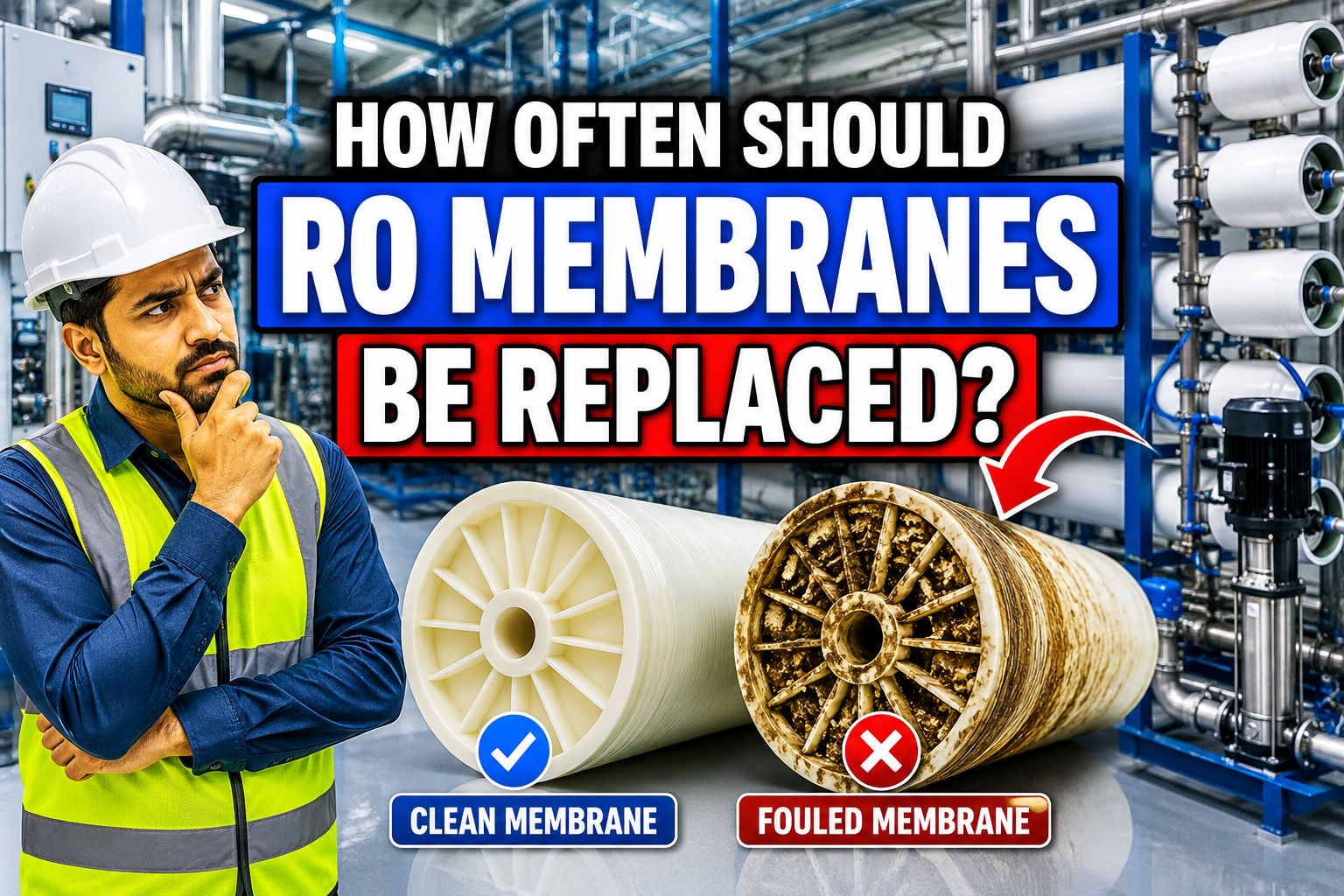
How Often Should RO Membranes Be Replaced?
2026-06-06 | by Joydip Manna
If you’re operating an RO system for industrial water treatment, process water, boiler feed water, wastewater recycling, or even drinking water applications, you’ve probably asked this question at some point:
How often should RO membranes be replaced?
The simple answer is:
There is no fixed replacement schedule.
Many plant owners assume an RO membrane should automatically be replaced after 2 years, 3 years, or 5 years. However, real-world plant operation tells a different story.
Some membranes fail within 18–24 months because of scaling, fouling, chlorine damage, or poor pretreatment. At the same time, we’ve seen membranes continue performing efficiently for more than 7 years when the system is properly maintained.
As per Plizma Technology , membrane replacement should always be based on performance data rather than calendar age.
What Is an RO Membrane?
An RO membrane is the heart of a reverse osmosis system.
It acts as a semi-permeable barrier that removes dissolved salts, minerals, bacteria, heavy metals, organic contaminants, and other impurities from water.
Whether the application is industrial process water, pharmaceutical manufacturing, food processing, power plants, or wastewater reuse, the membrane plays the most important role in producing high-quality treated water.
Over time, however, every membrane experiences fouling, scaling, and natural wear, which gradually impacts its performance.
How Long Do RO Membranes Usually Last?
Under normal operating conditions, most industrial RO membranes last between 3 and 7 years.
However, membrane life depends on several factors, including:
- Feed water quality
- Pretreatment efficiency
- Operating pressure
- Recovery rate
- Cleaning frequency
- Maintenance practices
- System operating conditions
A membrane operating with effective pretreatment and regular maintenance can often last much longer than expected.
Why Membrane Age Is Not the Real Story
One of the biggest misconceptions in the industry is that membrane age alone determines replacement.
The reality is different.
A membrane doesn’t suddenly stop working because it has completed five years.
Instead, its performance gradually changes over time.
This is why experienced operators monitor performance indicators such as:
- Permeate TDS
- Water production rate
- Salt rejection
- Differential pressure
- Cleaning effectiveness
These parameters provide a much better indication of membrane condition than simply looking at its age.
Signs Your RO Membrane May Need Replacement
1. Increasing Permeate TDS
One of the earliest warning signs is rising permeate TDS.
When membrane rejection starts declining, more dissolved salts pass through into the treated water.
If TDS continues increasing despite proper cleaning and maintenance, membrane replacement may be required.
2. Reduced Water Production
A noticeable drop in permeate flow is another common indicator.
If your RO system previously achieved its design capacity but now struggles to maintain output even after cleaning, permanent fouling or membrane damage may be present.
3. Higher Operating Pressure
When the system requires higher pressure to produce the same amount of water, it often indicates:
- Scaling
- Fouling
- Membrane compaction
Apart from reducing efficiency, this also increases power consumption and operating costs.
4. Frequent CIP Cleaning
Periodic cleaning is a normal part of RO plant operation.
However, if cleaning frequency keeps increasing and performance recovery becomes less effective after every cleaning cycle, the membrane may be approaching the end of its useful life.
Why Do RO Membranes Fail Earlier Than Expected?
In many cases, the membrane itself is not the actual problem.
The root cause often lies elsewhere in the system.
Common causes of premature membrane failure include:
- Poor pretreatment
- Hardness scaling
- Silica scaling
- Chlorine breakthrough
- Iron contamination
- Biological fouling
- Incorrect antiscalant dosing
- Improper shutdown procedures
At Plizma Technology , we frequently see facilities replacing expensive membrane elements without addressing these underlying issues. As a result, the new membranes develop the same problems within a short period.
Replacing membranes without solving the root cause rarely delivers long-term results.
How to Extend RO Membrane Life
The good news is that membrane lifespan can often be extended significantly through proper operation and maintenance.
Maintain Effective Pretreatment
Sediment filters, activated carbon filters, softeners, and other pretreatment systems help protect membranes from fouling and scaling.
Monitor Feed Water Quality
Regular water testing helps identify potential issues before they impact membrane performance.
Prevent Chlorine Exposure
Most RO membranes are highly sensitive to chlorine. Even small amounts can permanently damage the membrane surface.
Perform Scheduled CIP Cleaning
Routine cleaning removes fouling, scale deposits, and biological growth before they become severe.
Monitor Differential Pressure
Increasing differential pressure often provides an early indication of membrane fouling.
Avoid Excessive Recovery Rates
Operating beyond recommended recovery limits can accelerate scaling and shorten membrane life.
Follow Proper Shutdown Procedures
Membranes should be preserved correctly during extended shutdowns to prevent biological growth and damage.
How Do Industrial Plants Decide When to Replace Membranes?
Most industrial facilities do not replace membranes based solely on age.
Instead, they evaluate:
- Salt rejection performance
- Permeate flow rate
- Differential pressure
- Cleaning effectiveness
- Overall operating costs
If cleaning successfully restores performance, membrane replacement is usually postponed.
If performance cannot be recovered despite proper maintenance and cleaning, replacement becomes the most economical option.
If the membrane is still delivering the required water quality and production, there is usually no reason to replace it simply because it has reached a certain age.
Frequently Asked Questions
How long do industrial RO membranes usually last?
Most industrial RO membranes operate effectively for 3–7 years when supported by proper pretreatment and maintenance.
Can an RO membrane last more than 7 years?
Yes. Under excellent operating conditions, some membranes continue performing efficiently beyond seven years.
Does chemical cleaning make a membrane like new?
No. Cleaning removes fouling and scale deposits but cannot reverse oxidation damage, chemical degradation, or natural membrane aging.
What is the biggest cause of membrane failure?
Poor pretreatment remains the leading cause. Scaling, chlorine damage, iron contamination, and biological fouling account for most premature failures.
Should all membrane elements be replaced together?
Not always. Performance testing often identifies individual elements that require replacement, helping reduce maintenance costs.
Final Thoughts
As per Plizma Technology , RO membranes rarely fail without warning. Higher TDS, lower production, increasing operating pressure, and more frequent cleaning requirements are usually early indicators that membrane performance is declining.
The most successful plants do not replace membranes simply because they have reached a certain age. Instead, they monitor performance trends, identify root causes, and make replacement decisions based on actual operating data.
In many cases, the real issue is not the membrane itself but poor pretreatment, water quality fluctuations, scaling, or maintenance gaps. By addressing these issues early, industries can significantly extend membrane life, reduce operating costs, and maintain consistent water quality.
The bottom line is simple: replace an RO membrane when performance can no longer be restored—not when the calendar says it’s time.
RECENT BLOG
ETP for Jute Mill Wastewater Treatment in West Bengal: Improving Treatment Reliability
2026-10-22
ETP for Sugar Mills in India: A Practical Guide to Wastewater Treatment and Water Reuse
2026-10-14
Top 5 STP Manufacturers in Chhattisgarh
2026-09-28
Top 5 ETP Plant Manufacturers in Chhattisgarh
2026-09-28