


Recent
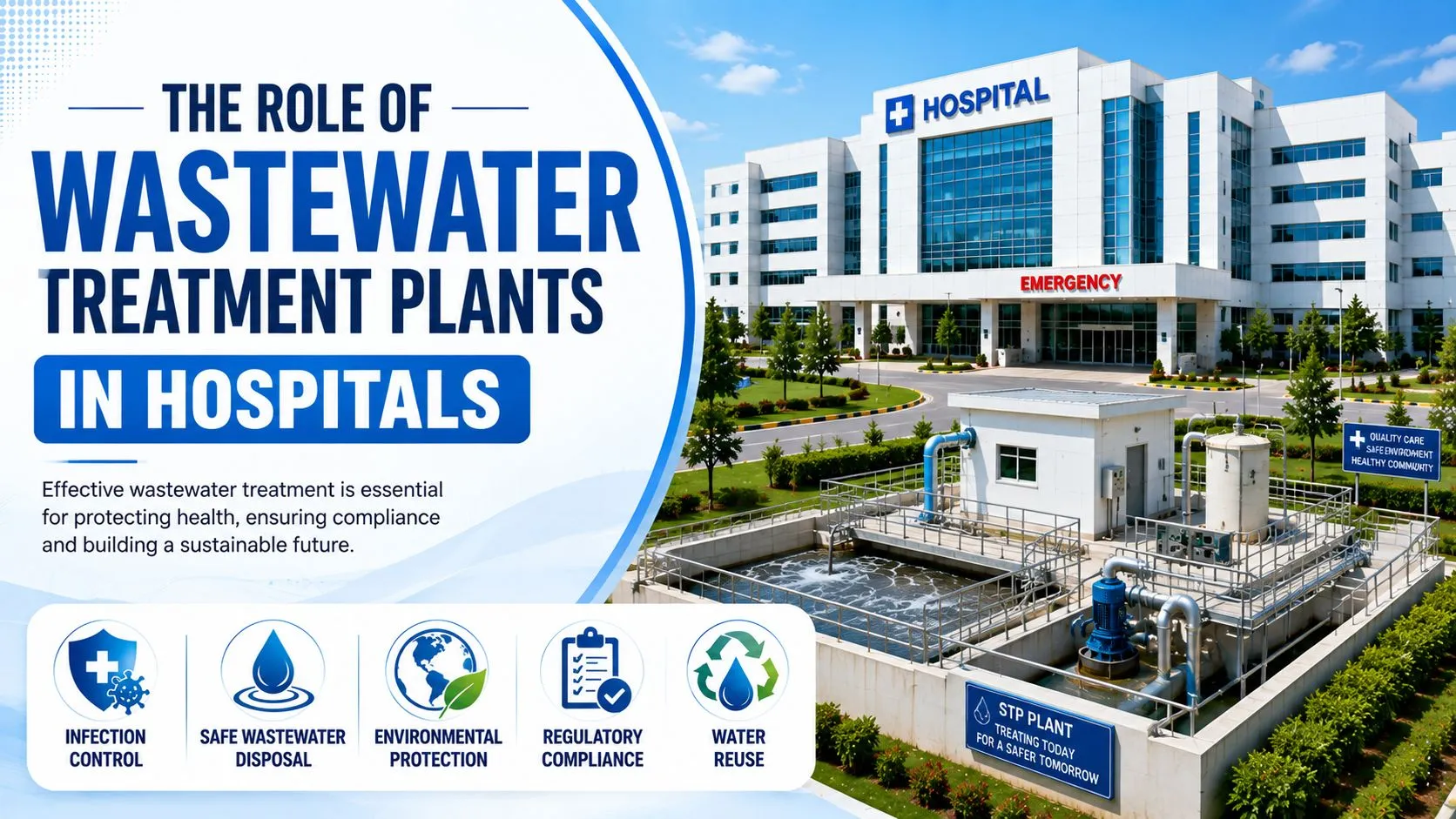
The Role of Waste Water Treatment Plants in Hospitals
2026-06-19 | by Joydip Manna
Hospitals save lives every day. But behind every operation theatre, laboratory, dialysis unit, pharmacy, and patient ward, another challenge keeps growing quietly. It is wastewater. Unlike domestic sewage, hospital wastewater contains a complex mixture of pharmaceuticals, antibiotics, disinfectants, blood residues, laboratory chemicals, radioactive traces from diagnostic departments, pathogens, and sometimes heavy metals. If this wastewater enters municipal drains without proper treatment, it can become a serious environmental and public health concern.
This is why modern healthcare infrastructure is no longer complete without a properly designed WasteWater Treatment Plant (WWTP) . Today hospitals are expected not only to provide quality healthcare but also to ensure their wastewater does not create another health hazard outside the hospital premises.
Why Hospital Wastewater is Different from Normal Sewage
Many people assume wastewater from hospitals is similar to domestic sewage because both originate from toilets, kitchens, and bathrooms. Actually, this is only a small part of the total wastewater generated inside a hospital.
Hospital wastewater also comes from:
- Operation theatres
- Intensive Care Units (ICUs)
- Pathology laboratories
- Radiology departments
- Dialysis units
- Pharmaceutical storage and preparation rooms
- Laundry facilities
- Sterilization departments
- Mortuaries
Because of these sources, hospital wastewater often contains substances that municipal sewage treatment plants are not originally designed to remove completely.
According to the World Health Organization (WHO) , untreated healthcare wastewater may carry infectious microorganisms, antibiotic-resistant bacteria, pharmaceutical residues, and hazardous chemicals that can enter rivers, lakes, or groundwater if not properly treated.
Why Hospitals Need Dedicated Waste Water Treatment Plants
Many hospital discharge wastewater into municipal sewer systems. However, this does not eliminate the responsibility of pre-treatment.
A dedicated wastewater treatment plant performs several important functions.
Removal of Disease-Causing Pathogens
Hospital wastewater contains bacteria, viruses, fungi, parasites, and other microorganisms that originate from infected patients. Advanced biological treatment followed by UV or chlorination significantly reduces these pathogens before discharge.
Without proper treatment, infectious organisms may survive long enough to contaminate nearby water bodies.
Reduction of Pharmaceutical Pollution
One growing environmental concern worldwide is pharmaceutical contamination.
Unused medicines, antibiotics, painkillers, chemotherapy drugs, and hormone-based medicines often enter wastewater through patient excretion or disposal practices.
Even very small concentrations can affect aquatic organisms and contribute towards antimicrobial resistance (AMR), which WHO considers one of the biggest global public health threats.
Modern hospital wastewater treatment plants help reduce these contaminants through biological degradation, activated carbon filtration, membrane filtration, and advanced oxidation processes.
Protection of Municipal Sewage Infrastructure
High-strength hospital wastewater can upset municipal sewage treatment operations.
Large chemical loads, disinfectants, or laboratory waste may reduce microbial activity inside conventional sewage treatment plants.
Proper on-site treatment reduces this risk considerably.
Typical Treatment Process Inside a Hospital Waste Water Treatment Plant
Although every hospital has different wastewater characteristics, most treatment plants follow multiple treatment stages.
Preliminary Treatment
Incoming wastewater first passes through coarse and fine screens.
These remove plastics, cloth, syringes without needles, paper waste, food particles, and larger suspended materials that could damage downstream equipment.
Grit chambers then separate sand and heavier particles.
Equalization Tank
Hospital wastewater generation varies throughout the day.
Morning OPD hours, surgery schedules, and laundry operations create sudden fluctuations in flow.
An equalization tank balances both flow rate and pollutant concentration before biological treatment begins.
Without equalization, treatment efficiency becomes unstable.
Biological Treatment
This stage removes dissolved organic pollutants.
Common technologies include:
- Moving Bed Biofilm Reactor (MBBR)
- Sequential Batch Reactor (SBR)
- Activated Sludge Process (ASP)
- Membrane Bioreactor (MBR)
These systems use naturally occurring microorganisms to break down biodegradable organic matter.
MBBR and MBR have become increasingly popular for hospital because they occupy less space while maintaining higher treatment efficiency.
Secondary Clarification
After biological treatment, suspended biomass settles inside clarifiers.
The settled sludge is removed for further handling while clarified water moves towards tertiary treatment.
Tertiary Treatment
Hospital wastewater often requires advanced polishing before reuse or discharge.
Typical processes include:
- Pressure Sand Filter
- Activated Carbon Filter
- Ultrafiltration
- Reverse Osmosis (where reuse quality is required)
- UV Disinfection
- Ozonation
- Chlorination
This stage significantly improves water quality by removing residual suspended solids, colour, odour, microorganisms, and dissolved contaminants.
Water Reuse Inside Hospitals
One major advantage of installing an efficient wastewater treatment plant is water recycling.
Properly treated water can safely be reused for several non-potable applications such as:
- Toilet flushing
- Landscape irrigation
- Cooling towers
- HVAC systems
- Gardening
- Road washing
- Utility cleaning
Under CPCB and MoHUA water conservation initiatives, many hospitals now aim to reduce freshwater dependency by maximizing treated wastewater reuse.
This becomes especially valuable in water-stressed regions across India.
Regulatory Requirements in India
Hospital wastewater management is governed by multiple authorities.
Some important regulations include:
- Central Pollution Control Board (CPCB)
- State Pollution Control Boards (SPCBs)
- Biomedical Waste Management Rules, 2016
- Water (Prevention and Control of Pollution) Act, 1974
- Environment (Protection) Act, 1986
- National Green Tribunal (NGT) directives wherever applicable
Hospitals must regularly monitor parameters such as:
- pH
- BOD
- COD
- TSS
- Oil & Grease
- Residual Chlorine
- Total Coliform
- Faecal Coliform
Non-compliance may result in environmental penalties, legal action, or operational restrictions imposed by pollution control authorities.
Challenges Faced by Hospital Wastewater Treatment Plants
Operating a hospital WWTP is not always straightforward.
Several practical issues arise during daily operation.
Variable Pollutant Load
Patient numbers fluctuate daily.
Emergency admissions, disease outbreaks, or seasonal infections can suddenly increase wastewater strength.
Treatment plants must therefore be designed with adequate hydraulic and organic loading flexibility.
Antibiotic Resistant Microorganisms
Researchers increasingly study the presence of antibiotic-resistant bacteria inside hospital wastewater.
Although biological treatment removes many microorganisms, advanced tertiary treatment becomes essential for reducing environmental risks associated with antimicrobial resistance.
Sludge Disposal
Treatment generates biological sludge that may contain concentrated contaminants.
Its handling, dewatering, transportation, and disposal should comply with applicable environmental regulations to avoid secondary pollution.
Skilled Plant Operation
Even the best-designed WasteWater Treatment Plant (WWTP) performs poorly without trained operators.
Routine monitoring of dissolved oxygen, MLSS, sludge age, pH, chlorine dosage, and equipment maintenance remains essential for consistent treatment performance.
Future Trends in Hospital Wastewater Treatment
Healthcare wastewater treatment is rapidly evolving.
Modern hospitals increasingly adopt:
- IoT-based remote monitoring
- SCADA automation
- Online water quality analyzers
- Membrane Bioreactor (MBR) systems
- Advanced Oxidation Processes (AOP)
- AI-assisted predictive maintenance
- Energy-efficient blowers
- Water reuse systems supporting green hospital initiatives
These technologies improve treatment consistency while reducing operating costs and environmental impact.
As sustainability becomes a major focus in healthcare infrastructure, wastewater treatment plants will continue becoming an integral part of hospital planning rather than an optional utility.
Conclusion
Hospital wastewater is far more complex than ordinary domestic sewage. It carries pathogens, pharmaceutical residues, chemicals, and other contaminants that require specialized treatment before discharge or reuse. A properly designed Waste Water Treatment Plant protects public health, preserves natural water resources, supports regulatory compliance, and enables sustainable water management within healthcare facilities.
As environmental regulations become stricter and water conservation gains greater importance, hospitals are increasingly investing in advanced wastewater treatment technologies that ensure both operational efficiency and environmental responsibility. For healthcare facilities, wastewater treatment is no longer just about compliance. It has become an essential part of safe and sustainable hospital infrastructure.
At Plizma Technology , wastewater treatment is viewed from an operational and engineering perspective rather than only a compliance requirement. A well-designed hospital wastewater treatment system should deliver consistent treatment performance, reliable operation, and long-term sustainability while meeting applicable regulatory standards.
Frequently Asked Questions
1. Why is hospital wastewater considered hazardous?
Hospital wastewater may contain infectious microorganisms, pharmaceutical residues, laboratory chemicals, disinfectants, and antibiotic-resistant bacteria. WHO and CPCB recognize these contaminants as requiring proper treatment before discharge.
2. Which treatment technology is most suitable for hospitals?
Technologies such as MBBR, SBR, and MBR are commonly used depending on hospital size, wastewater characteristics, available land, and treated water reuse requirements.
3. Can treated hospital wastewater be reused?
Yes. After appropriate tertiary treatment and disinfection, treated water can generally be reused for non-potable purposes such as flushing, gardening, cooling towers, and utility cleaning, subject to applicable regulations.
4. Which regulations govern hospital wastewater treatment in India?
Hospital wastewater management is primarily regulated by the Central Pollution Control Board (CPCB), State Pollution Control Boards (SPCBs), the Biomedical Waste Management Rules, 2016, the Water Act, 1974, and the Environment (Protection) Act, 1986.
5. Why is tertiary treatment important in hospital WWTPs?
Tertiary treatment removes remaining suspended solids, microorganisms, pharmaceutical residues, and trace contaminants that primary and secondary treatment alone may not eliminate completely. It improves water quality for safe discharge or reuse.
Also Read
👉 Sewage Treatment Plant Solutions by Plizma Technology
Contact Us
RECENT BLOG

ETP for Jute Mill Wastewater Treatment in West Bengal: Improving Treatment Reliability
2026-10-22

ETP for Sugar Mills in India: A Practical Guide to Wastewater Treatment and Water Reuse
2026-10-14
Top 5 STP Manufacturers in Chhattisgarh
2026-09-28
Top 5 ETP Plant Manufacturers in Chhattisgarh
2026-09-28