

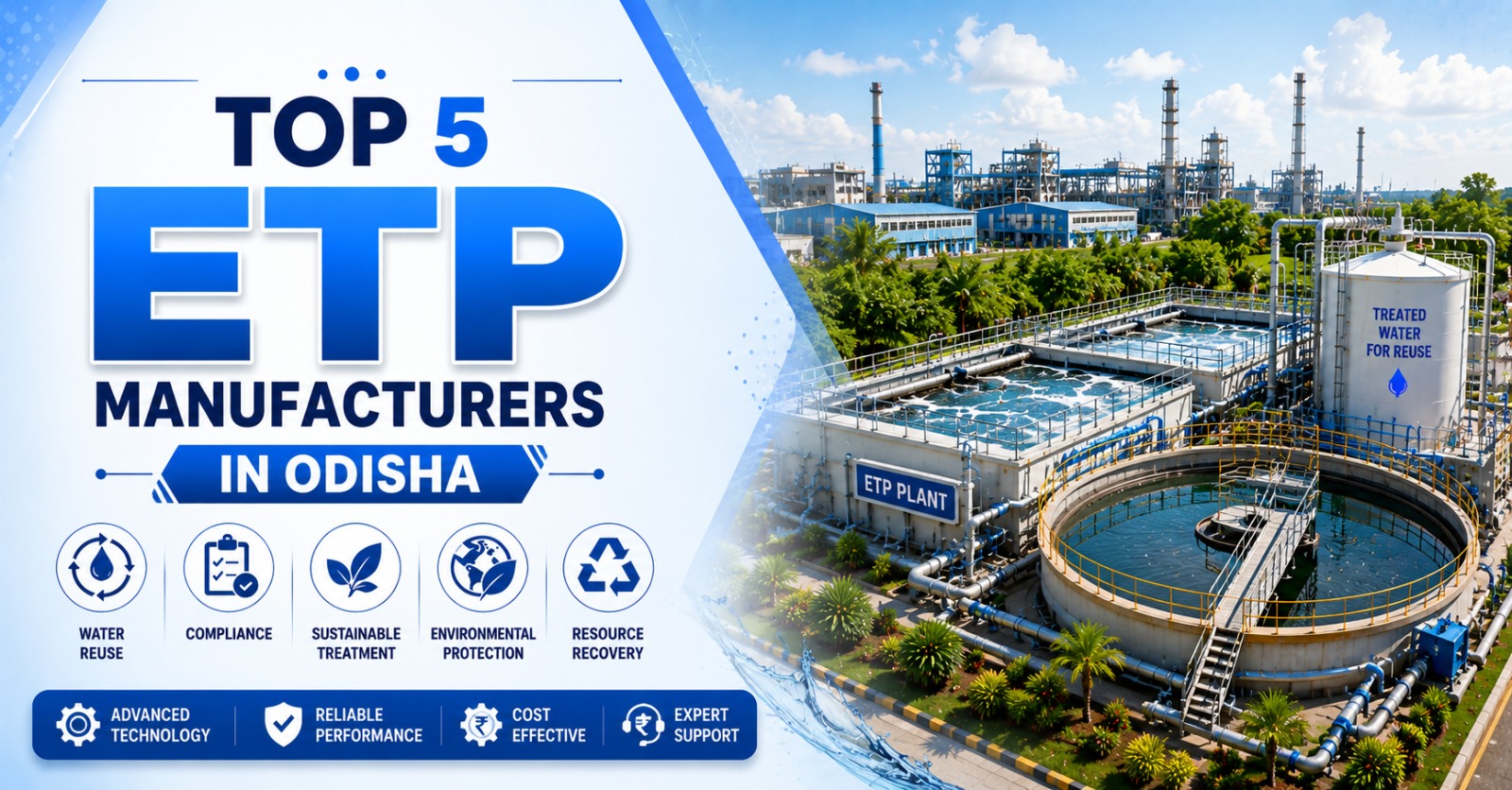
Hotels in Odisha need reliable Effluent Treatment Plant (ETP) solutions to manage wastewater, meet discharge norms, reduce environmental impact, and support water reuse. Many hospitality projects also look for advanced treatment options such as MBBR, tertiary treatment, and Zero Liquid Discharge (ZLD), depending on pollution control requirements and site conditions.
Below are some ETP and wastewater treatment solution providers serving hotels and commercial projects in Odisha.
1. Plizma Technology
Service Area: Odisha – pan-India projects
Plizma Technology is an engineering company specializing in the design and manufacturing of custom water and wastewater treatment systems. The company provides site-specific solutions for hotels, industries, municipalities, and institutions that require reliable wastewater treatment, water purification, and reuse systems.
For hotels and resorts in Odisha, Plizma Technology offers customized ETP and STP solutions based on actual wastewater load, kitchen discharge, laundry wastewater, space availability, reuse requirements, and pollution control norms. Instead of offering only standard catalog-based systems, the company engineers physical, chemical, and biological treatment processes according to site conditions and effluent characteristics.
Key Services:
ETP, STP, RO Plant, DM Plant, UF System, ZLD System, wastewater recycling, custom water and wastewater treatment plant design, manufacturing, installation, and maintenance support.
2. Water Care Systems
Location: Pandav Nagar, Bhubaneswar, Odisha
Water Care Systems provides packaged STP and ETP solutions for commercial and hospitality applications. Their systems are commonly designed using modern biological treatment processes such as MBBR, making them suitable for hotels, resorts, and similar facilities with regular wastewater generation.
Key Services:
ETP, STP, packaged treatment systems, MBBR-based wastewater treatment.
3. Healthy Enviro Solutions Pvt. Ltd.
Location: Haladi Padia, Laxmi Sagar, Bhubaneswar, Odisha
Healthy Enviro Solutions Pvt. Ltd. is a local pollution control equipment manufacturer offering customized wastewater and effluent treatment systems. They serve commercial and industrial clients, including hospitality businesses that require treatment plants as per site-specific discharge requirements.
Key Services:
Customized ETP, STP, pollution control equipment, wastewater treatment solutions.
4. Narayan Solutions
Location: Kolkata and Bhubaneswar operations
Narayan Solutions provides wastewater treatment and recovery systems for commercial and industrial clients. Their services include system design, installation support, and AMC services, making them suitable for hotels looking for long-term operation and maintenance support.
Key Services:
ETP, STP, wastewater recovery systems, AMC support, customized hotel wastewater solutions.
5. Kanti Industries
Location: Servicing Odisha through regional and national operations
Kanti Industries offers cost-effective ETP and STP systems for hospitality and industrial water recycling applications. Their systems are generally focused on durability, ease of operation, and practical wastewater management for different project sizes.
Key Services:
ETP, STP, water recycling systems, budget-friendly wastewater treatment plants.
How to Choose the Right ETP Manufacturer for Hotels in Odisha
Before selecting an ETP manufacturer, hotels should check whether the company can provide proper site assessment, plant design, manufacturing, installation, commissioning, and maintenance support. The right system should match the hotel’s wastewater load, kitchen discharge, laundry wastewater, space availability, reuse requirement, and Odisha State Pollution Control Board compliance needs.
For hotels, it is also important to choose a company that offers after-sales service and AMC support, because poor operation and maintenance can directly affect treated water quality and compliance.
Why Hotels in Odisha Need Proper ETP and STP Design
Odisha has coastal hotels, temple-town hotels, business hotels, resorts, and highway hospitality projects. Wastewater behaviour is not same in all these properties. A Puri resort and a Bhubaneswar business hotel will not have identical wastewater load. Kitchen discharge may be high in banquet properties. Laundry discharge may have detergent, surfactant, high TDS, and pH fluctuation. Restaurants add oil and grease. Toilets add organic load and pathogens.
This is why hotels should not select ETP manufacturer only by tank size or lowest quotation. The treatment plant has to match:
- Hotel room count and occupancy
- Restaurant and kitchen capacity
- Laundry load
- Banquet or event wastewater
- Space availability
- Reuse need for gardening, flushing, cooling, or washing
- Odisha State Pollution Control Board consent condition
- Discharge route, like drain, land, sewer, or reuse system
- Power availability and operator skill level
A badly designed plant may run for few weeks, but after that odour, floating sludge, black water, high BOD, high COD, high TSS, and complaint from authority can happen.
Common Treatment Process Used for Hotel Wastewater
A hotel wastewater treatment system usually includes these stages, though final design depends on analysis.
1. Screening and Oil-Grease Removal
Large solids, food particles, plastic, and floating waste must be removed first. Kitchen water should pass through grease trap or oil and grease separator. Without this step, biological treatment gets damaged, pipes choke, and smell starts.
2. Equalization Tank
Hotel flow comes unevenly. Morning and night peak is high, afternoon may be low. Equalization tank balances this flow and pollutant load before biological treatment. This is one of the most ignored but most important tanks.
3. Biological Treatment
MBBR, SBR, activated sludge, or MBR can be used depending on treated water requirement and space. MBBR is common for hotels because it is compact and handles variable load better when media, air, and retention time are properly designed.
4. Clarification and Sludge Handling
After biological treatment, suspended biomass must settle or be separated. Sludge should be removed regularly. If sludge is not removed, treated water quality drops and plant starts giving odour.
5. Tertiary Treatment
Pressure sand filter, activated carbon filter , micron filter, UF, UV, chlorination, or RO can be used. Tertiary treatment is required when treated water is reused for flushing, gardening, cooling tower makeup, or other non-potable applications.
6. ZLD, Where Required
Zero Liquid Discharge is not required for every hotel. But in some locations, especially where discharge permission is difficult or water reuse target is strict, ZLD or near-ZLD may be studied. It needs higher capital cost, power, RO reject handling, evaporator or other brine management, so it should be selected after proper feasibility.
How to Choose the Right ETP Manufacturer for Hotels in Odisha
Hotels should check whether the manufacturer is only supplying tanks or actually designing treatment process. This difference is very important. A proper ETP manufacturer should be able to provide:
- Site inspection and wastewater load study
- Basic wastewater testing guidance
- Correct process selection
- Hydraulic and organic load calculation
- Civil or prefabricated plant design
- Manufacturing and installation
- Commissioning support
- Operator training
- AMC and emergency service
- Treated water quality monitoring support
Also check whether the company understands CPCB and State Pollution Control Board compliance logic. In India, wastewater discharge and reuse conditions can vary based on location, consent condition, discharge point, and nature of project. So final design must be aligned with Odisha State Pollution Control Board requirements, not just general internet values.
Practical Trade-Offs Hotels Should Understand
- A compact MBBR plant saves space, but still needs proper aeration and sludge control.
- An MBR plant gives better treated water quality, but membrane cleaning and maintenance cost is higher.
- RO improves reuse quality, but reject water management becomes a problem if not planned.
- ZLD reduces liquid discharge, but power and operating cost is high.
- Low-cost plants reduce initial budget, but compliance risk and maintenance cost can increase later.
- Automation helps, but operator understanding is still needed. Sensors also need calibration, otherwise wrong reading creates wrong operation.
So the right ETP is not always the most expensive one. It is the one that matches the hotel’s wastewater, space, consent condition, and operation capability.
FAQs on Hotel ETP Plants in Odisha
1. Is ETP mandatory for hotels in Odisha?
Hotels may require ETP, STP, or combined wastewater treatment system depending on wastewater generation, property size, discharge route, and Odisha State Pollution Control Board consent condition. For hotels with kitchen, laundry, rooms, and banquet facilities, untreated wastewater discharge is not acceptable under pollution control requirements.
2. What is the difference between ETP and STP in hotels?
STP mainly treats sewage from toilets, bathrooms, and domestic wastewater. ETP treats wastewater with more complex pollutants, such as kitchen grease, laundry chemicals, detergents, high COD, oil, and other commercial wastewater. Many hotels require combined planning because hotel wastewater is mixed in actual site condition.
3. Can treated hotel wastewater be reused?
Yes, treated wastewater can be reused for gardening, toilet flushing, floor washing, cooling tower makeup, or other non-potable applications, if treatment quality meets required standards. For higher reuse quality, tertiary treatment, UF, UV, chlorination, or RO may be required.
4. Which technology is best for hotel ETP or STP?
MBBR is commonly used for hotels because it is compact and suitable for variable load. SBR, MBR, activated sludge, UF, RO, and ZLD may also be used depending on treated water requirement, space, and budget. There is no single best technology for every hotel.
5. Why does hotel ETP fail after installation?
Most failures happen due to wrong capacity design, missing grease trap, poor equalization, low aeration, no sludge removal, poor chemical dosing, lack of operator training, or no AMC. Hotel wastewater is variable, so the plant must be designed and operated for peak and shock load.
6. Should hotels choose local Odisha manufacturer or pan-India manufacturer?
Both can work. Local companies may offer faster site coordination. Pan-India engineering companies may offer more customized design and manufacturing capability. The hotel should compare process design, experience, service support, compliance understanding, and total lifecycle cost before selection.
Closing Note
Hotels in Odisha should treat wastewater plant selection as infrastructure decision, not only a purchase item. Kitchen waste, laundry water, sewage, space shortage, reuse demand, and pollution control compliance all have to be seen together. Plizma Technology works in this area with custom ETP, STP, RO, UF, DM, and ZLD systems for hospitality and commercial projects, with focus on practical design, installation, and operating support rather than only standard plant supply.