

Recent
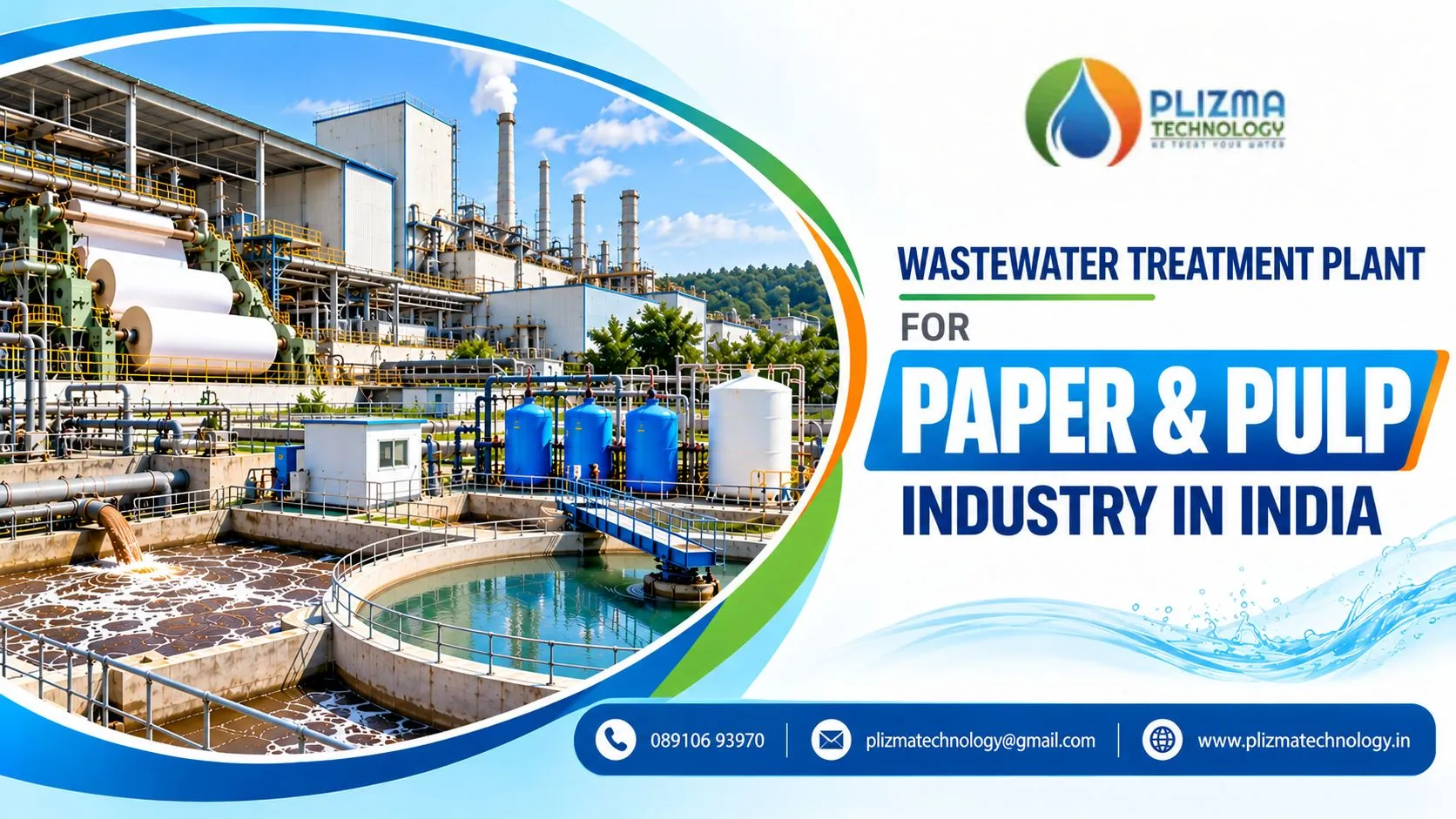
Wastewater Treatment Plant for Paper & Pulp Industry in India
2026-11-01 | by Joydip Manna
The paper and pulp industry is one of the major industrial sectors where water management plays a very important role. From pulp preparation and paper manufacturing to washing, bleaching and finishing, water is used across multiple production stages. But the process also generates wastewater containing fibres, suspended solids, organic pollutants, colour and residual process chemicals. If this wastewater is discharged without proper treatment, it can create serious environmental problems and regulatory complications for the manufacturing unit.
This is where a wastewater treatment plant for the paper and pulp industry becomes essential. A properly designed effluent treatment plant (ETP) helps remove pollutants from industrial wastewater, recover usable fibres and improve opportunities for water recycling within the manufacturing process.
However, treating paper mill wastewater is not as simple as installing a few tanks and filters. Different paper mills generate different types of effluent depending on their raw materials, production methods and chemical usage. Therefore, the treatment process must be selected according to actual wastewater characteristics, plant capacity and applicable discharge or reuse requirements.
Let us understand how paper mill wastewater treatment works, which technologies are commonly used and what Indian industries need to consider while planning an efficient effluent treatment plant.
Why Is Wastewater Treatment Important in the Paper and Pulp Industry?
Paper manufacturing generates wastewater from several operations, including pulp washing, stock preparation, paper machine operations, bleaching, coating and equipment cleaning. These wastewater streams may contain fibres, fillers, suspended solids, dissolved organic matter and residual process chemicals.
When untreated effluent enters rivers or other water bodies, its organic load can increase biochemical oxygen demand (BOD) and chemical oxygen demand (COD). This can reduce dissolved oxygen levels and affect aquatic ecosystems. Suspended solids and persistent colour create additional environmental concerns.
For industries operating in India, effective wastewater treatment is important for pollution control, regulatory compliance and sustainable manufacturing. It can also reduce freshwater consumption when treated water is suitable for reuse.
What Is a Paper Mill Effluent Treatment Plant?
A paper mill Effluent Treatment Plant (ETP) is a system designed to remove pollutants from wastewater generated during paper and pulp manufacturing before discharge or reuse.
Unlike a sewage treatment plant (STP), which primarily handles domestic sewage, an industrial ETP must address process-specific pollutants and variations in wastewater quality.
A typical paper industry ETP may include screening, fibre recovery, equalization, primary clarification, biological treatment, secondary clarification and tertiary filtration. Additional processes such as ultrafiltration (UF) and reverse osmosis (RO) may be required when higher-quality recycled water is needed.
The treatment configuration depends on wastewater flow, COD, BOD, suspended solids, colour, pH and the intended discharge or reuse application.
Major Stages of a Paper Mill Wastewater Treatment Plant
1. Screening and Fibre Recovery
Screening removes larger particles, unwanted debris and recoverable fibres from wastewater before it enters downstream treatment units.
Rotary screens, mechanical screens and fibre recovery equipment may be used according to the wastewater characteristics. Effective fibre recovery reduces suspended solids loading and helps minimize the loss of usable raw materials.
This stage is particularly important for recycled paper mills, where fibre losses can affect production costs and increase the treatment burden.
2. Equalization and pH Correction
Wastewater flow and pollutant concentrations can change during production shifts, equipment cleaning and changes in paper grades.
An equalization tank collects and mixes incoming wastewater to reduce sudden variations in flow and organic loading. pH correction may also be provided to maintain suitable conditions for subsequent chemical and biological treatment.
Without proper equalization, sudden changes in wastewater quality can disturb biological activity and reduce treatment efficiency.
3. Primary Treatment and Clarification
Primary treatment removes suspended solids and particles that can be separated from wastewater.
Coagulation and flocculation may be used to combine fine particles into larger aggregates, allowing easier separation. Sedimentation tanks remove settleable solids, while dissolved air flotation (DAF) may be suitable for lightweight fibres that do not settle efficiently.
Chemical selection and dosing should be based on wastewater testing. Excessive chemical consumption can increase operating costs and sludge production without providing proportional improvements.
4. Secondary Biological Treatment
Biological treatment uses microorganisms to break down biodegradable organic matter in paper mill wastewater.
Common technologies include the activated sludge process, moving bed biofilm reactor (MBBR) and extended aeration. For selected high-strength wastewater streams, anaerobic treatment may also be considered before aerobic treatment.
The selection depends on wastewater strength, available space, operating requirements and the required outlet quality.
Proper aeration, pH control, nutrient balance and biomass management are essential for stable operation. Biological treatment may not remove all colour-producing compounds or difficult-to-degrade organic pollutants, so additional treatment may be needed.
5. Tertiary Treatment and Effluent Polishing
After biological treatment, wastewater may still contain residual suspended solids, dissolved organics, colour or salts.
Pressure sand filters and multimedia filters help remove remaining suspended particles. Activated carbon may help remove certain dissolved organic compounds. Ultrafiltration and reverse osmosis can be incorporated when the intended reuse application requires further treatment.
Advanced oxidation may also be considered for selected difficult-to-degrade contaminants.
Not every paper mill requires all these technologies. The treatment system should be selected according to actual wastewater analysis and the required final water quality.
How to Reduce COD and BOD in Paper Mill Effluent
High COD and BOD are common concerns in paper mill wastewater treatment. The appropriate solution depends on the nature of the organic pollutants and the performance of the existing treatment system.
Effective fibre recovery, primary clarification and equalization help reduce and stabilize the load entering biological treatment. Biological processes then remove biodegradable organic matter under suitable operating conditions.
If COD remains high after biological treatment, the wastewater may contain difficult-to-degrade compounds or the biological process may not be operating properly. Additional treatment should be considered after identifying the underlying cause.
Simply increasing aeration or chemical dosing can raise operating costs without necessarily solving the problem.
Water Recycling and Zero Liquid Discharge in Paper Mills
Water recycling is an important consideration for paper mills because manufacturing requires substantial quantities of process water.
Depending on treated-water quality, recycled wastewater may be suitable for selected washing operations, equipment cleaning and other compatible manufacturing applications. Additional filtration or membrane treatment may be required for more demanding uses.
However, repeated recycling can increase dissolved salts and contaminant concentrations. These substances may affect product quality, scaling, corrosion and equipment performance. Water reuse must therefore be planned alongside the manufacturing process.
Zero liquid discharge (ZLD) is a more extensive approach designed to prevent routine liquid effluent discharge outside the defined system boundary. A ZLD system may combine biological treatment, filtration, reverse osmosis, evaporation and crystallization.
ZLD is not simply an RO installation. Membrane reject, concentrated salts and sludge still require appropriate management, and energy consumption can be significant. Its applicability should be assessed against the mill’s regulatory obligations and operating requirements.
Environmental Regulations for Paper Mills in India
Paper mills in India must comply with applicable environmental legislation, standards and consent conditions issued by the relevant authorities. The regulatory framework includes the Environment (Protection) Act, 1986, the Environment (Protection) Rules, 1986, and requirements administered by the Central Pollution Control Board (CPCB) and State Pollution Control Boards (SPCBs).
The Environment (Protection) Seventh Amendment Rules, 2025, notified through G.S.R. 612(E), were published on 10 September 2025. The notification provides for the revised rules to come into force after two years from publication, making 10 September 2027 the scheduled commencement date.
The applicability of revised standards depends on the relevant manufacturing category and the detailed requirements in the notification. Paper mills should distinguish between currently applicable obligations and standards scheduled to take effect in the future.
Regular monitoring, representative sampling, recordkeeping and compliance with the facility’s consent conditions remain important parts of wastewater management.
Common Problems in Paper Mill ETPs
Paper mill effluent treatment plants can experience operational problems when wastewater characteristics change or equipment performance declines.
- High COD: May indicate excessive organic loading or difficult-to-degrade compounds.
- High suspended solids: Can result from ineffective fibre recovery, poor clarification or sludge-settling problems.
- Persistent colour: May require additional treatment targeting the remaining colour-producing compounds.
- Aeration tank foaming: Can be associated with surfactants, biological conditions or operating imbalances.
- Membrane fouling: May result from inadequate pretreatment, organic deposits or scaling.
- Excessive sludge production: Can be linked to high solids loading or inappropriate chemical dosing.
The correct response depends on identifying the underlying cause. Regular monitoring of flow, pH, COD, BOD and suspended solids helps operators identify performance changes and maintain stable treatment.
How to Select a Paper Mill ETP Manufacturer in India
Selecting a suitable paper mill effluent treatment plant manufacturer requires an assessment of wastewater quality, production capacity and long-term operating needs.
Important considerations include wastewater flow and pollutant concentrations, appropriate treatment technologies, available land, energy consumption, chemical requirements, sludge management and the required level of water reuse.
Automation and monitoring instruments can help operators track important parameters and identify treatment problems early. However, automation cannot compensate for an incorrectly designed treatment process or inadequate maintenance.
A suitable ETP manufacturer should assess the mill’s actual requirements rather than propose the same configuration for every facility. The objective is to establish a treatment system that provides reliable performance under real production conditions.
Frequently Asked Questions
1. What is the best wastewater treatment process for paper mills?
A typical ETP combines fibre recovery, primary treatment, biological treatment and filtration where required.
2. How can COD and BOD be reduced in paper mill wastewater?
Suitable chemical treatment, effective solids removal and biological processes help reduce organic pollutants.
3. Can paper mill wastewater be reused?
Yes, treated wastewater can be reused when it meets the quality requirements of the intended application.
4. Is ZLD mandatory for every paper mill in India?
Requirements depend on applicable regulations, manufacturing category and specific consent conditions.
5. What affects paper mill ETP cost?
Capacity, wastewater quality, treatment technology, energy consumption, chemical use and sludge management determine costs.
Conclusion
A wastewater treatment plant for the paper and pulp industry helps control industrial pollution, recover suitable fibres and improve opportunities for water recycling. Its effectiveness depends on proper treatment design, stable operation and responsible management of sludge and other residual streams.
For paper mills in India, treatment decisions must consider actual wastewater characteristics, production requirements and applicable environmental standards. Water recycling and ZLD may provide additional benefits where technically and economically suitable.
Plizma Technology recognises industrial wastewater treatment as an integrated requirement involving pollution control, resource conservation and reliable plant operation. The appropriate treatment configuration can only be established after evaluating the mill’s wastewater profile, site conditions and discharge or reuse objectives.
RECENT BLOG
Why Mining Wastewater Needs Specialized ETP Treatment in Raniganj, West Bengal
2026-10-26
ETP for Jute Mill Wastewater Treatment in West Bengal: Improving Treatment Reliability
2026-10-22
ETP for Sugar Mills in India: A Practical Guide to Wastewater Treatment and Water Reuse
2026-10-14
Top 5 STP Manufacturers in Chhattisgarh
2026-09-28