2026-09-23



2026-06-19 | by Joydip Manna
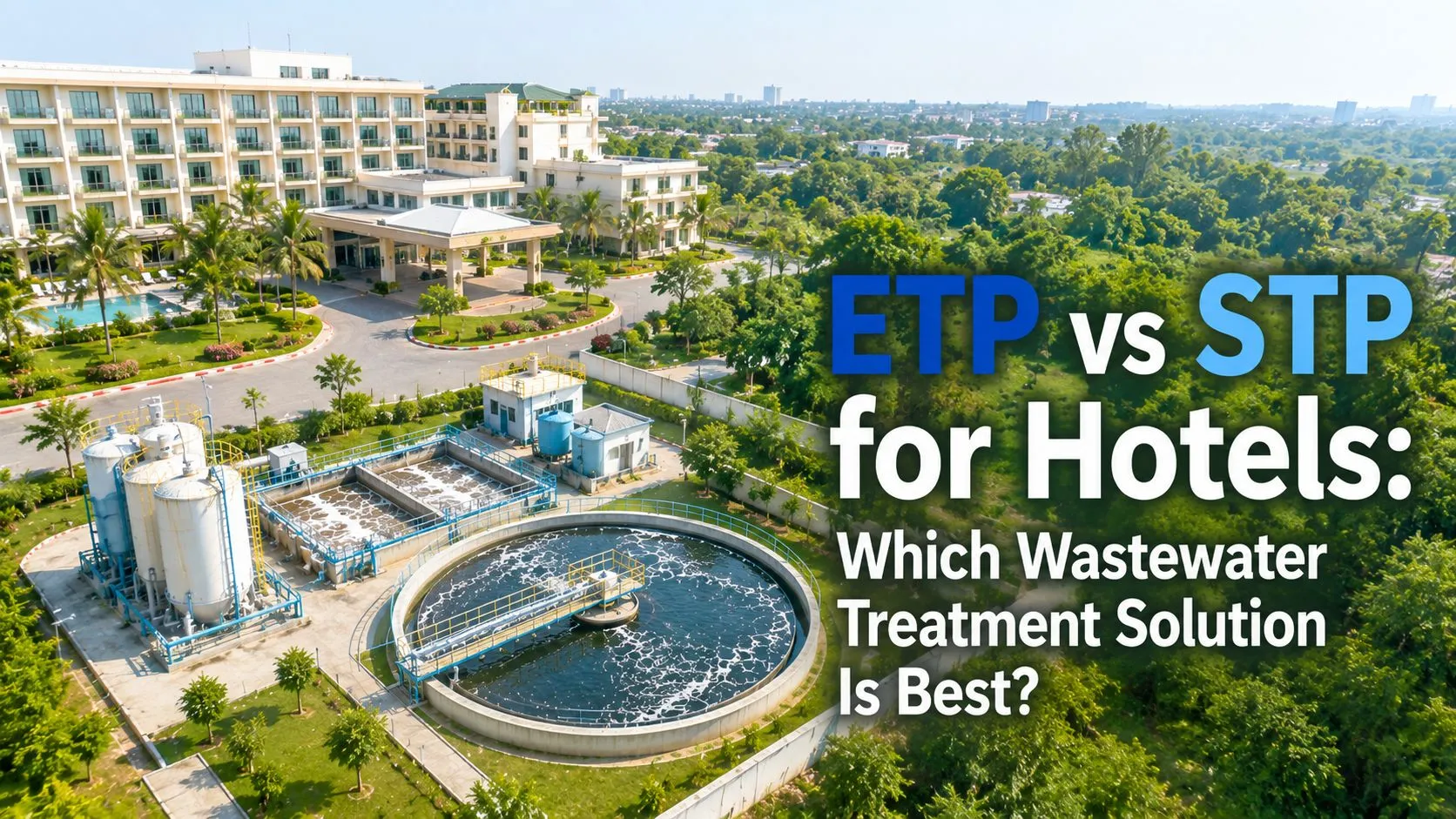
Hotels consume large volumes of water every day. From guest bathrooms and restaurants to laundries, kitchens, swimming pools, and cooling towers, almost every operation generates wastewater. However, one thing many hotel owners overlook is that not all wastewater is the same. Water discharged from a guest bathroom is completely different from wastewater produced by a commercial laundry or a maintenance workshop. Because of this, selecting the right wastewater treatment system becomes an important decision for both regulatory compliance and long-term operational efficiency.
One of the most common questions hotel developers ask is whether they should install an Effluent Treatment Plant (ETP) or a Sewage Treatment Plant (STP). Both systems are designed to treat wastewater, but they serve different purposes. Installing the wrong system can increase operational costs, affect water reuse quality, and even create compliance issues.
So, which one is the right choice for your hotel? Let us understand.
A hotel produces wastewater from multiple departments throughout the property. These include guest rooms, restaurants, kitchens, laundries, swimming pools, staff accommodation, cooling towers, housekeeping operations, and landscaped gardens.
The majority of this wastewater is domestic sewage generated through daily human activities such as bathing, toilet flushing, washing, and cooking. However, some facilities, particularly large laundries and engineering departments, generate wastewater containing detergents, oils, grease, disinfectants, and cleaning chemicals.
Since every wastewater stream has different characteristics, the treatment process also differs.
A Sewage Treatment Plant , commonly known as an STP, is designed to treat domestic wastewater generated from residential and commercial buildings. In hotels, this includes wastewater from guest bathrooms, toilets, showers, wash basins, restaurants, cafeterias, and staff facilities.
This wastewater mainly contains biodegradable organic matter, suspended solids, nutrients, and microorganisms. An STP removes these pollutants through biological treatment processes before safely discharging or reusing the treated water.
A typical hotel STP consists of several treatment stages, including screening, equalization, biological treatment, clarification, filtration, and final disinfection. Once treated, the water can often be reused for toilet flushing, landscape irrigation, cooling towers, floor cleaning, and other non-potable applications.
For most hotels, an STP becomes the primary wastewater treatment system because domestic sewage forms the largest portion of total wastewater generation.
An Effluent Treatment Plant (ETP) is specifically designed to treat wastewater containing industrial pollutants or chemical contaminants.
Unlike domestic sewage, industrial effluent may contain high concentrations of detergents, oils, grease, solvents, disinfectants, acids, alkalis, heavy metals, and other chemicals that cannot be removed efficiently through biological treatment alone.
An ETP combines physical, chemical, and biological treatment processes such as neutralization, coagulation, flocculation, sedimentation, aeration, filtration, and advanced polishing systems to remove these contaminants.
ETPs are widely used in industries such as pharmaceuticals, chemicals, textiles, food processing, automotive manufacturing, and refineries. However, certain hotel operations can also generate wastewater that requires effluent treatment.
Although both systems are designed to purify wastewater, their purpose is completely different.
An STP treats wastewater generated by people during daily activities. Since this wastewater mainly contains biodegradable organic matter and pathogens, biological treatment is usually sufficient to achieve the desired treatment standards. STPs are generally easier to operate and have lower installation and maintenance costs.
An ETP, on the other hand, is designed for wastewater containing chemicals, oils, grease, detergents, and other industrial contaminants. Removing these pollutants requires additional chemical treatment along with physical and biological processes, making ETPs comparatively more complex and expensive.
Simply put, an STP treats domestic sewage, whereas an ETP treats industrial or chemically contaminated wastewater.
For most hotels, a Sewage Treatment Plant is the most suitable solution because the majority of wastewater comes from guest rooms, washrooms, kitchens, restaurants, and common facilities.
Hotels mainly generate domestic sewage, which can be effectively treated through biological processes. Once treated, this water can be reused for flushing, gardening, cooling towers, and various housekeeping applications, helping hotels reduce their freshwater consumption significantly.
However, not every hotel has the same operational requirements.
Large luxury hotels often operate commercial laundries, engineering workshops, spa facilities, and extensive maintenance departments. Wastewater generated from these operations may contain high detergent concentrations, bleaching agents, oils, grease, or cleaning chemicals. In such situations, an ETP or a dedicated pre-treatment system may become necessary before the wastewater is sent for further treatment.
Although an STP is sufficient for most hospitality projects, certain hotels may require an additional ETP for specific wastewater streams.
These include:
Instead of mixing all wastewater together, these hotels often separate chemically contaminated wastewater and treat it independently.
Yes.
Many premium hotels install both systems to improve treatment efficiency.
A common arrangement includes routing domestic sewage from guest rooms and washrooms to the STP, while laundry wastewater undergoes separate treatment through an ETP. Kitchen wastewater is generally passed through grease traps before entering the STP, reducing oil and grease loading on the biological treatment system.
This combination allows each wastewater stream to receive the treatment process best suited to its pollutant characteristics while improving overall water quality for reuse.
Hotels can reuse treated water for gardening, flushing, HVAC cooling towers, road washing, and cleaning activities, reducing dependence on municipal water supplies.
Proper wastewater treatment helps hotels comply with environmental regulations while minimizing the risk of penalties, legal issues, and operational disruptions.
Water reuse significantly reduces freshwater procurement costs, especially in regions where water availability is limited or expensive.
Modern hospitality businesses increasingly focus on environmental sustainability and responsible water management. Efficient wastewater treatment supports green building certifications, ESG initiatives, and sustainable hotel operations.
Guests today are becoming more environmentally conscious. Hotels investing in water recycling and sustainable infrastructure demonstrate responsible business practices that strengthen their brand image.
Every hotel has unique wastewater characteristics. Before selecting a treatment system, several factors should be evaluated.
These include:
Designing the treatment plant based only on present-day requirements may create operational challenges in the future. A properly designed system should accommodate future expansion while maintaining consistent treatment performance.
For the majority of hotels, a Sewage Treatment Plant (STP) is the most practical and economical wastewater treatment solution because most wastewater originates from domestic activities such as guest rooms, bathrooms, restaurants, and staff facilities.
An Effluent Treatment Plant (ETP) becomes necessary only when hotels generate wastewater containing high concentrations of chemicals, detergents, oils, grease, or other industrial contaminants through operations such as commercial laundries or engineering workshops.
Large hospitality projects often benefit from using both systems together, ensuring that each wastewater stream receives the most appropriate treatment. This not only improves treatment efficiency but also supports water reuse, regulatory compliance, lower operating costs, and long-term sustainability.
As hotels continue focusing on water conservation and environmentally responsible operations, selecting the right wastewater treatment solution is no longer just a regulatory requirement. It has become an essential investment in operational efficiency and sustainable hospitality infrastructure.
Many commercial hotels require an STP because they generate substantial quantities of domestic sewage. The exact requirement depends on local environmental regulations and project capacity.
No. Most hotels only require an STP. An ETP is generally necessary only when wastewater contains industrial or chemical contaminants from operations such as commercial laundries or maintenance workshops.
Yes. Properly treated STP water is commonly reused for toilet flushing, landscape irrigation, cooling towers, floor cleaning, and other non-potable applications, helping hotels reduce freshwater consumption.
For hotels generating mainly domestic sewage, an STP is generally more economical because it has lower capital and operating costs. Installing an ETP where industrial-strength treatment is unnecessary can increase costs without providing additional benefits.
Small and medium-sized hotels often operate efficiently with a single STP supported by grease traps where required. Larger hotels with commercial laundries or chemical-intensive operations may benefit from using both an STP and an ETP to achieve better treatment efficiency and water reuse quality.
Selecting the right wastewater treatment solution depends on understanding the actual wastewater generated by the hotel rather than simply choosing between an STP and an ETP. Proper system design, regular operation, and planned maintenance help hotels achieve regulatory compliance, improve water reuse, reduce operating costs, and support long-term sustainability goals. At Plizma Technology, wastewater treatment solutions are developed by evaluating wastewater characteristics, project requirements, and future expansion needs, ensuring that hotels invest in systems that remain efficient throughout their operational life.