

Recent
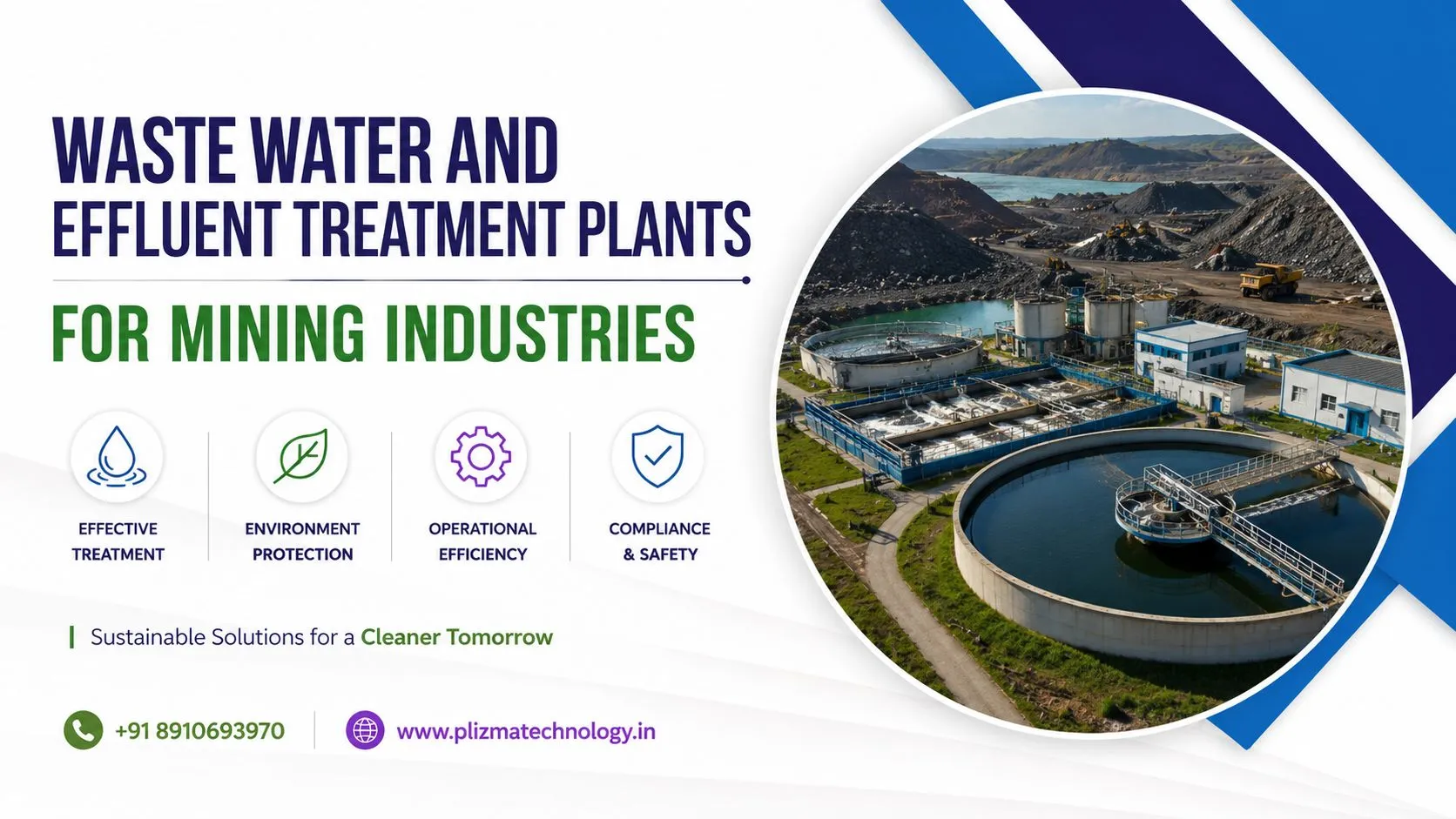
Waste Water and Effluent Treatment Plants for Mining Industries
2026-06-19 | by Joydip Manna
Mining industries use huge quantity of water, and the wastewater coming out from mining operations is not as simple as normal industrial wastewater. Water enters mines through groundwater, rainfall and surface runoff. Then water is also used for ore washing, crushing and grinding, dust suppression, mineral beneficiation and equipment operations.
So what finally comes out can be very different from one mine to another. It may contain high suspended solids, dissolved minerals, iron, manganese, sulphates, acidity or alkalinity and different heavy metals depending on the ore and mining process.
This is exactly why wastewater and Effluent Treatment Plant (ETP) for mining industries need a different approach. A treatment system suitable for one mining operation may simply not work properly for another one.
Why Mining Wastewater Needs Different Treatment
Mining wastewater is unpredictable.
A mine can have relatively clean groundwater entering from one side and highly turbid pit water at another. During monsoon the situation changes again because large quantity of surface runoff enters mining areas. Then there is wastewater coming from beneficiation, ore washing, equipment cleaning and other processing operations.
These streams may contain different pollutants such as:
- Total suspended solids and fine mineral particles
- Iron and manganese
- Dissolved salts and sulphates
- Acidity and abnormal pH
- Aluminium and other metals
- Copper, zinc, lead, nickel, chromium or arsenic depending on ore geology
- Oil and grease from equipment
- Chemicals used during mineral processing
- Cyanide in certain gold processing operations
- High TDS in some mine waters
This does not mean every mine contains all these contaminants. This is an important point. Mine water has to be tested first and treatment process selected according to what is actually present.
Acid Mine Drainage – A Major Mining Problem
Acid mine drainage, commonly called AMD, is one of the difficult wastewater problems associated with certain mining operations.
When sulphide-bearing minerals become exposed to water and oxygen, oxidation reactions can produce acidic drainage. Now the problem is not only low pH. This acidic water can also mobilise metals from surrounding rocks.
So settling alone cannot solve this type of wastewater.
Neutralisation is generally required, followed by metal precipitation and solid-liquid separation. Lime, limestone or other suitable alkaline chemicals can be used depending upon water chemistry.
When pH is increased under controlled conditions, many dissolved metals become less soluble and can be separated as sludge.
But just adding more chemical is not the solution. Excess chemical dosing increases operating cost, sludge generation and scaling. Different metals also behave differently at different pH levels. This is why actual water chemistry becomes very important.
How a Mining Effluent Treatment Plant Works
There is no one fixed ETP process for every mine. Still, mining wastewater treatment generally includes collection, equalisation, chemical treatment, clarification, filtration and sometimes advanced membrane treatment.
1. Collection and Segregation
Treatment actually begins before wastewater enters the ETP.
Clean stormwater should be separated from contaminated water wherever possible. Mine drainage, process wastewater, workshop wastewater and high-TDS streams may also need separate collection depending on site conditions.
There is a practical reason behind this.
Suppose a small amount of highly contaminated wastewater gets mixed with a very large quantity of relatively clean water. Now the entire volume has to pass through the treatment plant. Pumps become larger, tanks become larger and chemical treatment requirement can also increase.
Proper segregation can reduce unnecessary hydraulic load.
2. Equalisation
Mine wastewater flow is rarely constant.
Pit dewatering can increase heavily during rainfall while mineral processing operations create their own flow variations. An equalisation tank or pond helps balance these changes before water moves into chemical treatment.
Mixing may also be required because heavy mineral solids settle rapidly while very fine particles can remain suspended for longer period.
3. pH Correction and Neutralisation
Acidic mine water generally requires alkaline chemical dosing. Highly alkaline wastewater may require acid dosing instead.
Online pH monitoring and controlled dosing becomes useful here because correct pH is important for subsequent metal removal.
If chemical dosing is not properly controlled, the plant may keep consuming chemicals and still not achieve expected treatment.
4. Coagulation and Flocculation
Fine mineral and clay particles are another issue in mine wastewater.
Some of these particles are so fine that simply keeping water in a settling tank does not remove them efficiently.
Coagulants are used to destabilise these particles. Flocculants then help them join together and form larger flocs which can settle more easily.
Chemical selection and dosing depends on actual wastewater. Jar testing is commonly useful because mineral characteristics, pH and solids concentration can change treatment performance considerably.
5. Clarification
After chemical precipitation, coagulation and flocculation, solids have to be separated from water.
Clarifiers, lamella settlers and similar systems can be used for this purpose. They remove original suspended mineral matter as well as solids generated during chemical precipitation.
Where mine water contains extremely high solids, settling ponds or pre-clarification can be provided before the main treatment plant.
6. Filtration and Polishing
Clarified water may still contain fine suspended particles.
Pressure sand filters, multimedia filters or other polishing systems can therefore be used depending on final water requirement.
Activated carbon can also be useful for particular organic contaminants, but it is not something every mining ETP automatically requires. Treatment technology should follow contaminant.
7. Reverse Osmosis and Membrane Treatment
Reverse osmosis becomes relevant where dissolved salts have to be reduced significantly or high-quality treated water is required for reuse.
But there is another side of RO which should not be ignored.
RO separates dissolved contaminants and produces treated permeate, but it also generates concentrated reject. So reject handling has to be planned along with RO itself.
Otherwise contaminants are only shifted from one water stream into another concentrated stream.
Sludge Management Is Equally Important
A mining ETP does not only produce treated water. It also produces sludge.
This sludge can contain mineral solids, precipitated metals and chemicals used during treatment. Clarifier sludge may require thickening and then dewatering using filter press, centrifuge or another suitable system.
Sludge handling cannot be treated as last-minute arrangement.
If sludge is not removed properly, it starts accumulating inside clarifiers. Solids carry over into filters, filters choke faster and treated water quality starts dropping.
Sometimes plant chemistry is actually working, but poor sludge handling makes entire ETP look like it is failing.
Reusing Treated Mine Water
Not every litre of treated mine water needs to be discharged.
Depending on its final quality, treated water can potentially be reused for applications such as ore washing, dust suppression and selected mineral processing operations.
But discharge-quality water and reuse-quality water are not always same thing.
Water meeting discharge requirements may still not be suitable for a sensitive industrial process. At the same time, producing very high-quality RO water for an application like basic dust suppression may unnecessarily increase energy and treatment requirements.
So first the final use should be understood, then treatment level can be decided.
Monitoring and Automation
Mining wastewater changes with production, rainfall and mine conditions, so regular monitoring becomes very important.
Modern plants can monitor parameters such as flow, pH, turbidity, conductivity or TDS and tank levels. PLC and SCADA systems can also control pumps, chemical dosing and plant alarms.
But automation does not mean plant can run without attention.
Sensors get dirty. Calibration drifts. Dosing pumps can lose prime and mineral deposits can build up on instruments. Mining is a harsh operating environment, so instrumentation itself needs regular maintenance.
Laboratory testing also remains important, particularly for metals and other parameters which cannot be managed only through basic online instruments.
Mining Wastewater Treatment in India
Indian mining operations have to consider CPCB requirements along with conditions specified by concerned State Pollution Control Board or Pollution Control Committee and other project-specific environmental approvals.
Under CPCB’s general standards, pH of effluent discharged to inland surface water is specified between 5.5 and 9.0, while suspended solids are specified at 100 mg/L for this discharge route. However, industry-specific standards and individual consent conditions can impose different or stricter requirements.
This becomes important because coal, iron ore, bauxite, limestone and non-ferrous metal mines do not produce identical wastewater.
Another major Indian condition is monsoon.
An ETP designed only according to normal dry-season flow can face serious hydraulic load during continuous rainfall. Mine-water collection, stormwater segregation, equalisation capacity and peak pumping therefore have to be considered along with treatment capacity.
ETP or Zero Liquid Discharge?
Zero Liquid Discharge or ZLD can be considered where water recovery requirements are high or liquid discharge is severely restricted.
But ZLD is considerably more complex than conventional ETP.
Membrane systems concentrate dissolved contaminants and evaporation or crystallisation may then be required. This increases energy consumption and produces concentrated solids which again need proper management.
So conventional ETP, water-recovery systems and ZLD should not be considered simply as small, medium and advanced versions of same treatment plant. Each one serves a different requirement.
Frequently Asked Questions
1. Why do mining industries require an ETP?
Mining ETPs treat suspended mineral matter, metals, abnormal pH and other mine-specific pollutants before wastewater is discharged or reused. The actual treatment depends upon mine-water chemistry and applicable environmental requirements.
2. What are the common pollutants in mining wastewater?
Common contaminants can include TSS, iron, manganese, sulphates, dissolved salts, acidity and various metals. However, pollutant composition changes according to ore geology and mining or beneficiation process.
3. What should be the pH of treated mining wastewater?
Under CPCB’s general standards for discharge to inland surface water, pH is specified between 5.5 and 9.0. Applicable industry-specific standards and SPCB/PCC consent conditions should also be checked.
4. Can mining wastewater be reused?
Yes. Depending on treated-water quality, it can potentially be reused for dust suppression, ore washing and selected process requirements. Additional filtration or membrane treatment may be needed where higher water quality is required.
5. Is RO compulsory in a mining ETP?
No. RO is required only where treatment objectives justify membrane separation, such as significant dissolved-salt reduction or higher-quality reuse. Many mine-water streams can be treated through chemical treatment, clarification and filtration without RO.
6. Why does monsoon affect mining ETPs?
Heavy rainfall increases mine dewatering and contaminated surface runoff. The sudden increase in water and suspended solids can overload treatment systems if equalisation, collection and peak-flow capacity were not properly considered during design.
Conclusion
Mining wastewater is difficult because its quality keeps changing with ore, process, rainfall and mine conditions. A properly designed ETP helps remove suspended solids, metals and other contaminants while making treated water suitable for discharge or possible reuse. For Plizma Technology, effective mining wastewater treatment starts with understanding actual mine water first, because one treatment system simply cannot fit every mining operation.