2026-09-23



2026-06-24 | by Joydip Manna
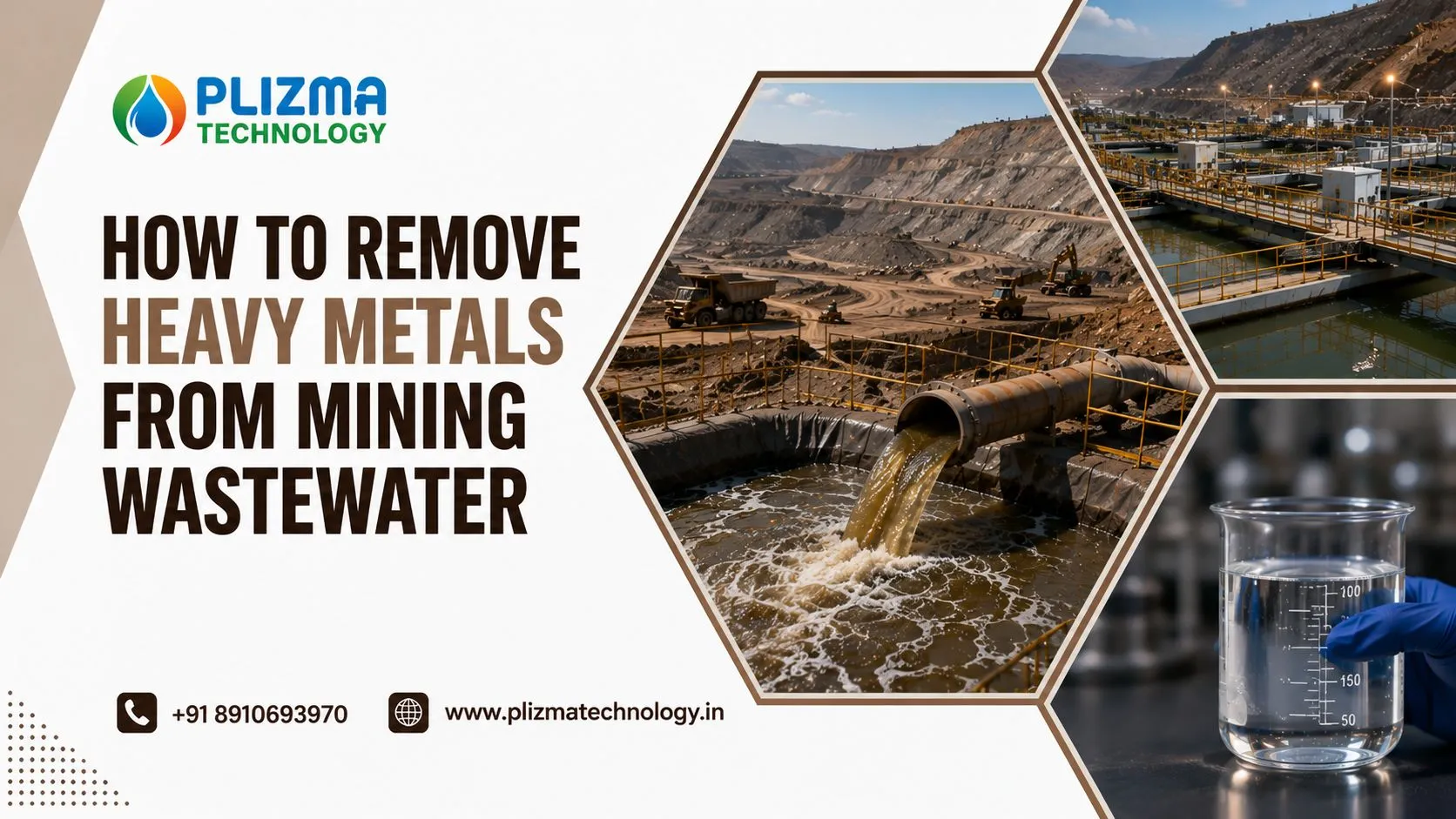
Mining has always been one of the major industrial sectors in Chhattisgarh. Iron ore, coal, bauxite, limestone, and manganese mining support steel, power, and cement industries across the state. But there is another side of mining operations that industries cannot ignore anymore. Wastewater coming from mines often carries dissolved heavy metals, suspended solids, acidity, and toxic contaminants. If this water reaches rivers or groundwater without proper treatment, the environmental impact becomes long-term and in many cases irreversible.
For mining companies operating in Chhattisgarh, heavy metal removal is no longer only an environmental responsibility. Industries looking for an ETP Plant Manufacturer in Chhattisgarh also need to consider process stability, heavy metal removal efficiency, sludge management, and long-term water reuse. It has become an operational requirement because discharge standards prescribed by regulatory authorities are becoming stricter, inspections are increasing, and water reuse is slowly becoming an economic necessity. The challenge is not simply removing metals. The challenge is removing them consistently despite seasonal changes, fluctuating mine water quality, and changing production conditions. That part many discussions miss.
Unlike municipal wastewater, mining wastewater changes every day. During monsoon, runoff increases suspended solids significantly. During dry seasons, dissolved metal concentrations may increase because dilution reduces. Open-cast and underground mines also generate different wastewater characteristics.
Typical contaminants found in mining wastewater include:
Many mining locations in Chhattisgarh also experience acid mine drainage (AMD). When sulphide-bearing rocks react with oxygen and water, sulphuric acid forms. The acidic water dissolves heavy metals from surrounding rocks, making treatment much more difficult. Unless pH is corrected first, removing dissolved metals becomes inefficient.
Heavy metals behave differently from ordinary organic pollutants. They do not naturally degrade over time.
Instead they accumulate inside:
Eventually these metals enter the food chain. Long-term exposure has been associated with neurological disorders, kidney damage, liver toxicity and ecological degradation. That is why regulatory agencies such as CPCB, State Pollution Control Boards, WHO, and USEPA prescribe strict discharge limits for several heavy metals.
For mining companies, untreated wastewater can also result in:
This is exactly why wastewater treatment should be viewed as a process stability issue, not only a compliance activity.
Heavy metals exist in different forms.
Some remain dissolved.
Some attach to suspended solids.
Others exist as complexes with sulphates or organic compounds.
Therefore one treatment technology rarely removes every contaminant efficiently. Most successful mining wastewater treatment plants combine multiple treatment processes instead of depending upon a single unit operation. An experienced Effluent Treatment Plant Manufacturer in Chhattisgarh can select and integrate these treatment stages according to wastewater chemistry, metal concentration, flow variation, and required treated-water quality.
A typical treatment sequence includes:
Each stage removes a different group of contaminants.
Skipping one stage often reduces the efficiency of the next stage.
Mine water quality rarely remains constant.
Equalization tanks absorb sudden fluctuations in:
Without equalization, chemical dosing becomes unstable, increasing both operating cost and treatment inconsistency.
Many plants underestimate this unit, although it directly influences the performance of every downstream process.
This is perhaps the most critical step.
Heavy metals remain dissolved under acidic conditions.
By increasing pH using lime, caustic soda or other alkaline chemicals, dissolved metals convert into metal hydroxides which can later settle out.
Different metals precipitate at different pH values.
Therefore pH optimisation is never one fixed number for every mining wastewater stream.
Chemical precipitation remains the most widely used heavy metal removal process in mining industries.
Common chemicals include:
These chemicals convert dissolved metals into insoluble particles.
Once converted into solids, conventional clarification systems can remove them effectively.
Although this method is economical, excessive chemical dosing generates larger sludge volumes, increasing disposal costs.
Very fine metal particles do not settle easily.
Coagulants destabilize suspended particles.
Flocculants bind them together into larger flocs.
Larger particles settle much faster inside clarifiers.
Correct polymer selection often determines whether a clarifier performs efficiently or continuously carries solids into downstream filters.
Clarifiers separate treated water from settled sludge.
The sludge collected here contains concentrated heavy metals.
Proper sludge handling becomes equally important because simply transferring contaminants from water into sludge does not eliminate environmental responsibility.
Mining facilities generally require safe sludge dewatering followed by disposal according to hazardous waste management requirements wherever applicable.
Pressure sand filters remove remaining suspended solids.
Activated carbon filters may also be installed where organic contaminants or colour removal becomes necessary.
Filtration protects downstream membrane systems if advanced treatment is planned.
When mining companies intend to recycle wastewater for process reuse, conventional treatment may not be sufficient.
Advanced technologies include:
Reverse osmosis removes dissolved salts and remaining heavy metals to produce high-quality reusable water.
However, membrane systems demand careful pretreatment.
High suspended solids or scaling compounds rapidly reduce membrane life.
This is one reason why complete process design matters more than simply installing an RO plant.
Mining industries are also exploring newer treatment methods.
These include:
Each technology has strengths and limitations.
Electrocoagulation, for example, reduces chemical consumption but increases electrical energy demand.
Constructed wetlands provide sustainable polishing but require significant land area.
Ion exchange delivers excellent polishing but becomes expensive for wastewater containing high suspended solids.
Plant designers generally combine these technologies with conventional treatment rather than replacing traditional systems entirely.
One growing trend across Indian mining projects is wastewater reuse.
Instead of discharging treated water, industries increasingly reuse it for:
Water reuse reduces freshwater dependency while improving long-term operational sustainability.
In water-stressed industrial regions, this becomes both an environmental and economic advantage.
Mining wastewater treatment plants operating in Chhattisgarh often face practical field conditions that textbook designs rarely discuss. For projects requiring an ETP Plant Manufacturer in Raipur, treatment design should account for actual wastewater characteristics, seasonal variations, sludge generation, and the intended reuse or discharge requirements.
Some common challenges include:
A flexible treatment plant generally performs better than a rigid design because mining operations themselves continue changing over the life of the mine.
Mining wastewater discharge in India is governed through environmental standards prescribed by the Central Pollution Control Board (CPCB), State Pollution Control Boards (including the Chhattisgarh Environment Conservation Board), and relevant environmental legislation. Depending on the project, industries may also need to comply with Environmental Clearance conditions issued under the Ministry of Environment, Forest and Climate Change (MoEFCC).
Monitoring commonly includes:
Meeting numerical limits consistently is generally more important than achieving occasional good laboratory results.
Many mining wastewater treatment plants fail not because the technology is incorrect, but because operation changes while treatment systems remain unchanged.
Common operational issues include:
Stable plant performance usually depends more on process optimisation than on adding expensive equipment.
Removing heavy metals from mining wastewater in Chhattisgarh requires a complete treatment strategy rather than a single technology. Every mine generates wastewater with different chemical characteristics, making site-specific process design essential. Equalization, pH correction, chemical precipitation, coagulation, clarification, filtration, and advanced polishing together provide the most reliable approach for achieving regulatory compliance and supporting water reuse.
As environmental standards continue becoming stricter and freshwater availability becomes more uncertain, mining wastewater treatment is gradually shifting from a compliance requirement to an important operational asset. Well-designed treatment systems reduce environmental risk, improve water recovery, and support more sustainable mining practices throughout the life of the project.
Iron, manganese, chromium, lead, cadmium, nickel, zinc, copper, aluminium, and arsenic are among the most frequently monitored heavy metals, depending on the mineral being extracted.
Chemical precipitation followed by coagulation, flocculation, clarification, and filtration remains the most widely adopted industrial solution because it is reliable for handling variable mine water quality.
Yes. After appropriate treatment, mining wastewater can often be reused for dust suppression, ore washing, cooling systems, vehicle washing, and green belt irrigation, subject to quality requirements.
Most dissolved heavy metals only precipitate within specific pH ranges. Incorrect pH reduces removal efficiency and increases chemical consumption.
Mining wastewater treatment is generally regulated through CPCB guidelines, State Pollution Control Boards such as the Chhattisgarh Environment Conservation Board, and environmental clearance conditions issued by MoEFCC wherever applicable.
At Plizma Technology, mining wastewater treatment is viewed as a process engineering challenge rather than simply a compliance exercise. Every mining site presents different wastewater characteristics, which is why treatment systems should be designed around actual water quality, operational variability, sludge management requirements, and long-term water recovery objectives rather than relying on a single standard solution.