


STP Manufacturer Mining Camp Wastewater Management
2026-06-19 | by Joydip Manna
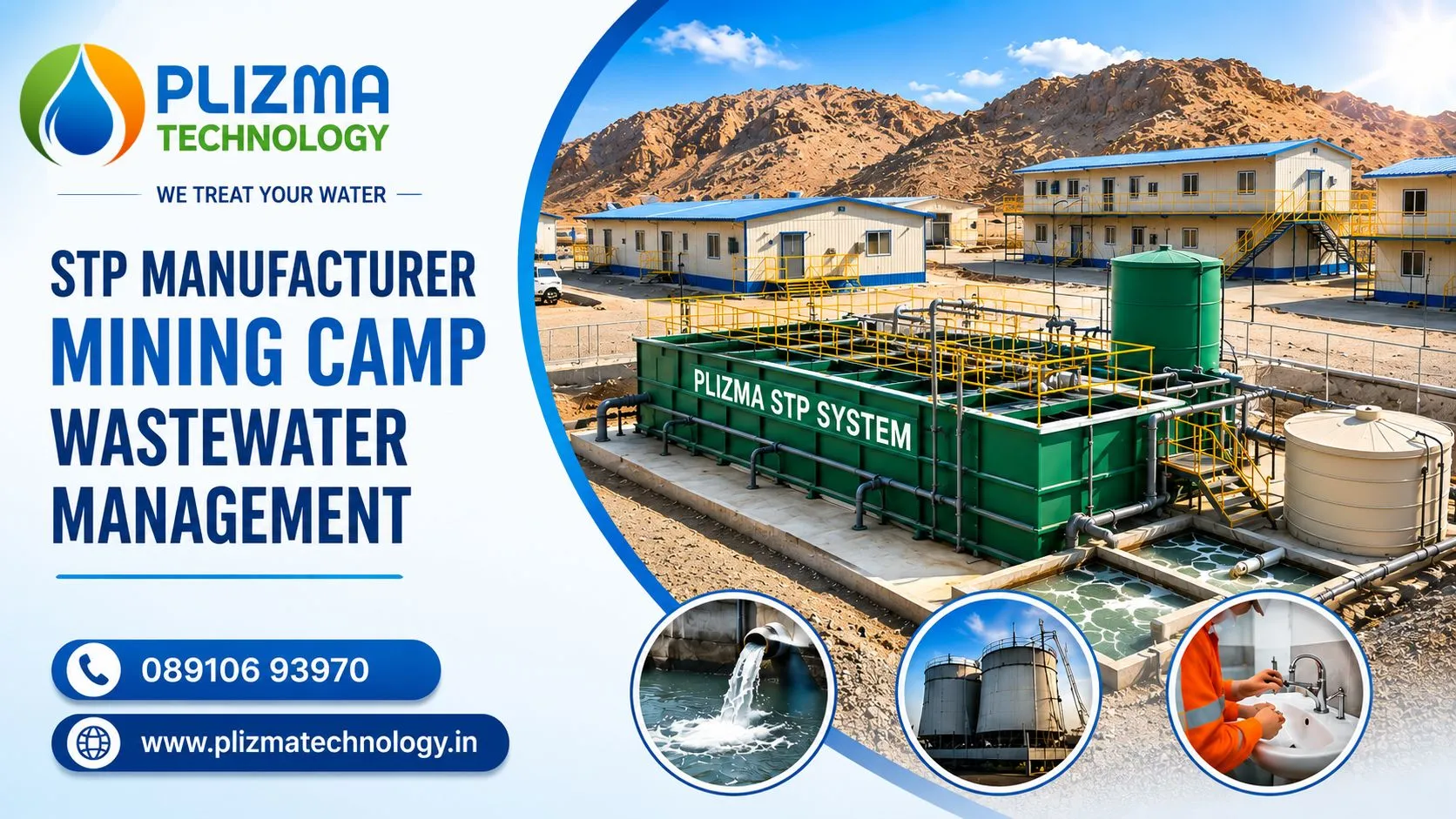
Mining camps create a wastewater management requirement which is easy to underestimate. Workers living at the camp use toilets, bathrooms, kitchens, laundry and housekeeping facilities every day, and all these activities generate sewage. The problem becomes more difficult because mining camps are usually located away from urban sewer networks. There may be limited land, changing workforce strength, irregular power supply and very limited access to trained wastewater operators.
This is where a properly designed Sewage Treatment Plant, or STP, becomes important. The plant has to treat domestic sewage reliably and, where conditions and regulations permit, treated water can also be reused for suitable non-potable applications. Wastewater treatment is therefore not only about disposal. It can also become part of the site’s water-management system.
Why Wastewater Management Is Important in Mining Camps
A mining camp can accommodate hundreds or sometimes thousands of workers depending on the project stage. Every worker contributes wastewater through bathing, toilet use, washing and other domestic activities. Kitchens and laundry facilities add further organic and suspended loads. If this wastewater is discharged without adequate treatment, it can create odour, hygiene issues and contamination of surrounding land and water resources.
Mining camps also have a different operating pattern from normal residential buildings. Worker numbers can increase during construction and reduce during later project stages. Shift timings can create high wastewater flows at particular hours, followed by periods of comparatively low flow. An STP therefore has to tolerate variation instead of being designed only for one fixed operating condition.
The practical objective is to provide a treatment system that remains stable when the camp population, wastewater flow and organic loading are changing.
Understanding Wastewater From a Mining Camp
The sewage coming from worker accommodation is primarily domestic wastewater. It generally contains biodegradable organic matter, suspended solids, nutrients, detergents and microorganisms. Kitchen wastewater can also contain grease and higher organic loading.
However, mining companies need to distinguish between domestic sewage and industrial wastewater.
Wastewater from mineral processing, workshops, vehicle washing, equipment maintenance or other process areas can contain different pollutants and may require an Effluent Treatment Plant or specialized treatment system. These streams should not automatically be sent to the domestic STP.
This segregation is important because an STP designed for domestic sewage is not necessarily designed to remove industrial contaminants. If unsuitable industrial wastewater enters the biological treatment process, it can disturb microorganisms, reduce treatment efficiency and eventually create compliance problems.
How an STP Works for a Mining Camp
A typical mining-camp STP can include preliminary treatment, equalization, biological treatment, clarification, tertiary polishing and disinfection depending on the required final water quality. The complete treatment sequence generally follows:
Screening → Equalization → Biological Treatment → Solid-Liquid Separation → Tertiary Treatment → Disinfection → Treated Water Storage → Reuse or Permitted Discharge
The exact configuration depends on sewage characteristics, plant capacity, available land, electricity supply, operator availability and the intended use of treated water.
The treatment technology should therefore be selected after understanding the complete site requirement. CPHEEO guidance identifies factors such as capital cost, O&M cost, power consumption, land requirement and reuse while evaluating wastewater-treatment technologies.
Preliminary Treatment Protects the Plant
The first treatment stage removes larger solids before they reach pumps and biological equipment. Plastic, cloth, sanitary materials, hair and other coarse materials can cause blockages if they are not removed properly.
This becomes a bigger concern at remote mining locations. In an urban facility, a blocked pump or damaged screening system may be repaired relatively quickly. At a remote mining camp, technical support and spare parts can be several hours or even days away.
Proper screening and regular removal of accumulated solids therefore protects downstream equipment and reduces unnecessary maintenance.
Equalization for Variable Wastewater Flow
Equalization is especially useful in mining camps because wastewater generation can vary significantly throughout the day.
Workers may use bathrooms heavily before and after shifts. Kitchen activities may also create particular flow peaks. At other times, wastewater generation can fall considerably.
The equalization tank acts as a buffer between incoming sewage and the biological treatment process. It reduces sudden hydraulic variations and helps provide a more stable load to the biological stage.
This is particularly useful where the workforce operates in multiple shifts or where camp occupancy changes during different stages of the mining project.
Biological Treatment of Mining Camp Sewage
The biological stage is responsible for removing biodegradable organic pollution from sewage. Microorganisms consume organic matter under controlled conditions, reducing the pollutant load before clarification and final treatment.
Different technologies can be considered, including MBBR, SBR, activated sludge and membrane-based systems. There is no single technology that should be considered the best for every mining camp.
A remote project may prefer a system that is simpler to operate and maintain. Another project may have very limited land and therefore require a compact treatment configuration. If high-quality reuse water is required, additional membrane or tertiary treatment may also become relevant.
Important factors during technology selection include:
- Available land and site conditions
- Power availability and consumption
- Operator skill
- Variation in sewage flow
- Sludge generation
- Required treated-water quality
- Maintenance requirements
- Future expansion
The plant has to be selected around actual operating conditions, not simply around the equipment catalogue.
Tertiary Treatment and Disinfection
An STP intended for wastewater discharge and an STP intended to produce reuse water may not require exactly the same final treatment configuration.
Where higher-quality treated water is required, tertiary filtration and disinfection can be incorporated after biological treatment. Depending on the reuse requirement, filtration, activated carbon, ultrafiltration, membrane treatment or other polishing processes may be considered.
Disinfection is particularly important where workers may come into contact with reclaimed water. The final water-quality target should be established according to the intended application and applicable regulatory requirements.
CPCB’s reuse approach also emphasizes matching treated sewage quality with the requirements of the intended use rather than assuming that all treated water is suitable for every application.
Reuse of Treated Water in Mining Camps
Mining sites can have a significant opportunity for wastewater reuse because water availability is often an operational concern. Freshwater may need to be transported, pumped over long distances or extracted from limited local sources.
After suitable treatment, treated sewage can potentially be used for non-potable applications such as landscaping, toilet flushing, external cleaning and selected mining-related activities where permitted.
CPCB’s guidance on treated-sewage reuse identifies mining-sector applications and documents an example involving the Hindustan Zinc Rajpura Dariba Mining & Smelting complex, where treated sewage is used for applications including mining, mineral beneficiation, dust suppression, cooling and horticulture.
This demonstrates the potential for reuse, but it does not mean every mining site can use treated sewage in the same way. Water quality, application method, worker exposure and local regulatory requirements have to be considered for each site.
Treated Water for Dust Suppression
Dust suppression is a particularly interesting application in mining because water is routinely required to control dust from roads and operating areas. Treated sewage may be considered for this purpose when the required water quality and applicable permissions are satisfied.
The treatment plant should not simply be connected to dust-suppression tankers without evaluation. Microbiological quality, salinity, dissolved solids, application method and potential worker exposure can all influence the suitability of reclaimed water.
Therefore, the dust-suppression requirement should be identified during STP design so that the appropriate treatment and storage arrangement can be considered from the beginning.
Modular STP for Remote Mining Locations
Remote mining sites can face difficult civil and logistical conditions. Bringing construction materials to site, arranging foundations and building large conventional treatment structures may increase project time and cost.
Packaged and modular STPs can provide a practical option in locations where rapid installation and reduced civil work are important. Equipment can be manufactured and assembled under controlled conditions before being transported to the camp.
Modular systems can be particularly useful when the project has:
- Limited land availability
- Short construction schedules
- Difficult site access
- Changing camp population
- Requirement for future capacity expansion
However, modular does not mean that site conditions can be ignored. Foundation requirements, transportation dimensions, lifting arrangements, weather, electrical supply and maintenance access still need to be evaluated.
Power Consumption and Remote Operation
Power reliability is another major consideration for mining-camp STPs. Pumps, blowers, mixers and control systems all require electrical power, and some mines rely on captive generation.
Aeration can represent a significant portion of biological-treatment energy consumption. Blower selection, diffuser efficiency and process control can therefore affect long-term operating costs.
The STP should also be compatible with the site’s emergency power arrangement. Critical pumps, blowers and control systems may need suitable redundancy so that a single equipment failure does not immediately stop treatment.
CPHEEO guidance similarly recognizes power consumption and O&M requirements as important considerations in treatment technology selection.
Automation and Monitoring
Mining camps may have limited availability of experienced STP operators. Automation can help reduce routine operating difficulties and provide early warning when equipment or process conditions move outside the desired range.
Depending on the plant, automation may include PLC-based control, automatic level management, pump alternation, blower sequencing, flow measurement and equipment alarms.
But an automated STP is not a maintenance-free STP.
Biological treatment still needs monitoring, sludge removal, equipment inspection and periodic testing. Automation is mainly useful for maintaining consistency and identifying problems before they become major failures.
Sludge Management at Remote Sites
Sludge is continuously generated during biological wastewater treatment and needs a defined management route.
At a remote mining camp, transporting wet sludge over long distances can be expensive and operationally difficult. For this reason, sludge handling should be considered during the original plant design rather than after commissioning.
Depending on the selected treatment technology, sludge holding and dewatering arrangements may be included. The final disposal or further management route needs to follow the applicable regulatory requirements.
A sewage-treatment system cannot be considered complete if it treats liquid wastewater but has no practical plan for the solids generated by that treatment.
Odour Control Around Worker Accommodation
The STP may be located relatively close to worker accommodation, so odour control becomes an important practical requirement.
Odour can develop due to septic sewage, poor screening, sludge accumulation, stagnant zones or inadequate aeration. Proper ventilation, tank design, housekeeping and sludge management can reduce these problems.
Where site conditions require it, additional odour-control arrangements can also be incorporated.
This is particularly important in mining camps because wastewater infrastructure is operating in the same environment where workers are living and working.
Designing the Correct STP Capacity
STP capacity should not be decided only by taking today’s worker population and applying a standard formula.
Mining projects change. Construction workers may increase the population temporarily, contractors can change, and the camp may operate at different occupancy levels during different project stages.
The design should therefore consider maximum expected population, permanent and contract workers, shift patterns, water consumption, kitchen and laundry loads and future expansion.
At the same time, excessive oversizing should be avoided. A biological STP that operates for long periods at extremely low loading can have its own process-control difficulties.
The target should be a treatment system that remains stable across the realistic operating range.
STP and ETP Are Not the Same
This distinction deserves attention because mining sites may have several different wastewater streams.
An STP treats domestic sewage, while an ETP treats industrial or process effluent.
The worker camp requires an STP for domestic wastewater. The mining and processing areas may require ETP systems for industrial wastewater depending on the process.
Trying to solve both problems with one treatment system without wastewater characterization can create serious operational issues. Industrial contaminants can interfere with biological sewage treatment, while a domestic STP may not have the chemical or physical treatment processes required for industrial effluent.
Proper source segregation is therefore part of wastewater management.
Selecting an STP Manufacturer for Mining Camps
Choosing an STP manufacturer should involve more than comparing equipment prices. The manufacturer needs to understand the remote operating environment and design around the actual camp conditions.
The evaluation should include:
Treatment performance + reliability + O&M + power consumption + automation + spare parts + technical support + reuse requirements
For remote mining projects, technical support is particularly important. A pump, blower or control-panel failure that would be a minor issue in a city can become a significant operational problem at a remote camp.
The manufacturer therefore needs to consider spare-parts planning, maintenance access and long-term support from the project beginning.
Regulatory Compliance in India
Mining-camp wastewater management needs to comply with the applicable environmental permissions, consent conditions and requirements of the relevant State Pollution Control Board or Pollution Control Committee.
CPCB provides national-level standards and guidance, while local authorities can prescribe requirements based on site-specific conditions. CPHEEO, under the Ministry of Housing and Urban Affairs, provides technical guidance in the water supply and sanitation sector.
The final treated-water quality should be established according to the actual discharge or reuse requirement. This becomes particularly important where reclaimed water can come into contact with workers or the surrounding environment.
Common Problems in Mining Camp STPs
Even a technically correct STP can perform poorly if operational conditions are ignored. Underloading, sudden hydraulic loading, insufficient sludge removal and inadequate operator training are common causes of performance variation.
Remote locations introduce another problem: spare parts.
A failed pump or blower may not be immediately replaceable if the site is far from the nearest service facility. Keeping critical spares and establishing technical support arrangements can therefore be as important as selecting the treatment technology itself.
The plant needs to be designed not just for normal operation, but also for the situations when something goes wrong.
Frequently Asked Questions
1. Why does a mining camp require an STP?
A mining camp generates domestic sewage from toilets, bathrooms, accommodation, kitchens and other facilities. An STP treats this wastewater before permitted discharge or suitable reuse and helps control environmental and sanitation risks.
2. Can treated mining-camp sewage be reused?
Yes, where treatment quality and regulatory conditions permit. Potential uses include landscaping, toilet flushing, cleaning and selected mining-related applications. CPCB’s reuse guidance includes documented mining-sector examples of treated-sewage utilization.
3. Can mining process wastewater enter the STP?
It should not automatically be mixed with domestic sewage. Process wastewater can contain pollutants requiring different treatment. The wastewater should be characterized and a suitable ETP or specialized process should be considered where required.
4. Which STP technology is suitable for mining camps?
MBBR, SBR, activated sludge, MBR and other treatment configurations can be considered. The appropriate selection depends on population, flow variation, land availability, power, operator skill, treated-water requirements and O&M conditions.
5. Can treated sewage be used for dust suppression?
It can be considered where water quality, application conditions and applicable permissions allow. Mining-sector reuse examples documented by CPCB include dust suppression applications.
Conclusion
Mining camp wastewater management requires a treatment system that can work reliably under changing and sometimes difficult conditions. Worker populations change, sewage flows fluctuate, power can be dependent on captive systems and technical support may be far away. These factors make STP selection and long-term operation particularly important.
A properly designed STP can treat domestic sewage and, where suitable, create an additional source of reclaimed water for non-potable applications. Landscaping, toilet flushing, external cleaning and selected mining activities can provide opportunities to reduce freshwater demand.
The larger direction is moving from wastewater disposal toward water recovery and reuse. CPCB’s reuse approach recognizes treated sewage as a potential resource and documents practical applications across different sectors, including mining.
For mining companies, the important question is therefore not only how much sewage an STP can treat, but how reliably it can operate at a remote location, how it will handle changes in camp population, how sludge will be managed and where treated water can safely be reused.
For an STP manufacturer, these conditions need to be considered from the beginning. A plant that performs well during commissioning but becomes difficult to operate after the mining camp is fully occupied is not a complete wastewater-management solution.
Industry Note: Plizma Technology approaches mining-camp wastewater treatment around practical site conditions, reliable treatment, manageable O&M and opportunities for treated-water reuse, because remote wastewater infrastructure has to continue working long after installation and commissioning.