2026-09-28



2025-06-30 | by Joydip Manna
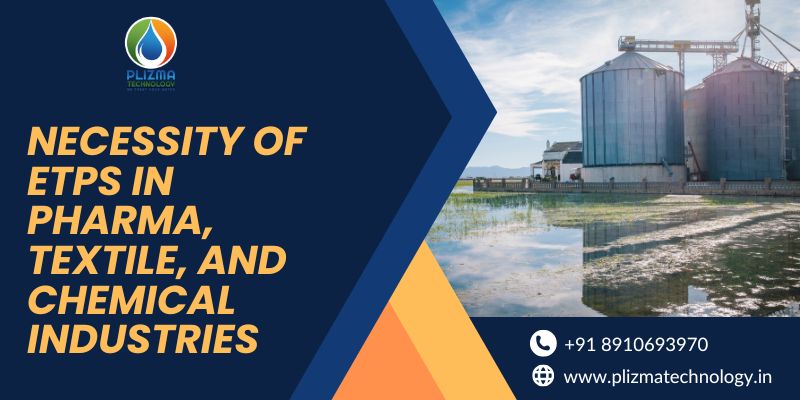
If you work in the industrial profession, you must prioritize water and waste management technology. In today’s industrial landscape, environmental sustainability is no longer an option; it is a necessity. Industries such as textiles, chemicals, and pharmaceuticals generate a significant amount of wastewater containing hazardous pollutants, which pose serious health hazards and contribute to environmental degradation. In such a critical situation, a reliable effluent wastewater treatment plant service provider can save you from contaminating water sources and damaging the ecosystem.
An effluent treatment plant, or ETP, is a specialized technology designed to treat industrial wastewater in compliance with environmental safety regulations, promoting ecological sustainability. Through this blog, we will discuss the necessity of ETPs in the pharma, textile, and chemical industries.
The pharmaceutical industry mainly produces wastewater that contains active pharmaceutical ingredients and organic chemicals, which are non-biodegradable and toxic. If the pharmaceutical industry discharges the wastewater without proper treatment, it can lead to water contamination and damage aquatic life.
The textile industry primarily focuses on textile dyeing and consumes a substantial amount of water during the production process. After the garment production process, the textile industry releases effluents with heavy metals, toxic chemicals, and dyes. These pollutants have a profoundly negative impact on the environment, disrupting the ecological balance.
Different industries produce different types of wastewater, so a single treatment approach does not work everywhere. An effective effluent treatment plant (ETP) is designed according to the type of pollutants, wastewater flow, production process, and required treated-water quality. This is why industries need properly designed industrial wastewater treatment rather than relying on a standard setup.
In the textile industry, for example, wastewater can contain dyes, suspended solids, chemicals, and other treatment-resistant pollutants. A properly designed ETP can combine processes such as screening, equalization, neutralization, coagulation, biological treatment, filtration, and disinfection to gradually reduce the pollutant load. In many applications, activated sludge treatment is used to handle biodegradable organic matter, while filtration or membrane treatment can be added when higher-quality water is required for reuse.
The treatment requirement becomes even more important when industries move toward newer chemical formulations. For example, reducing the use of persistent substances in textile finishing can simplify certain wastewater treatment challenges. However, the actual treatment process still needs to be selected according to the wastewater characteristics rather than simply depending on one technology.
Chemical manufacturing generates wastewater that can contain acids, alkalis, solvents, organic compounds, suspended solids, and heavy metals. If this industrial effluent is not treated properly, these contaminants can enter soil and water resources and create long-term environmental problems. An effluent treatment plant manufacturer therefore needs to understand the chemical composition of the wastewater before selecting the treatment process.
This is where customized ETP design becomes important. Chemical industries may require a combination of neutralization, chemical precipitation, coagulation, biological treatment, filtration, and membrane processes depending on the contaminants present. Industries in regions such as West Bengal, Odisha, Bihar, and Jharkhand can have very different wastewater characteristics based on their manufacturing activities, so the ETP cannot be designed only around capacity. The pollutant profile matters equally.
Chemical recovery can also become part of the wastewater management strategy where technically feasible. Recovering useful chemicals from industrial effluent can reduce raw-material losses and lower some operational expenses, while also reducing the contaminant load entering downstream treatment stages.
The importance of an ETP is not limited to textile or chemical manufacturing. Pharmaceutical, food processing, dairy, paper, paint, leather, beverage, and other industries generate wastewater that needs treatment before discharge or reuse. A properly operated wastewater treatment plant helps reduce the release of pollutants into rivers, lakes, soil, and groundwater.
Environmental protection is one of the primary purposes of an ETP. Industrial wastewater may contain substances that can affect aquatic organisms, soil quality, and surrounding ecosystems. Treatment processes reduce these contaminants before the effluent is discharged according to the applicable requirements.
ETPs also support regulatory compliance. Industries are required to manage their wastewater according to applicable environmental standards and consent conditions. Proper treatment, monitoring, and record keeping can help industries maintain compliance and reduce the risk of penalties, operational restrictions, or other regulatory action.
Water reuse is another important part of modern industrial wastewater management. Depending on the treated-water quality and intended application, treated effluent can potentially be reused for activities such as cooling, gardening, washing, or other industrial requirements. This reduces dependence on freshwater and supports better water-resource management, particularly in water-stressed areas.
There is also an operational benefit. When wastewater is treated and managed properly, industries can reduce uncontrolled discharge, improve resource recovery opportunities, and manage water consumption more efficiently. The actual savings, however, depend on wastewater characteristics, plant design, energy consumption, chemical requirements, and the level of water reuse.
ETPs are not simply a compliance installation placed inside an industrial facility. They form an important part of industrial wastewater treatment and water management, helping industries control pollutants, protect surrounding water resources, and create opportunities for treated-water reuse.
The right ETP solution depends on wastewater quality, flow, industry type, available land, discharge requirements, and future production plans. This makes proper process selection and plant design critical from the beginning. An experienced ETP plant manufacturer can evaluate these factors and develop a treatment system suited to the actual industrial effluent rather than applying the same process everywhere.
For industries looking to manage industrial effluent more effectively, Plizma Technology provides ETP solutions designed around different industrial wastewater treatment requirements across India.
2026-09-28
2026-09-23